Experimental and radically contemporary, (AB)NORMAL bring to life projects that oscillate between reality and imagination
Speaking with them means entering a universe where architecture expands beyond built space, inhabiting multiple dimensions: real and virtual, physical and conceptual. Founded in 2017 by Marcello Carpino, Mattia Inselvini, Davide Masserini, and Luigi Savio—after a shared experience in Rotterdam at OMA, Rem Koolhaas’ studio—(AB)NORMAL explore the boundaries of these worlds, building spaces and visions shaped by pop culture, science fiction, technology, and gaming. Architects by training and visionaries by vocation, they move across installations, interiors, set design, creative direction, and exhibitions, reinterpreting the very idea of space as a visual language. Through collaborations with brands such as Cassina, Moncler, Versace, LVMH, Vogue, Bally, Plan C Frame, and Polimoda—and installations for Triennale Milano, Alcova, Oslo Architecture Triennale, and the Venice Biennale—(AB)NORMAL exemplify how design today does not merely give form, but generates experiences. We met them to talk about imagination, method, and experimentation, as well as the Fuorisalone 2026 theme, Be the Project: an invitation to rediscover the value of thought becoming space.
NORMAL_WSA_SOUNDSYSTEM_HERO-03.jpg)
© (AB)NORMAL_WSA_SOUNDSYSTEM_HERO
Your work constantly moves across scales and formats, navigating multiple dimensions. Calling yourselves architects no longer seems enough—who is (AB)NORMAL? What defines you and makes you recognizable?
We are a truly multidisciplinary studio; our approach merges architecture, design, graphics, and creative direction. This versatility allows us to adapt to different scales and contexts, building a recognizable yet ever-evolving language. Our distinctive signature is visual and iconic, the result of research processes focused on contemporary social and cultural phenomena—from gaming to streaming, from the relationship between technology and entertainment to the aesthetic exploration of materials.
We don’t adhere to a fixed style. We prefer movement, change, and questioning, maintaining curiosity and absorbing the stimuli of those we work with—whether brands, institutions, or private clients. This attitude, which might sometimes seem like a weakness, is for us an intrinsic value: the ability to interpret the complexity of the present without reducing it to a predefined formula. We aspire to be recognized for our ability to capture contemporaneity, transforming research into concrete design. We are often seen as researchers with an interest in architecture, but it is precisely from this ambiguity that our strength emerges: we do not draw boundaries between thought and construction, between theory and space.
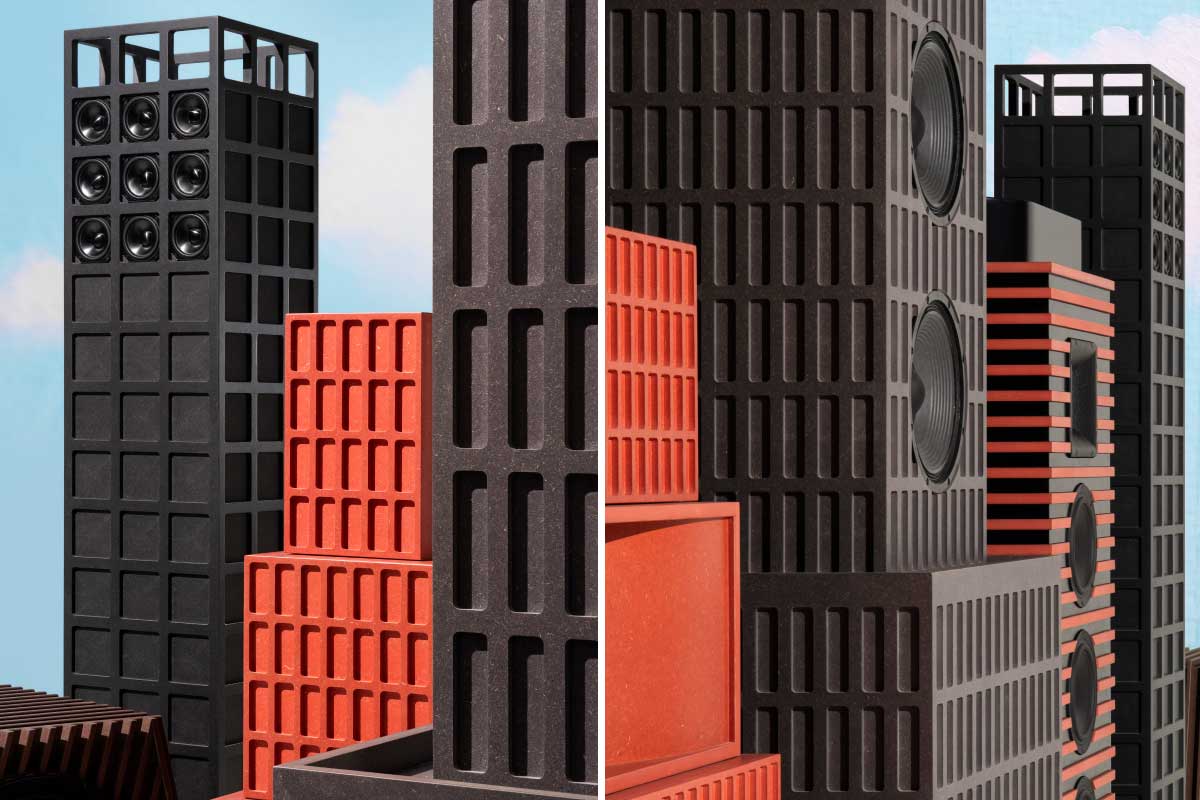
© (AB)NORMAL_WSA_SOUNDSYSTEM
For you, architecture is an open system. Where does your projectuality originate?
For us, architecture is a dynamic, open system born from the constant interaction between languages, individuals, and technologies. Our design methodology is rooted in close observation of cultural and social phenomena, translating them into engaging spatial experiences. Every project we create is a narrative in which material, light, sound, and image blend to form environments not only to be crossed, but to be intensely lived.
We work in balance between the virtual and the tangible, between speculative research and concrete realization, integrating digital tools as essential components of our creative process. Our goal is not a finished form, but the promotion of openness—the ability to generate new connections, meanings, and behaviors within the spaces we conceive.
Is there a recent project you consider emblematic of your approach?
A significant example of our approach is the new flagship store Plan C Frame on Via Manzoni in Milan. We developed it together with the creative platform April, which defined the conceptual and programmatic foundations. This project embodies our vision of architecture as a flexible system adaptable over time. The space is conceived as a dynamic infrastructure, able to be reorganized and updated without structural interventions: a versatile container ideal for hosting retail activities, exhibitions, or temporary collaborations.
Every element—from the equipped walls to the entrance loggia, from the thematic niches to the red staircase-library—contributes to creating a coherent organism designed to transform through different uses while maintaining its identity. Plan C reflects our interest in projects situated at the intersection of retail and culture, of the permanent and the ephemeral. We focus on creating atmospheres rather than simple forms, seeking a balance between materiality and technology, language and behavior. For us, architecture is defined by what happens inside it: a living system in continuous evolution, absorbing and reflecting contemporaneity.
© (AB)NORMAL APRIL PLAN C @piercarloquecchia @dsl__studio_ @michelapedranti
How do you use digital tools—3D modeling, rendering, software—not just to visualize, but to truly design?
The introduction of modeling and representation software has radically transformed the way we design—not only the way we visualize. For us, digital tools are not a technical extension of drawing, but a working environment where form is generated through simulation, error, and possibility.
We model, test, and modify in real time spatial relationships, light behaviors, or material variations. Rendering is not a final image, but a critical device that allows us to think about space as we construct it. Digital tools become an operational laboratory, a shared territory where the project takes shape dynamically, openly, and collaboratively.
Do you think hybridization between disciplines today is a necessity or a choice?
We don’t believe interdisciplinary hybridization is an absolute necessity, but for us it’s a natural condition. It allows us to go beyond the boundaries of architectural design and develop projects involving different languages—from design to curatorship, from communication to visual research.
This cross-disciplinary approach enables us to better interpret the complexity of the present and build spaces that are not only physical, but also cultural and narrative. Hybridization is not an imposed method, but the most authentic form of our curiosity.
NORMAL_INTERIOR_BOCCACCIO_3_04.jpg)
© (AB)NORMAL_INTERIOR_BOCCACCIO
The Fuorisalone 2026 theme, Be the Project, invites us to rediscover design not as a finished form, but as a dynamic and responsible process. How do you interpret it?
We live immersed in a visual narrative that celebrates the finished image as the final stage of a project. Our daily social-media scrolling shows us completed results but rarely reveals the complexity of the processes behind them: interdisciplinary teams, decisions, mistakes, revisions. The theme Be the Project is therefore an important invitation to refocus on process—on what usually remains invisible.
For our generation, this isn’t easy: we grew up with a cult of the perfect image, but today we feel the need to share fragility and the collective dimension of work. As a studio, we are increasingly communicating the intermediate phases, showing the project as a living system in constant transformation.
Speaking of fragility, errors are rarely discussed—as if they weren’t part of the process…
In design, error is rarely mentioned, because showing it isn’t considered appealing. Contemporary culture—and the Italian one in particular—tends to hide fragility, equating mistakes with failure rather than with learning. Yet error is an integral part of the design process: it represents a fertile deviation, a condition that forces you to question yourself, recalibrate, improve. It often happens that an unforeseen issue becomes a project’s turning point, revealing solutions a linear path wouldn’t have predicted.
Working openly means accepting the possibility of making mistakes and transforming error into a critical tool. It’s an attitude that accompanies us through every phase of our work, and one we consider essential to never stop learning, evolving, and refining our design sensitivity.
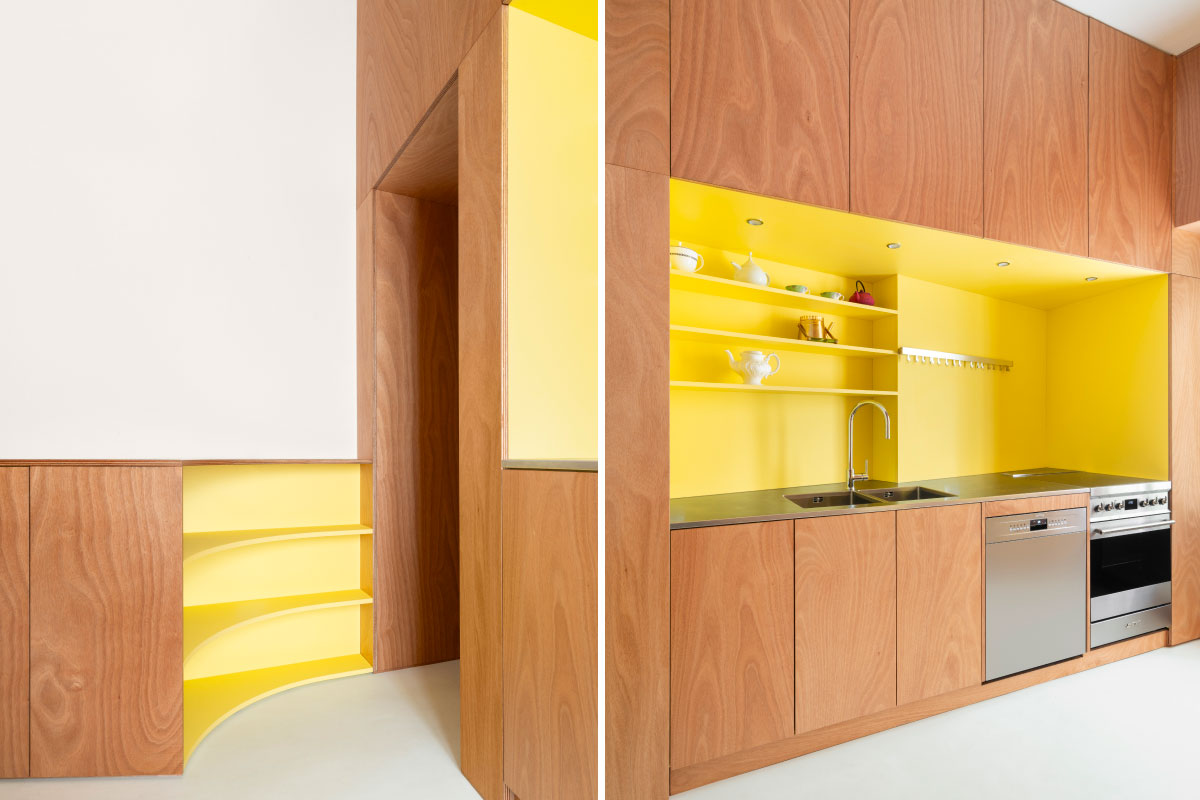
© (AB)NORMAL_INTERIOR_BOCCACCIO
If you had to choose a project, building or artist who taught you what it means to imagine space, who would it be?
It’s difficult to answer such a question, because imagining space doesn’t correspond to having a single reference, but to absorbing concepts and sensitivities that accumulate over time. One of the principles we are rediscovering in our design process is Stimmung, in the Kantian sense: the emotional disposition that allows one to perceive harmony between human beings and the world. It’s an idea that guides us especially when designing exhibitions or fashion-related installations, where atmosphere and sensory resonance matter more than form.
Another recent reference is Do Ho Suh, whose exhibition we visited not long ago. His way of conceiving space as a collection of memories from other places pushed us to reflect on the idea of building starting from what already exists—from fragments of shared experiences. Each project thus becomes a living archive of memories, relationships, and presences, a way to give continuity to collective memory through architecture.
.jpg)
© (AB)NORMAL @abnormal_story @piercarloquecchia @dsl__studio
What is your biggest challenge today as a studio?
Our greatest challenge is finding clients who truly understand the potential of a design dialogue with us. We often feel we’re not fully tested, as if part of our energy and competencies remains unexpressed. We are working to overcome this limitation, expanding toward architectural-scale projects, but it’s not always easy to encounter clients willing to engage with this evolution. Our goal is to build architectures that have weight in their context—not only for function or finish, but for their geometric presence, for their ability to generate relationships and influence what surrounds them. The challenge today is transforming this ambition into real opportunities for construction and dialogue.
What are you working on? Will we see you at Milan Design Week?
We are working on several collaborations that will take shape over the coming months. Some brands with whom we’ve shared experiences in past editions of Salone del Mobile have chosen to renew their trust in our work, and at the same time we are beginning new projects that will allow us to further expand the studio’s field of action.
It’s an intense period: we’re dedicating a lot of energy to finalizing interior and new-building projects started over the past year, with the aim of consolidating the transition between research, image, and realization. We hope to soon share part of this journey publicly, which for us represents a moment of concrete evolution and new perspectives for (AB)NORMAL.
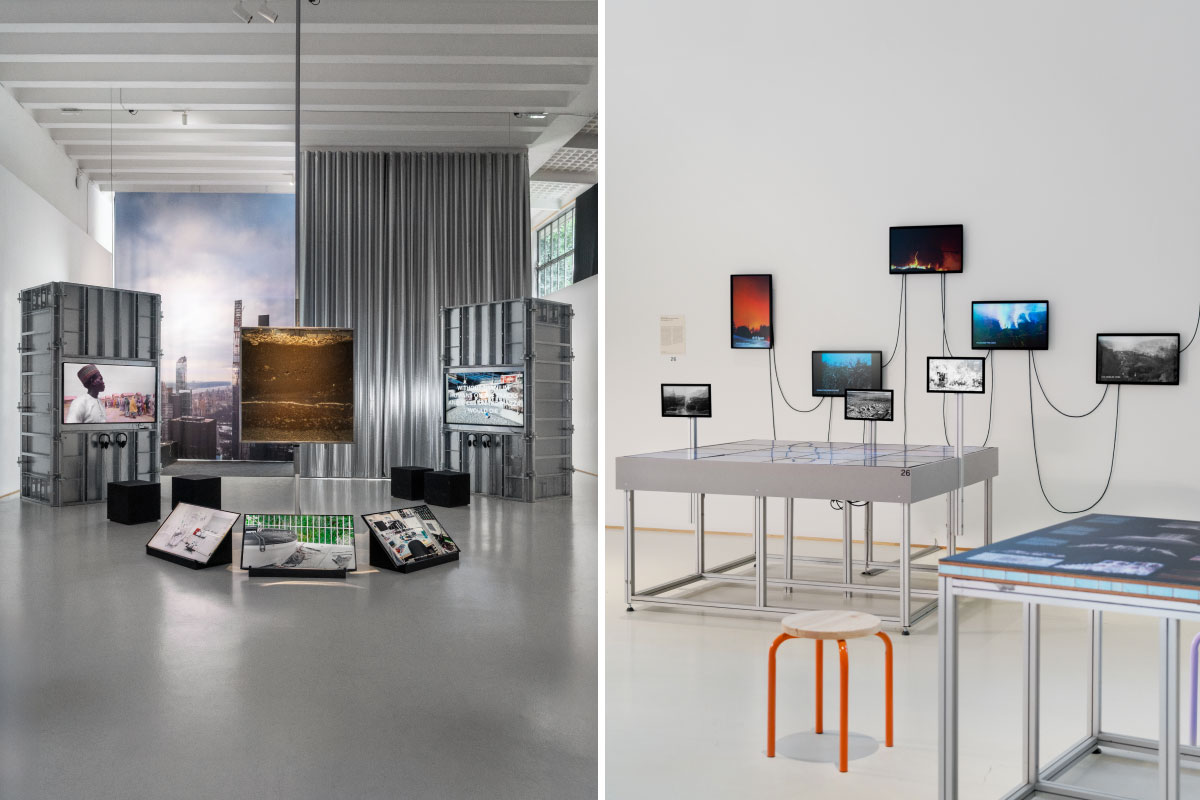 © (AB)NORMAL @abnormal_story @piercarloquecchia @dsl__studio


 Iscriviti alla nostra newsletter