Between research, craft and industry, Plasticiet transforms discarded plastic into “new stones” that speak of the future, sustainability and imperfect beauty
Awarded as Emerging Talents of the Year at Dutch Design Week 2025, Marten van Middelkoop and Joost Dingemans founded Plasticiet in 2016 in Rotterdam - a studio that turns plastic waste into a new material, surprisingly elegant and durable. They recover post-industrial and post-consumer waste from companies, food industries and even chocolate molds, turning it into dense, decorative sheets that evoke marble veins or Venetian terrazzo patterns. Rather than recycling, Plasticiet is building a new material language. Today, their work revolves around two main collections: Karlite, a sustainable alternative to resin, and Mother of Pearl, a handcrafted material that captures the irregular glow of nacre - both made entirely from recovered plastic. Alongside these, the studio develops custom materials for brands and commercial spaces - including Jil Sander, Bershka x OMA, Ace & Tate, BMW and Liberty London - moving seamlessly between research, craftsmanship and industrial production.
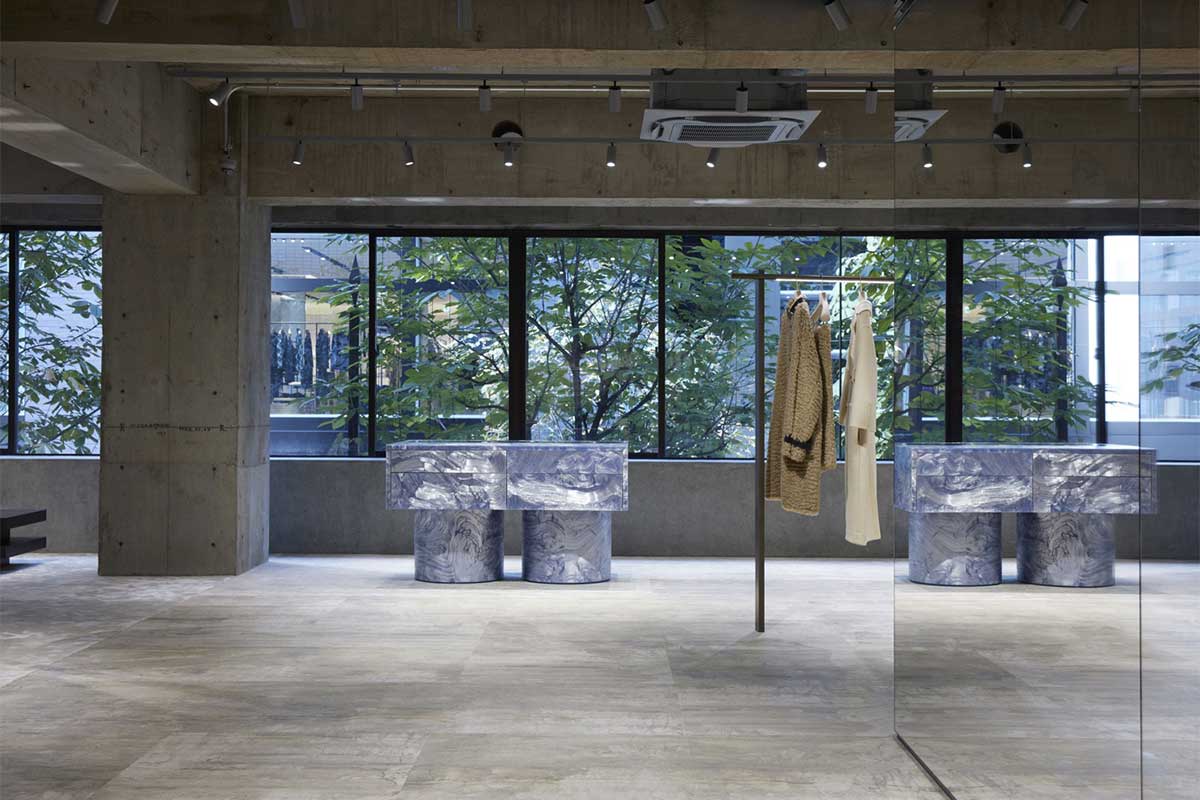
Plasticiet x Jil Sander, Store design by Casper Mueller Kneer, Courtesy of Jil Sander, Photographer Paul Riddle
How would you define yourselves? Are you more of a material lab, a surface brand or a circular design project?
We are three things: a (solid surface) material manufacturer, a design studio, and a small-scale furniture maker, all from recycled plastic. We design and develop our own materials, which we then produce ourselves. From those materials, we create furniture and objects, both for our own collections and for commissioned projects. Everything we do stems from a recycling ethos, because we believe that plastic is not merely waste, but a valuable resource that deserves to be thoughtfully reintroduced into the world.
Your story includes a period in Mumbai, where the first idea was born - meeting local artisans who reuse everything - and then a toaster oven where you began melting plastic. How much of that experimental spirit remains today?
We both still often feel like we’re two boys with a school project that got out of hand. As we grow, we’ve had to become entrepreneurs, but we never lost that sense of play and curiosity. That is our core, and what we love to do. We’re constantly inventing, modifying, or rebuilding machines to fit our needs. When developing new materials, we refine endlessly, yet within that refinement, we still find happy accidents, small discoveries that open the door to something new. That balance between structure and experimentation keeps the process alive.
What was the moment when you thought, “Okay, this works”? Plasticiet’s products come from observing natural stones - was there a project or a client that made you realize plastic could truly become stone?
In the beginning, we made a small block, less than 10 by 10 centimeters from shampoo bottle caps. It became our keystone, a tiny piece that convinced us the idea could actually work. Over the years, there have been many moments when we thought, either this is, or this isn’t going to work. So far, it’s been working out! We just kept refining and developing. Right now, we’re focused on refining our process to make each product from a single material wherever possible, without needing backings or frames that cannot be separated. Our goal now is simple: whatever can be made from our materials, should be made entirely from them.
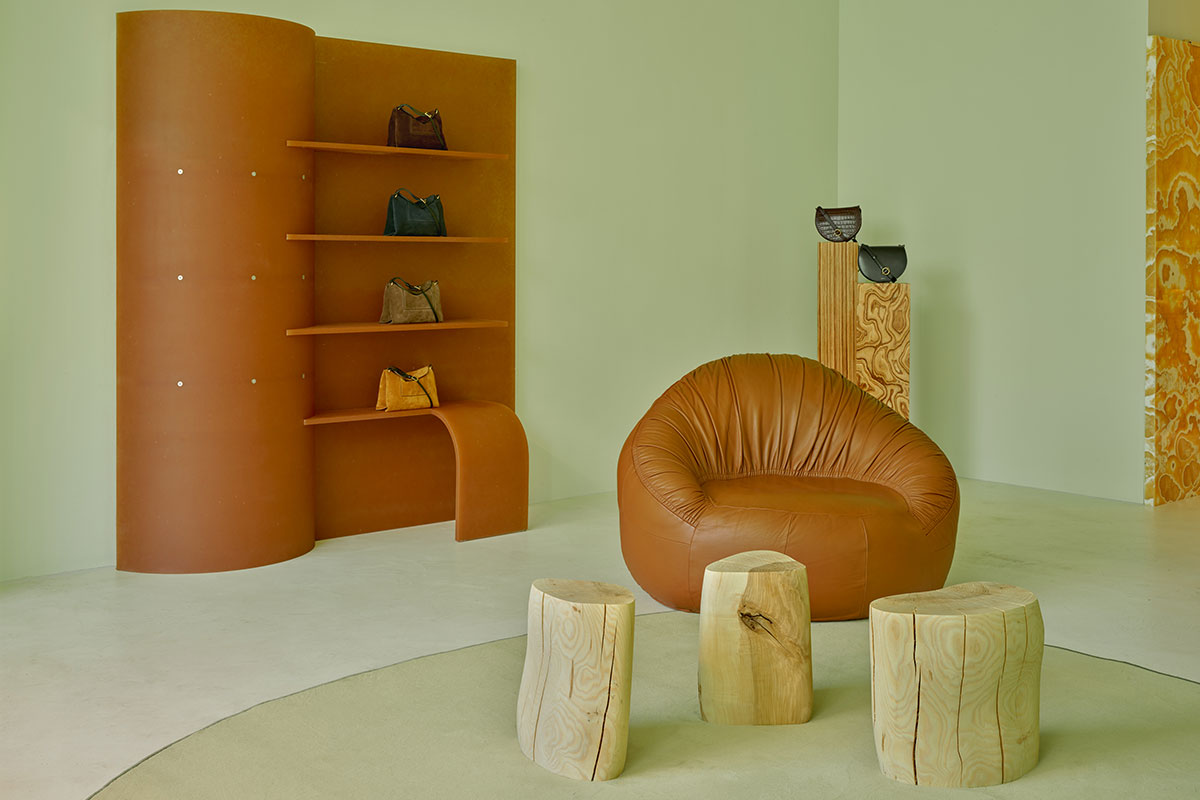
Plasticiet Karlite Sienna for Wandler, Pictures by Pim Top
And why plastic? In a world where everyone wants less plastic, you chose to face it and elevate it.
Plastic isn’t going anywhere, over 450 million tons are produced every year. To put that into perspective, that’s about the same weight as 45 million fully loaded garbage trucks.With so much plastic produced, we need a solid infrastructure to recycle it. We have to show people how special plastic actually is, motivate them to not throw it away, to care for it. Either by recycling or embracing its unique qualities. Have you ever thought about how special it is that we take a black greasy substance (oil) deep from the earth’s crust and then through various processes make a material that can almost literally do anything that we want it to do. Plastic is in almost all products that we use, and each part of each item is specifically developed to fulfil a specific purpose.
We’re not advocates for more plastic, we’re advocates for using it properly. When we do, its strength and versatility will reveal themselves, reminding us that it’s a material capable of far more than we give it credit for.
At the heart of your work today are two surfaces: Karlite and Mother of Pearl. How do they differ, and when do you recommend using one over the other?
Mother of Pearl and Karlite share only their base material, but their processes are completely different. Karlite is more industrial, a material we specifically designed for large-scale, consistent production. Mother of Pearl is literally created by hand. In the end, it’s a matter of taste. Karlite offers a controlled translucency and uniformity, while Mother of Pearl embraces movement and the look of natural stone.
All your materials are 100% recycled, from post-production or post-consumer waste: where do these plastics actually come from? Do you have your own supply chain, or do you rely on partner companies?
Since starting over the years we’ve partnered with many companies who have sources of recycled polycarbonate. Much of it comes from discarded car headlights (for our collection Karlite), factory cut-offs, and production waste.
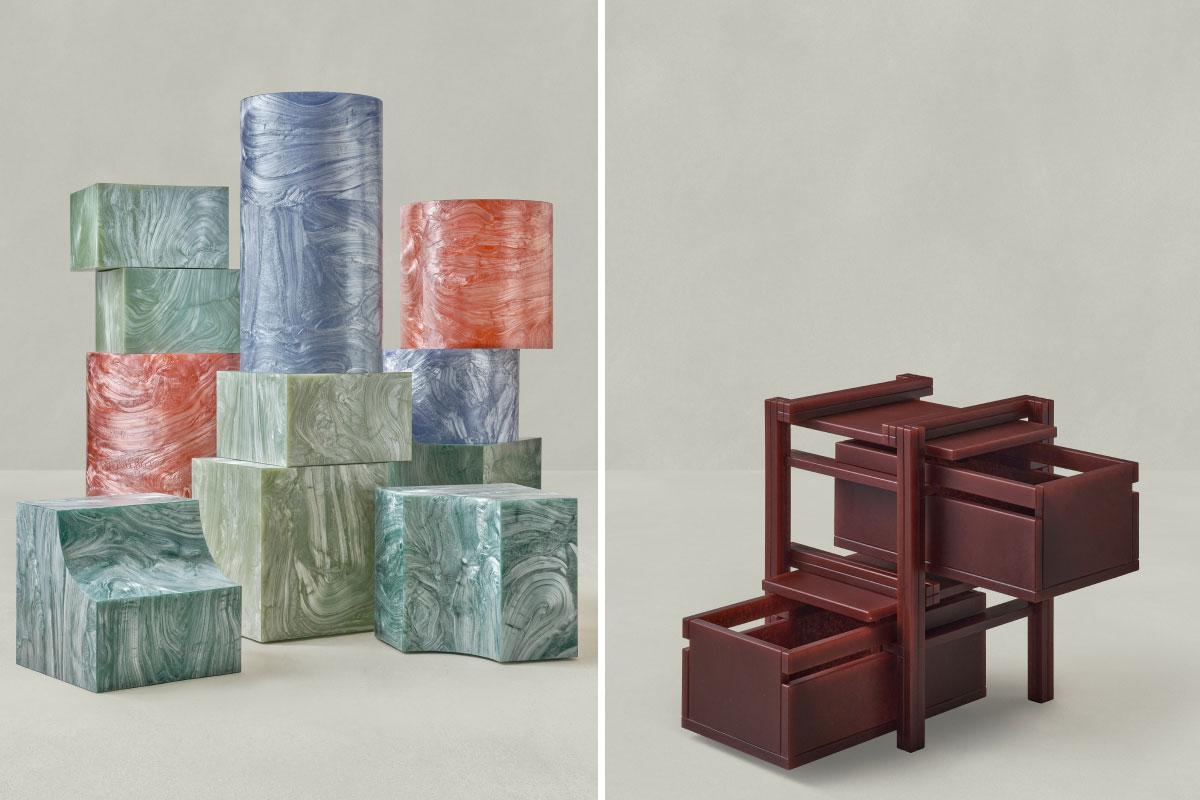
Image on the left: Plasticiet, Mother of Pearl, Picture by Pim Top Image on the right: Plasticiet, Karlite Pomegranate object 2, by Pim top
One striking feature of your panels is that they don’t hide the past of the material - the fragments remain visible. Is that a political choice (to show the waste) or an aesthetic one (like terrazzo, like stone veins)?
It’s both. We want our materials to carry their history with pride. The traces of past use, the subtle imperfections, they remind us that transformation doesn’t erase origin. In that sense, the visible fragments are both a design decision and a statement. that waste can be beautiful when giving it new form and function, so it can be reintroduced in the world as a new product or design.
You also create custom materials - how does that process work?
We ask clients to share their references such as RAL/Pantone color, sketches or renderings, a visual description, the application etc. We then create a set of four samples, and send them to the client. This way they can select which fits their project best. If it’s not quite there yet, we refine and repeat this process until it's right.
In your opinion, what is still missing for recycled materials to become the norm rather than the exception?
Consistency and infrastructure. Many recycled materials are still produced on a small scale, with unpredictable availability or quality. We need broader systems that support recycling as standard practice, not as an afterthought. And that demands an industry-wide shift. At the same time, designers, architects, and clients need to trust that recycled materials can be both beautiful and reliable. Changing that mindset, seeing recycled plastic not as a compromise but as a valuable, high-quality material in its own right is crucial for real progress.
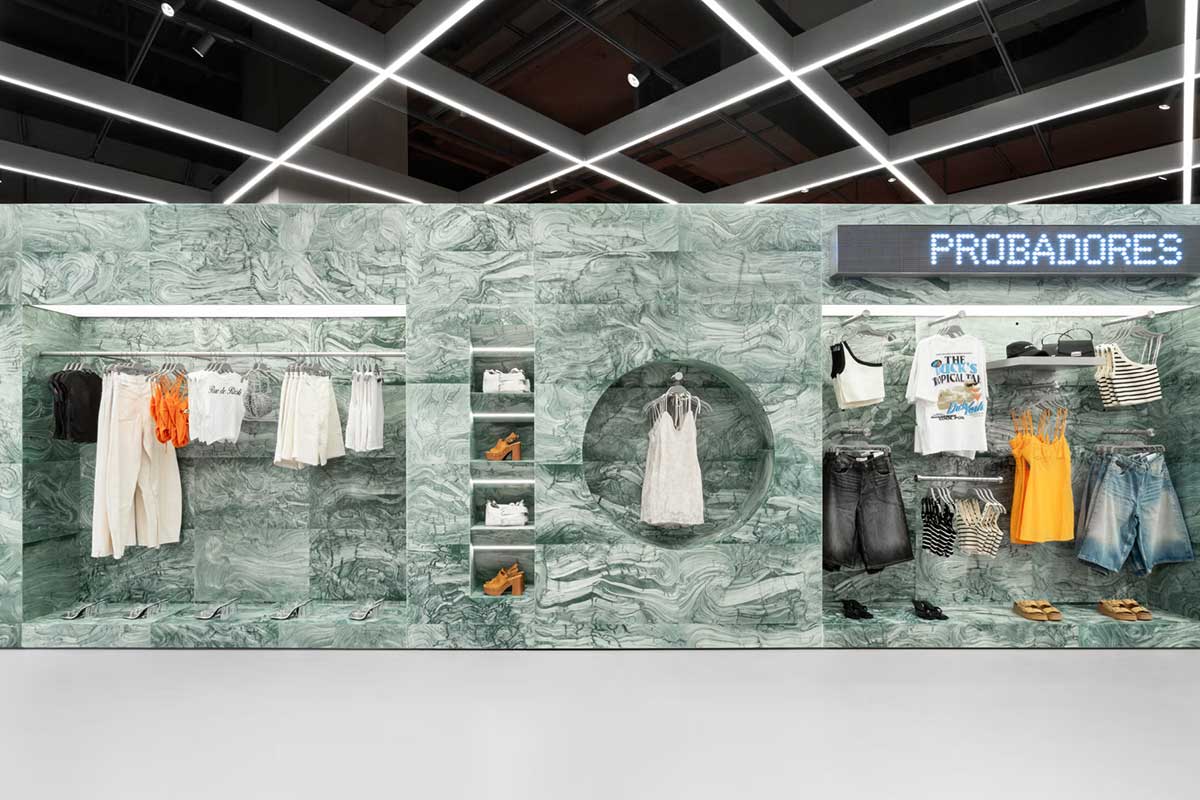
Plasticiet x Bershka, store design by OMA
This year’s Fuorisalone theme is “Be the Project.” What does that mean to you?
Right now, it’s simply the way we think and approach our work. By transforming plastic into durable, beautiful surfaces, we demonstrate that it ought to be treated as a valuable resource, not as waste. Just as with so many other products in our consumerist world, this implies an industry-wide shift: we cannot ignore the versatility and lasting value of materials that are too often deemed disposable. We know we’re not alone in this. From clients and consumers choosing truly sustainable products, to designers and architects selecting responsible materials, to contractors embedding waste reduction into their work, everyone has a role to play. Sustainable design cannot rely on one company, one invention, or one solution. It’s a collective collaborative effort. Which makes it more fun, we’ve had many interesting conversations and projects come through giving us the chance to experiment, collaborate and play around with new ideas.
Tag: Be the Project Interviste Design Product Design Fuorisalone 2026
© Fuorisalone.it — All rights reserved. — Published on 02 December 2025
 Iscriviti alla nostra newsletter