The role of error in teaching, the design process, and contemporary design culture
A Full Professor of Industrial Design and Dean of the School of Design at the Politecnico di Milano, Francesco Zurlo discovered design only after graduating in Architecture. As he recounts in an interview: “I quickly realized I wasn’t suited for that discipline. Failure turned into a personal revelation: the confirmation that my initial idea was an illusion, not a springboard toward success in the classic sense.”
Within the broader reflection on Fuorisalone 2026’s theme — Be the Project — Zurlo’s perspective becomes an opportunity to delve into the role of error in education, teaching, and the creative process. It is an invitation to recognize error as a constitutive part of design, and a central element of design culture.
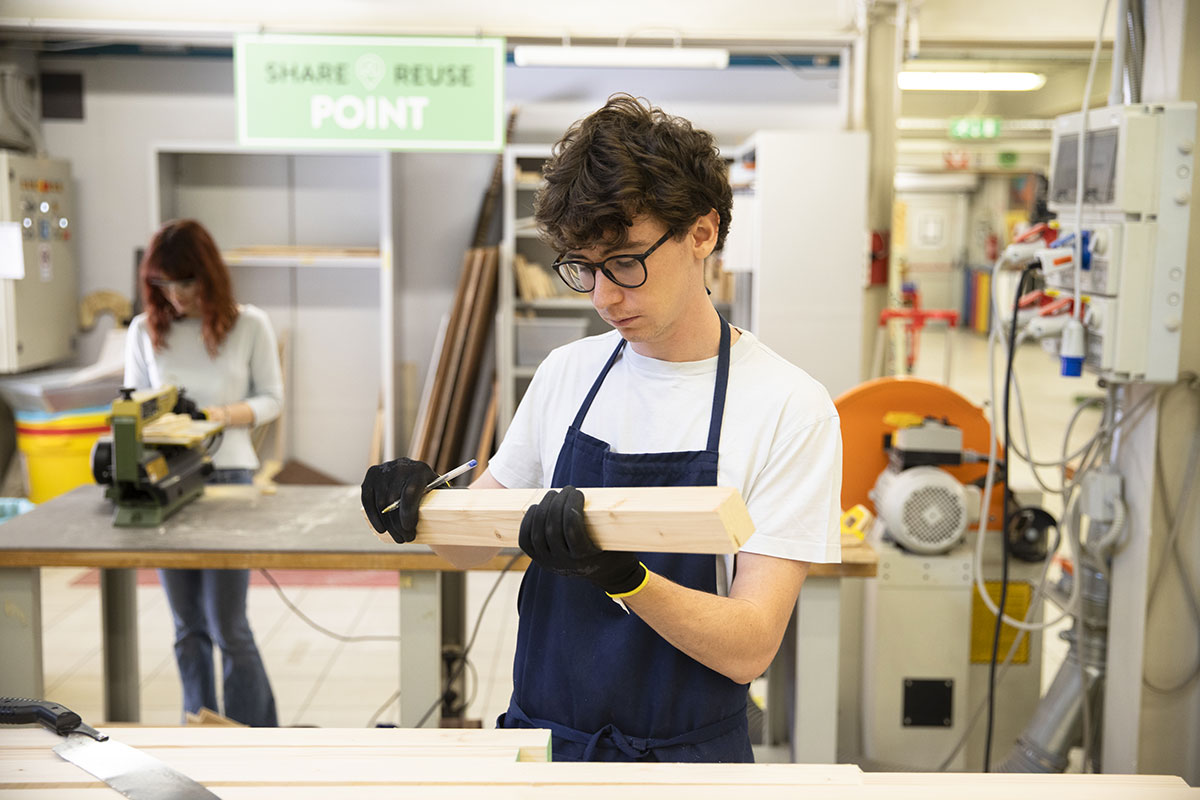
Photograph by Marco Dapino
Based on your own experience, what role does error play in the education of a designer?
Assessing error is intrinsically tied to the nature of the object being designed. We cannot treat error uniformly: when dealing with design that interfaces with manufacturing and tangible physical products, error can be extremely costly. The designer must anticipate every potential problem with deep critical thinking. Consider, for instance, designing a plastic product destined for injection molding: failing to evaluate something as simple as the draft angle can jeopardize investments worth hundreds of thousands of euros. Here, error must be prevented because its impact — economically for the company and environmentally — is not easily reversible.
Conversely, in the world of bytes — digital services, interfaces, software — tolerance to error is much higher. Here we have a powerful ally: "undo”, the ability to experiment without consequences, take a step forward and then step back — a small design rewind. This ease of correction makes error less costly and, as a result, more acceptable within the experimental process.
In short, error is inevitable in design, but its acceptability and the methods for managing it depend on the specific context. The designer’s skill lies in evaluating and anticipating the “cost” of that error.
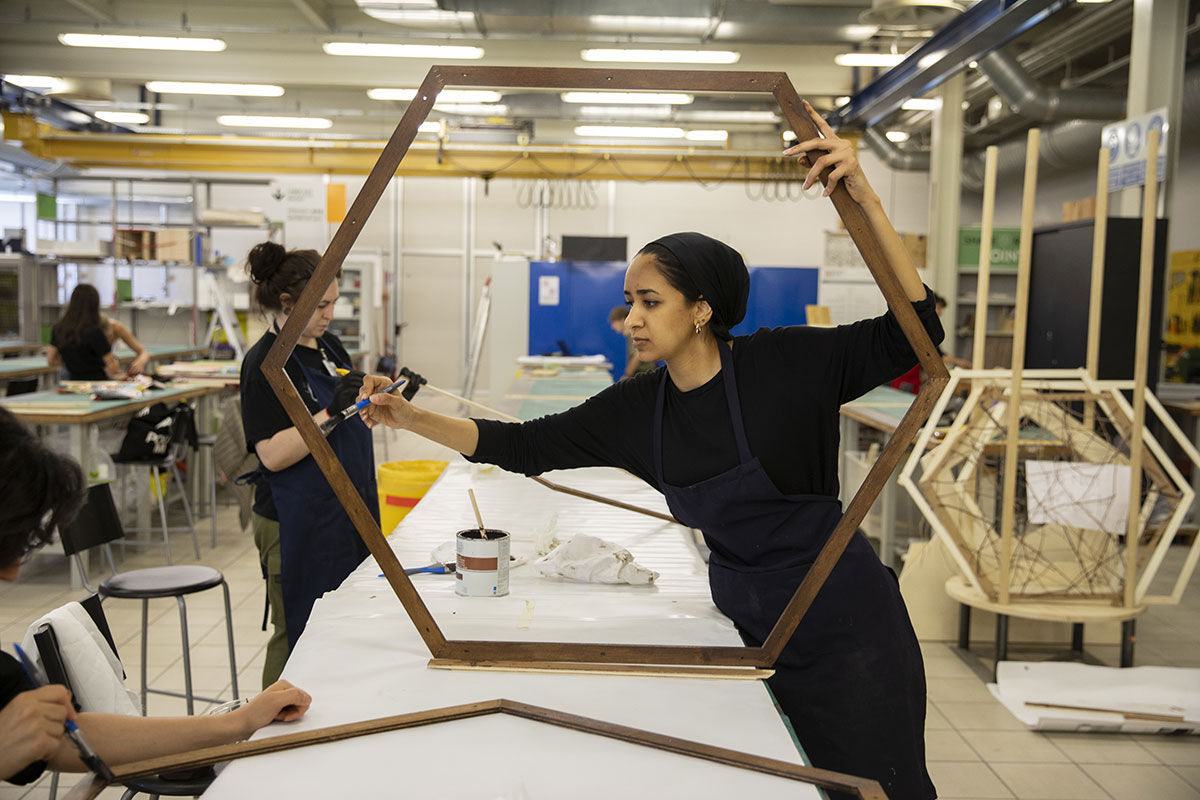
Photograph by Marco Dapino
A designer should act as a “director of processes” able to anticipate error. How is verification during development supported and innovated in teaching?
Today, this verification is strongly facilitated by rapid prototyping. If we analyze Design Thinking, we see that beyond reframing problems, its key element is prototyping: bringing the idea into tangible form quickly so it can make sense (sense-making) and building consensus by involving potential users through focus groups and simulations.
The digital world has positively influenced the design of physical objects. Google engineer Alberto Savio developed the concept of pretotyping — rather than prototyping. The idea is to test the interest and functionality of an idea using minimal, fast tools, such as simulating an app with a series of post-its, even before investing in it. By osmosis, this speed of verification has transferred to tangible design: for example, digital 3D printing now allows rapid testing of certain aspects of an idea (form, ergonomics, material combinations), thus helping avoid downstream errors.
Innovation in verification is how contemporary design attempts to neutralize error.
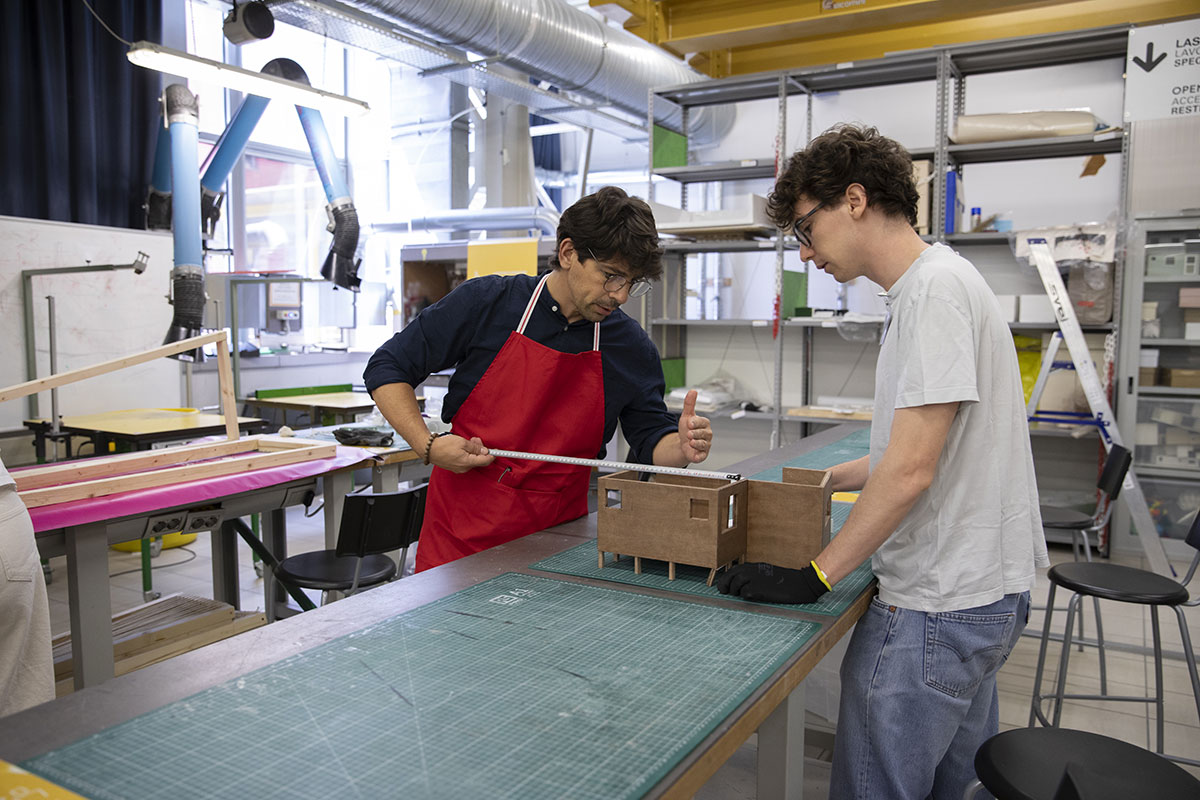
Photograph by Marco Dapino
How has the approach to error and experimentation changed in design schools?
The core issue is a matter of soft skills. Culturally, in Europe and Italy, failure is still perceived as the loss of a definitive chance. This contrasts sharply with the North American model, where the central principle is Fail Fast: the encouragement to try, do, and if you make a mistake — so be it — because you still gained meaningful learning.
Our goal in education is to transfer a different cultural model. This translates into teaching practices that emphasize group work, fast hypothesis testing, and the ability to negotiate and engage in critical discussion. A valuable reference is the Japanese concept of Hansei (self-reflection), composed of two ideograms. Many students are constantly projected toward the “next” thing, without stopping. Hansei is the act of pausing, looking at what you’ve done, reflecting, and understanding how not to repeat mistakes. Recovering this dimension of self-reflection is fundamental in today’s training, countering the constant race toward the future.
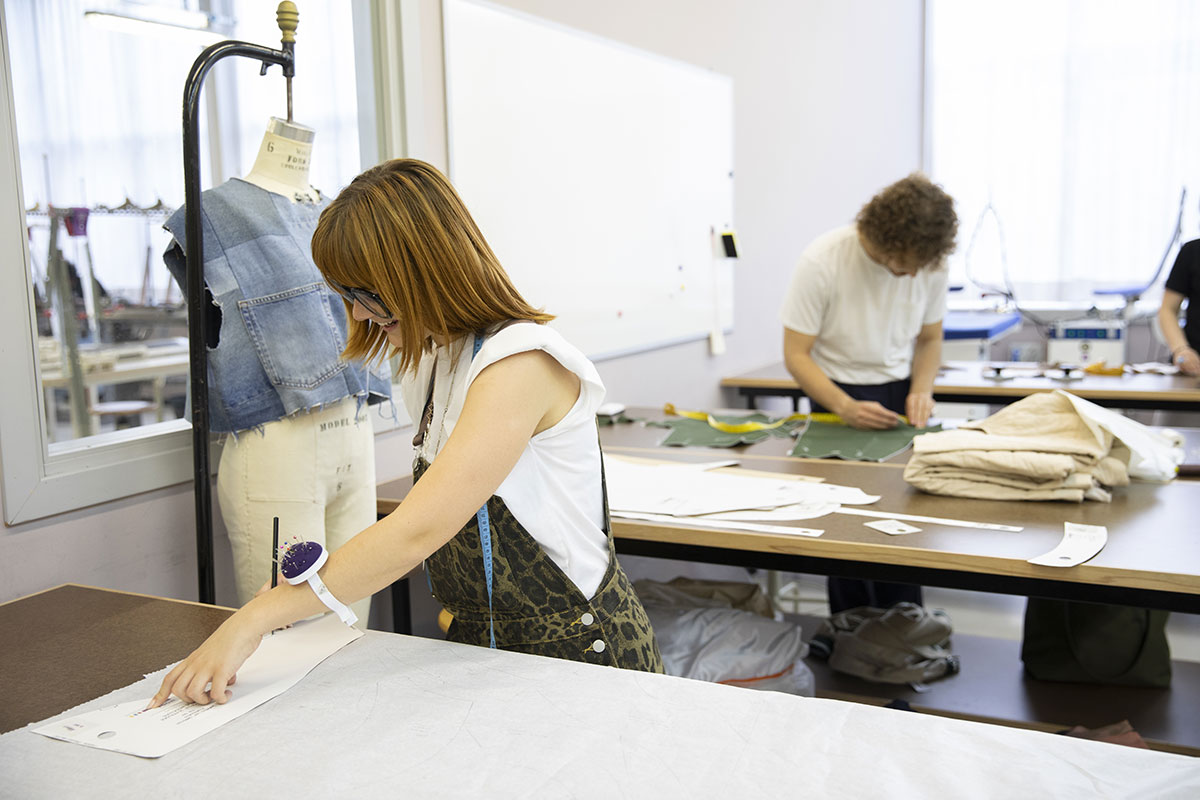
Photograph by Marco Dapino
Considering today’s complexity, as Dean, do you think it is necessary to reintroduce the more “humanistic” disciplines that were once more present?
There is an essential need to strengthen humanistic disciplines. We introduced Professor Volontè for the sociology of innovation, and contributions from semiotics have also been fundamental. When I coordinated the Integrated Product Design program, I introduced a Life Design course in collaboration with psychology to develop soft skills.
The goal is twofold: to help students reflect on themselves in order to understand their mistakes, and to make them capable of envisioning their future. I learned the word “hopefulness”, a dimension often overlooked by students who live only in the moment but need to understand where the “building blocks” they are assembling will lead them.
I also believe it is crucial to develop critical reading skills. This becomes even more important with the rise of powerful technologies such as AI. Without critical capacity, one risks accepting any output and being constantly misled. Designers must understand the ethical implications of each design choice and move beyond a simple black-and-white view to perceive the infinite shades in between.
Finally, the humanistic dimension must integrate with more contextual aspects, such as data literacy — a critical understanding of data, where results are not accepted without questioning. This urgency is perfectly captured by a story told by writer David Foster Wallace during a Graduation Day speech: an older fish asks two younger fish, “Hi boys, how’s the water today?” And they look at each other and reply, “What’s water?”
This image is powerful: designers must never forget the water they swim in.
Tag: Be the Project Interviste Design Politecnico di Milano Product Design Fuorisalone 2026
© Fuorisalone.it — All rights reserved. — Published on 10 December 2025
 Iscriviti alla nostra newsletter