DON'T CALL ME COLLECTIBLE!
Vestigia
05.07 - 26.09 2026
An Exhibition curated by Cosimo Bonciani
-
Villa Marie
Via della Boccaccia, 50
Vorno (Lucca)
Between Pietrasanta and Lucca, TABLEAU and VESTIGIA trace a different geography for contemporary design, where territory is no longer a backdrop but an active part of the creative process.
Design once followed a predictable map. Ideas were developed in studios, objects were crafted in manufacturing districts and eventually presented at trade fairs, where projects entered the public eye. That geography still exists, but it no longer tells the whole story. Milan remains the industry's international meeting point, yet some of today's most compelling research is taking shape elsewhere, in places where making remains embedded in everyday life and where projects are allowed to unfold at a pace dictated by experimentation rather than exhibition schedules.
Tuscany is becoming one of those places. Not as an alternative to Milan, nor as a satellite of Design Week, but as a territory where craftsmanship, landscape, hospitality and cultural production increasingly operate as parts of the same ecosystem. What draws designers, artists and curators here is not simply the region's heritage or visual identity, but the possibility of working within a living manufacturing culture, where knowledge still circulates between workshops, artisans and producers.
TABLEAU's decision to establish part of its research in this context reflects precisely this shift. Based in Copenhagen, the gallery has gradually evolved beyond the conventional role of an exhibition space, becoming a curatorial platform that builds relationships between designers, makers and places long before objects are publicly presented. While much of contemporary design still revolves around the finished piece, TABLEAU seems more interested in the conditions that allow that piece to exist in the first place. Tuscany is not a destination to illustrate. It is a productive landscape with which to think.
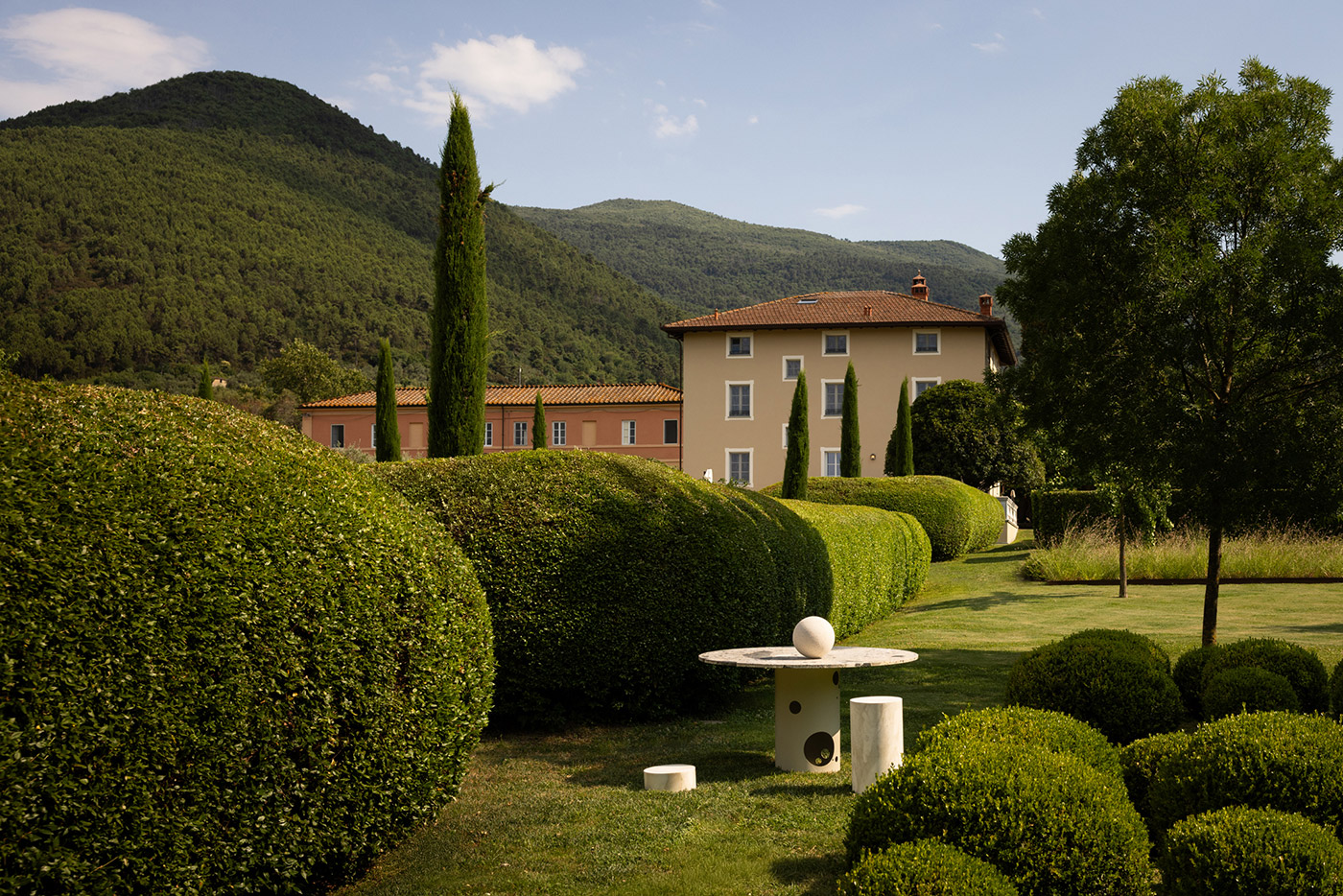
Villa Marie/ Silos Table di Tommaso Spinzi / Ph di Dario Borruto
This is the framework behind the relationship between OUTSIDERS, the residency programme developed with LABottega in Pietrasanta, and VESTIGIA, the exhibition platform returning to Villa Marie in Vorno from 5 July to 26 September 2026 with DON'T CALL ME COLLECTIBLE!, curated by Cosimo Bonciani. They are not separate initiatives. They are two stages of the same process. One belongs to research, shared making and conversations with artisans. The other opens that process to the public while preserving its connection to the territory that generated it.
The exhibition begins long before the exhibition itself. That may be the most significant aspect of OUTSIDERS. Designers do not arrive to produce a collection within a predefined schedule. They temporarily inhabit a manufacturing environment, confronting materials, techniques and forms of knowledge that inevitably reshape their initial ideas. It is a slower rhythm than industrial production and a different one from exhibition making, allowing projects to evolve, change direction and absorb the unexpected. Research is no longer separated from production. It happens through it.
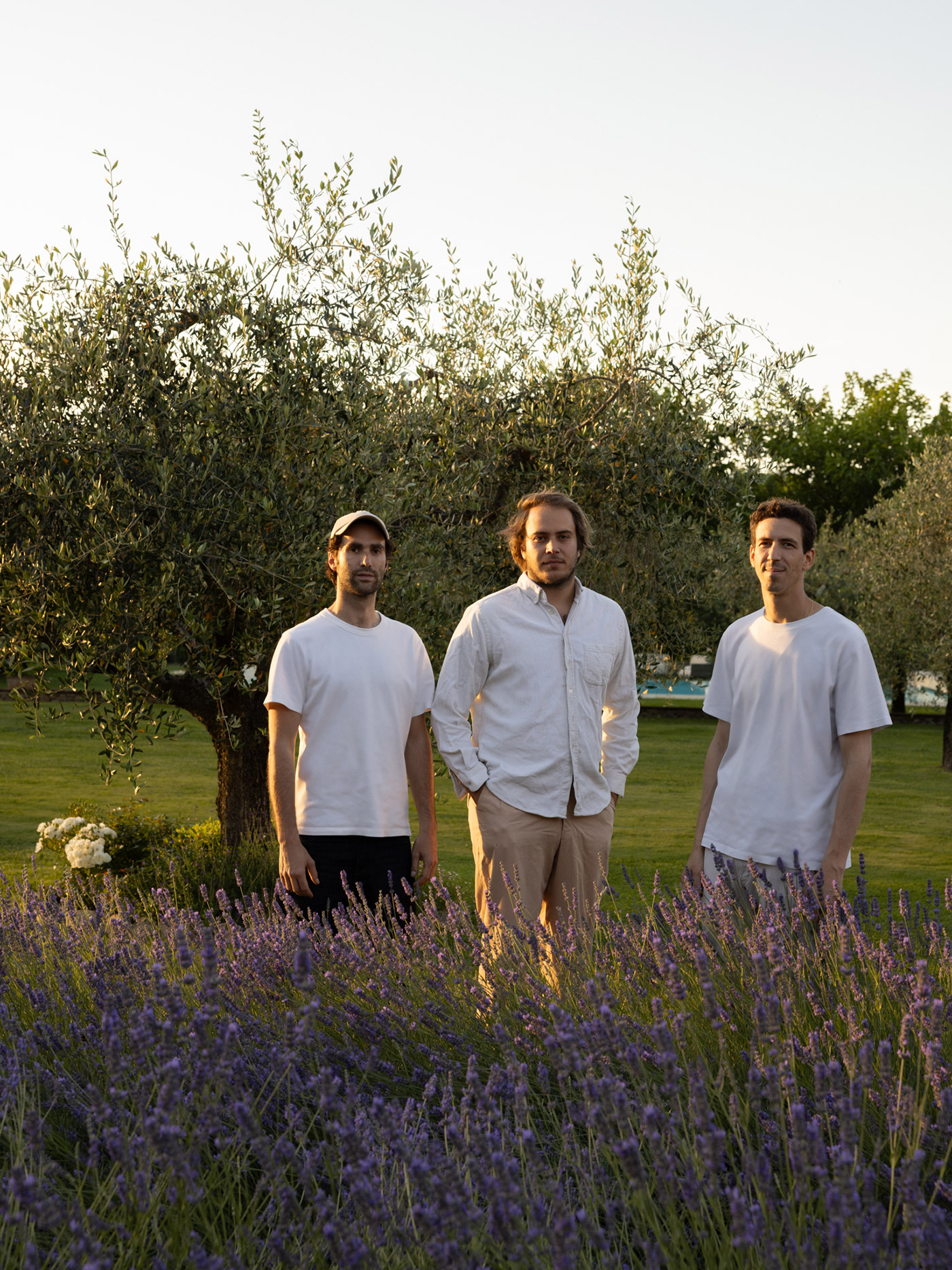 Ph di Dario Borruto
From this perspective, the exhibition title becomes more than a provocation. DON'T CALL ME COLLECTIBLE! is neither a rejection of the market nor a critique of collecting. It questions a definition that increasingly describes economic positioning before it describes design itself. The expression collectible design has undoubtedly expanded the visibility of limited edition works, yet it often shifts attention towards rarity before considering the process that made the work possible. Bonciani's curatorial statement proposes a different reading. Before an object exists there is research, doubt, dialogue, material investigation and the willingness to rethink an initial intuition. The finished piece is simply the visible outcome of a much longer journey.
Villa Marie plays an equally important role. Like a growing number of places emerging across Europe, it resists traditional definitions. Neither gallery nor museum, neither hotel nor cultural institution, it belongs to a new generation of spaces where hospitality becomes cultural infrastructure. Here architecture, landscape and exhibition remain inseparable, allowing works to engage directly with their surroundings instead of being isolated within the neutrality of the white cube. The site does not merely host the exhibition. It actively shapes the way it is experienced.
The curatorial text summarises this position through a remarkably simple statement: "VESTIGIA is not an exhibition about Tuscany. It is an exhibition that happens through Tuscany." The distinction may appear subtle, yet it fundamentally changes the way the project can be understood. Territory is no longer treated as narrative or scenery. It becomes a design grammar composed of people, skills, materials, economies and cultural memory that collectively make the work possible.
The selection of participating designers reflects this approach, bringing together practitioners from different generations and cultural backgrounds, including Duccio Maria Gambi, Francesco Maria Messina, Sara Ricciardi, Laurids Gallée, Jacob Egeberg, IAMMI, Older Studio, TERRÆSTUDIO, Leonardo Cappellini, Filippo Mannucci, Francesco Doria, Jonathan Bocca, Costantino Gucci, Millim Studio, Neemesi, Tommaso Pardini, Tommaso Spinzi and TABLEAU and Bloc Studios.
Rather than assembling a conventional group exhibition, VESTIGIA creates what its manifesto describes as a temporary ecosystem: a shared environment where different materials, practices and design languages coexist without seeking stylistic uniformity. It feels less like a sequence of individual works than a temporary community brought together by a common process.
Perhaps this is VESTIGIA's most valuable contribution. Its ambition is not simply to question the expression collectible design, It reminds us that every object begins long before it reaches the gallery. Before the market comes research. Before collecting comes making. Before the object comes the territory, the people, the conversations and the material intelligence that slowly shape an idea.
This is where design continues to build its cultural value today. Not only through exhibitions or fairs, but through places capable of generating relationships, knowledge and production over time. If a new geography of contemporary design is emerging, it may well be defined less by the concentration of events than by the ability of certain territories to become active participants in the creative process itself.


 Iscriviti alla nostra newsletter