A journey through the masterpieces of the artist who redefined the island's identity
Lanzarote is a place outside of time—a volcanic island shaped by eruptions and earthquakes that have sculpted surreal landscapes. Its soul is deeply connected to both art and nature, thanks to the work of César Manrique, an artist and architect born in the 1920s in Arrecife, now the island’s capital.
Multitalented and visionary, Manrique studied in Madrid and made a name for himself across Europe and the U.S. He even lived in New York—then the beating heart of contemporary art—but chose to return to his native island in the 1960s, turning Lanzarote itself into his masterpiece.
Volcanic rock, natural caves, craters, and ocean winds shaped his architecture—not just buildings, but true extensions of the landscape. His work is a dialogue with the land, its scale and its substance. These creations can’t be replicated—they are born from a deep respect for the places they inhabit. The result is a magical and unrepeatable harmony, where the uniqueness of nature merges with the uniqueness of art. That’s the spirit of the Isla diferente, the “different island” that inspired Manrique’s vision.
Here’s a guide to his most iconic architectural works on the island.
Fundación César Manrique – Tahíche
Built on lava flows from eruptions between 1730 and 1736, this was Manrique’s own home and the clearest expression of his bond with nature. Above ground, a modernist take on traditional Canarian architecture: open spaces, natural light, functional simplicity.
Below, five natural volcanic bubbles transformed into living spaces—lounges, a studio, pool, BBQ area, and even a small dance floor. Visiting this house is an immersive experience, with every room inviting a connection between art, nature, and volcanic light. Inside, you’ll find Manrique’s personal art collection, along with works by Picasso and Miró. Today, the foundation hosts temporary exhibitions and cultural events.
House Museum César Manrique – Haría
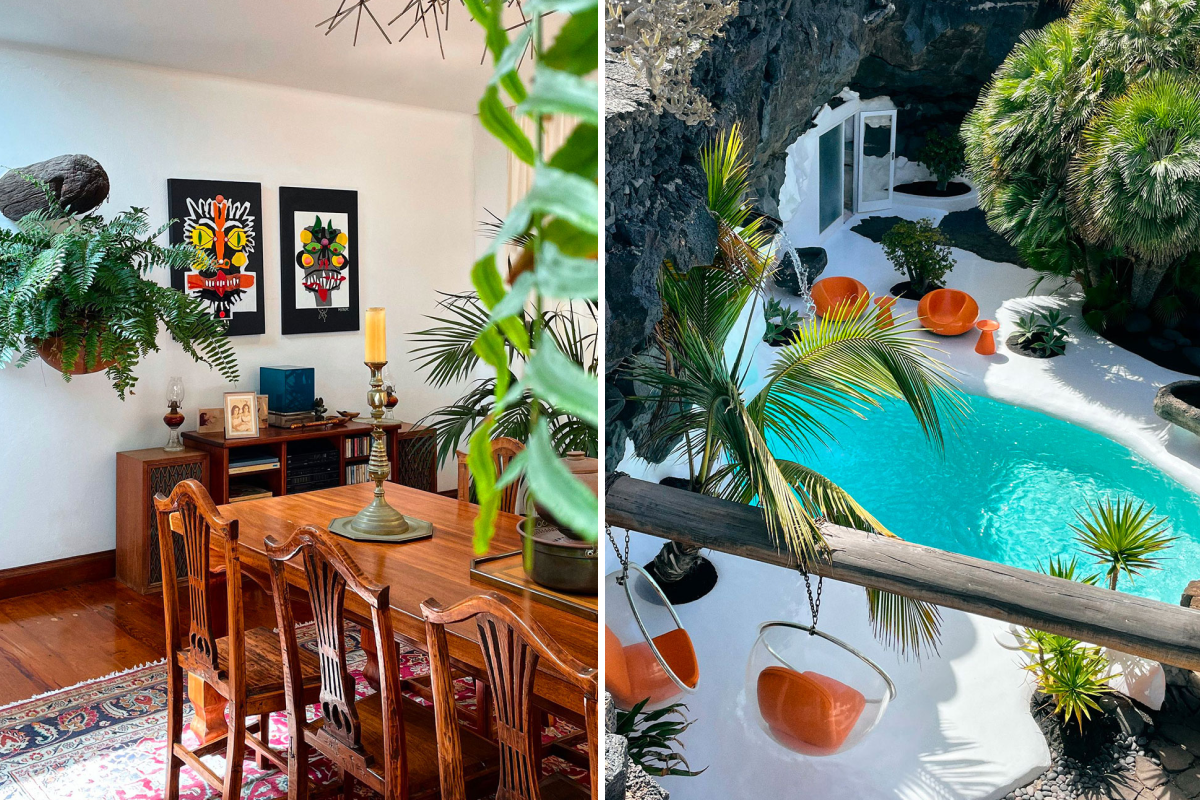
Located in a lush palm grove in the north, this was the artist’s final home. Once a farmhouse, it was transformed by Manrique into a peaceful, meaningful retreat: white stucco walls, local stone, sculptural furniture, paintings, sketches, photos, and personal mementos. Walking through the house, you feel the slow rhythm of rural life and creativity. The garden frames the space, and his studio has been left untouched—frozen in time.
Jameos del Agua
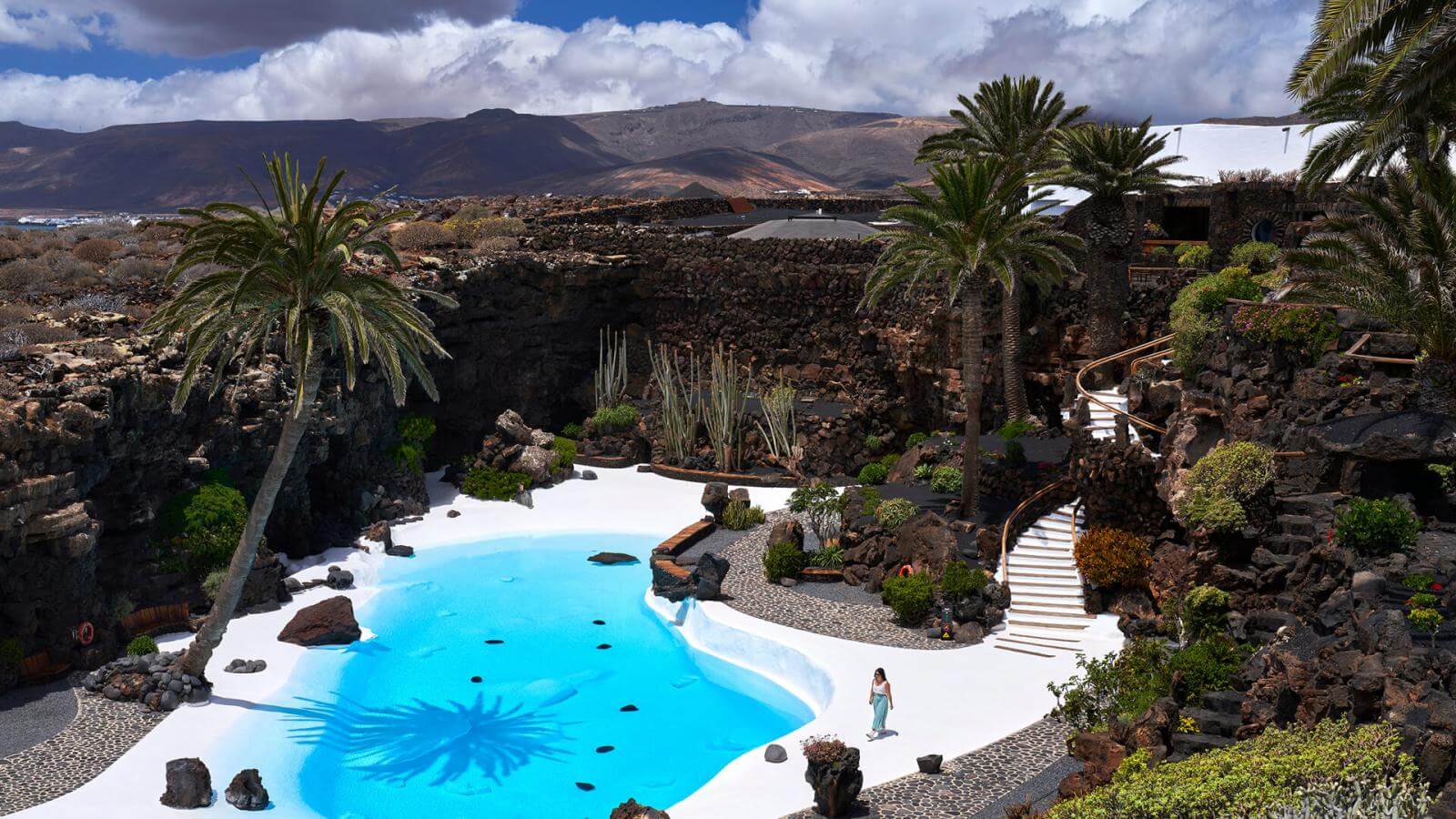
Perhaps Manrique’s most famous work, set inside a volcanic tunnel. A perfect blend of geology and architecture, with no forced structures. It features a natural auditorium with perfect acoustics, an artful pool, hanging restaurant, gardens, and a famous underground lake inhabited by blind albino crabs (Munidopsis polymorpha). Every detail—from staircases to lighting—respects the shape and material of the volcanic environment. A true multisensory space, unlike any other.
Mirador del Río
A stunning viewpoint overlooking the Atlantic and the island of La Graciosa—almost invisible from the outside, as it blends seamlessly with the cliff.
Inside, curved, flowing spaces invite contemplation. Panoramic windows embrace the landscape, while furniture, handles, and fixtures are designed to be touched and used as functional art. A space to reflect on nature as large-scale architecture.
Jardín de Cactus
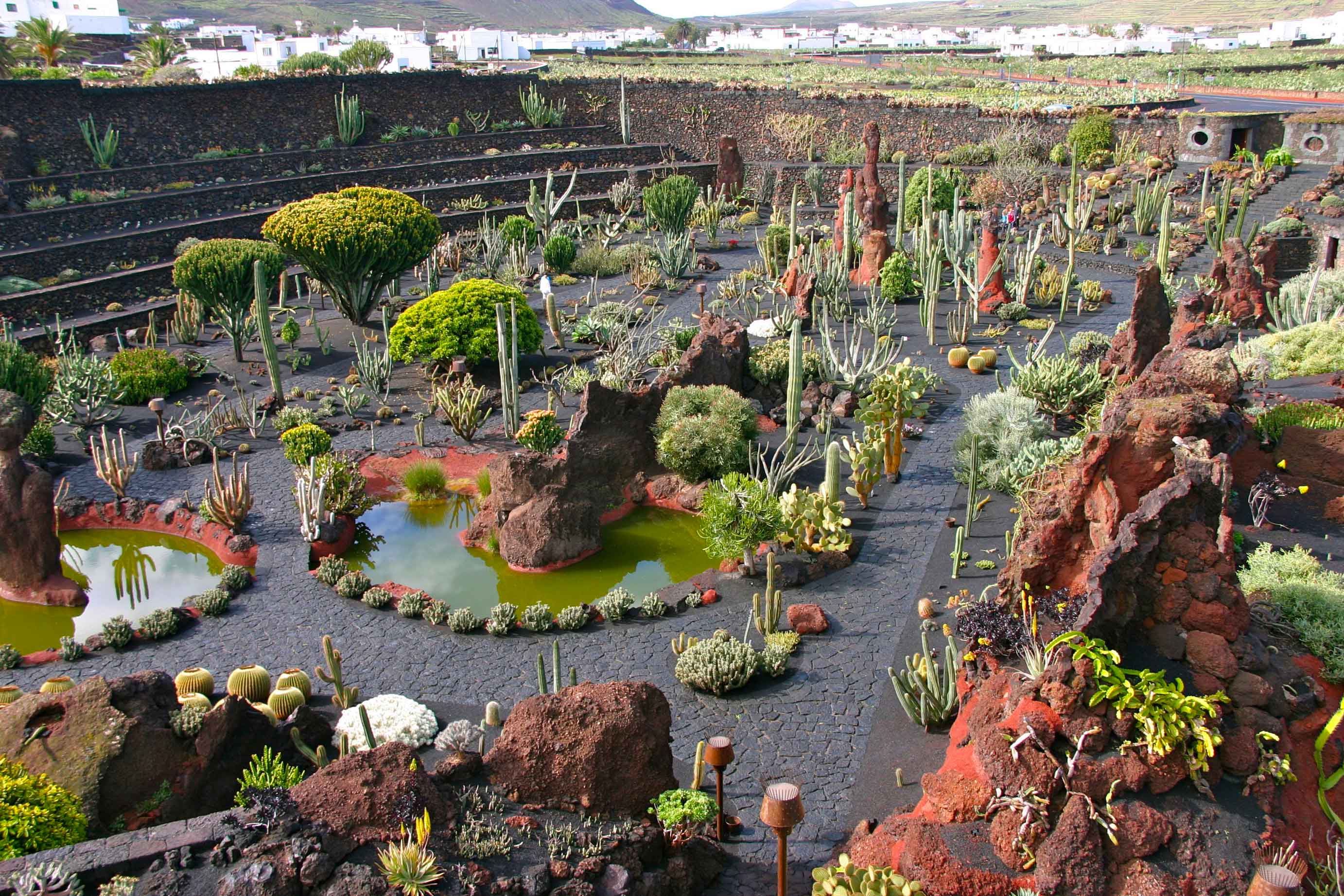
Designed in 1991 in a former volcanic ash quarry, this sculptural garden showcases more than 4,500 cacti from over 450 species, arranged in circular terraces like a natural amphitheater.
The restored windmill pays homage to the island’s agricultural roots. Paths, benches, and ceramics are beautifully integrated into the landscape, without disrupting it—a slow, thoughtful journey through nature, seen as art.

Museo del Campesino & Monumento alla Fecundidad – San Bartolomé
Opened in 1968, this space is a tribute to traditional rural life in the Canary Islands.
Manrique redesigned a farmhouse into a center with workshops, exhibition halls, a craft market square, a cave restaurant, and the striking Monument to Fertility—an organic tower made of fiberglass, symbolizing rebirth.
A collective space that celebrates the dignity of farming life with a pop, playful style deeply rooted in the land. Entry is free, and the space often hosts markets and events.
Hotel Meliá Salinas – Costa Teguise
A landmark in hotel architecture, designed by Fernando Higueras with landscape and color elements by Manrique.
Terraced levels guarantee sunlight and sea views in every room. Lush gardens, lagoon-like pools, murals, and artistic details make it a fully immersive experience where contemporary design meets the art-nature philosophy of Manrique.
Castillo de San José – Arrecife
Once a military fortress, this building is now the International Museum of Contemporary Art (MIAC).
Renovated by Manrique, it preserves its historical structure while embracing contemporary art. Works are displayed both inside and outdoors, blending culture with coastal views. His architectural touch enhances the original without erasing it.
El Diablo Restaurant – Parco Nazionale di Timanfaya
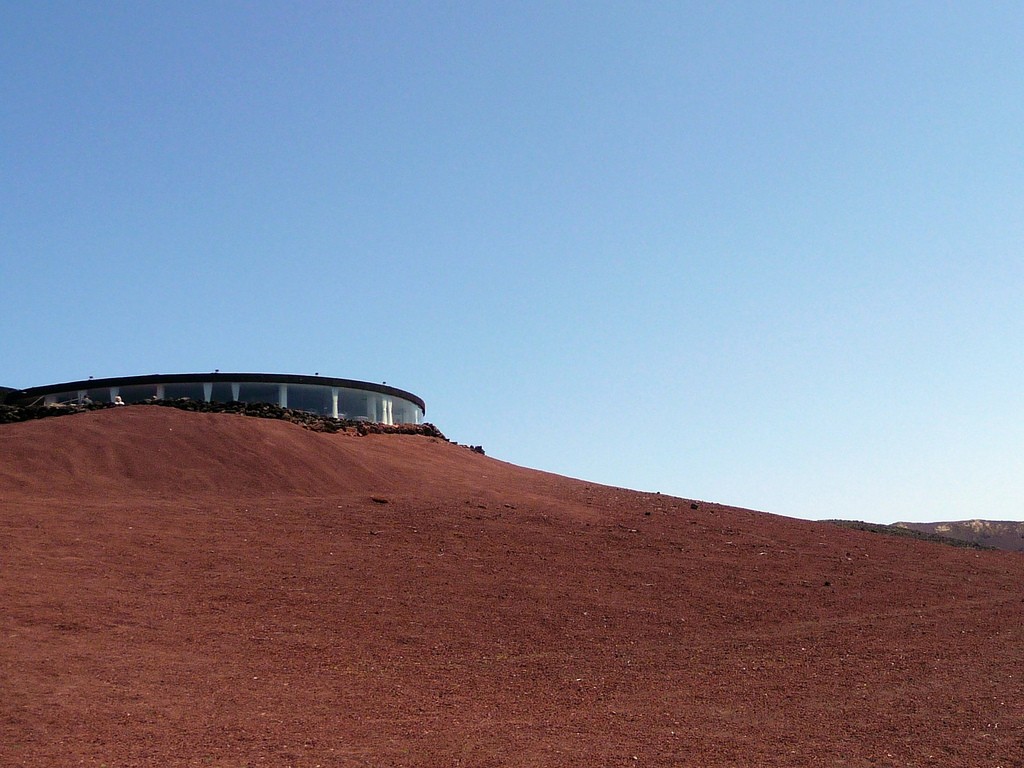
Located inside the otherworldly Timanfaya National Park, El Diablo is a restaurant designed by Manrique where the grill is powered by geothermal heat from the volcano below.
The building is integrated into the lunar-like landscape and offers a dining experience rooted in nature, sustainability, and art—a perfect symbol of Manrique’s unique vision.
Tag: Architecture Design Travel
© Fuorisalone.it — All rights reserved. — Published on 30 October 2025
 Iscriviti alla nostra newsletter