Between growth, complexity, and new ways of experiencing the event, our way of living - and interpreting - Fuorisalone is changing
Now that Milano Design Week 2026 has come to an end, opinions, analyses, and rankings are everywhere. An almost inevitable exercise for an event that, because of its scale and visibility, exposes itself more than any other and turns everyone into a design pundit. But before focusing on individual opinions, it may be worth taking a step back and looking at the system as a whole.
Because of its broad, layered, and multifaceted nature, Milano Design Week can hardly be reduced to a single interpretation or a clear-cut judgment: it is a complex ecosystem made up of different levels, different audiences, and objectives that often do not coincide. And this is also why, year after year, it continues to maintain an international relevance that is difficult to replicate elsewhere. The numbers confirm it. Even within a far from simple geopolitical and economic context, the 2026 edition recorded growing figures. A result that should not be taken for granted and that, more than anything else, reflects the system’s ability to keep attracting companies, designers, and audiences from all over the world, confirming itself as a privileged platform for relationships and visibility. In this sense, it is interesting to observe how many companies continue to invest in Design Week not only as an exhibition moment, but as a strategic space, in some cases even anticipating their presentations compared to traditional timelines: a clear sign of confidence in the relational value of the event.
© Lorenzo Fraschetti
At the same time, this growth has brought the system to a level of complexity that today requires new ways of reading it. Over the years, expansion has been the main driving force: new “districts,” new formats, and a progressive opening toward increasingly diverse languages and sectors. Today, this multiplication creates an extremely rich surface, but also one that is more difficult to interpret. It is not only a question of quantity, but of orientation and attention. Within this constant density, attention becomes fatigued: if everything asks to be seen, nothing truly manages to be looked at. In a context where everything is accessible and simultaneous, the challenge is no longer finding content, but deciding what truly deserves attention. Not because value is missing, but because it is distributed, diffused, no longer concentrated in a few recognizable places or moments. This is where a new necessity emerges: not so much reducing, but knowing how to select.
© Lorenzo Fraschetti
Fuorisalone.it, as both a platform and guide to the event - the first digital guide dates back more than 25 years - has always had a dual objective: offering a complete mapping of the event and tools to build a personal and conscious itinerary. In recent years, however, the way content is consumed has changed. The active construction of a personal route has been accompanied and partly replaced by a more passive mode, mediated by editorial formats, guides, and lists conceived as “shortcuts”: useful tools, but ones that often standardize choices, reducing the space for autonomous exploration.
This mechanism is not specific to Fuorisalone alone; rather, it reflects broader dynamics - particularly evident here and close to the theme of overtourism - concerning the relationship between people, places, and experiences. In other words, a mechanism that responds to logics of visibility, but risks flattening the experience, shifting the focus from discovery to confirmation. The question therefore changes: is the event model itself being questioned, or the way we experience it? A matter not only of accessibility and communication, but also of individual critical capacity. To read this complexity, it is not enough to focus on queues, gadgets, or isolated episodes: they offer only a partial vision, one that fails to capture the value of an ecosystem capable of generating connections and content on an international scale.
© Lorenzo Fraschetti
It is also interesting to observe how, within this scenario, the approach of companies is changing. Their presence is no longer only exhibition-based, but increasingly narrative and relational. Brands - from design to fashion, from automotive to technology - create experiences that communicate visions even before products, inevitably changing both timing and formats. This opens up another level of interpretation concerning the role of companies and the continuing - far from diminishing - interest in Milano Design Week from realities belonging to very different sectors. Being in Milan today does not simply mean presenting a product, but taking part in a collective ritual. It is a moment in which brands create experiences capable of expressing a vision, experimenting with different languages and formats - not always successfully - in an attempt to connect with an international community that matters not because of its size, but because of the quality of the opinion leaders that compose it.
© Lorenzo Fraschetti
This selection is reflected in access modes and in the construction of events themselves. If once there were only a few centralizing moments, today the system is more widespread and fragmented: overlapping events, more intimate formats, sometimes exclusive, where a “less is more” logic emerges. Time itself has expanded. Appointments for the professional audience already begin with miart 2026 and intensify until midweek, later leaving space for a broader and more accessible phase. Two temporalities and two modes of participation therefore coexist: one selective and relational, the other more inclusive and participatory. A tension that, precisely because it remains unresolved, continues to make Design Week relevant and able to evolve.
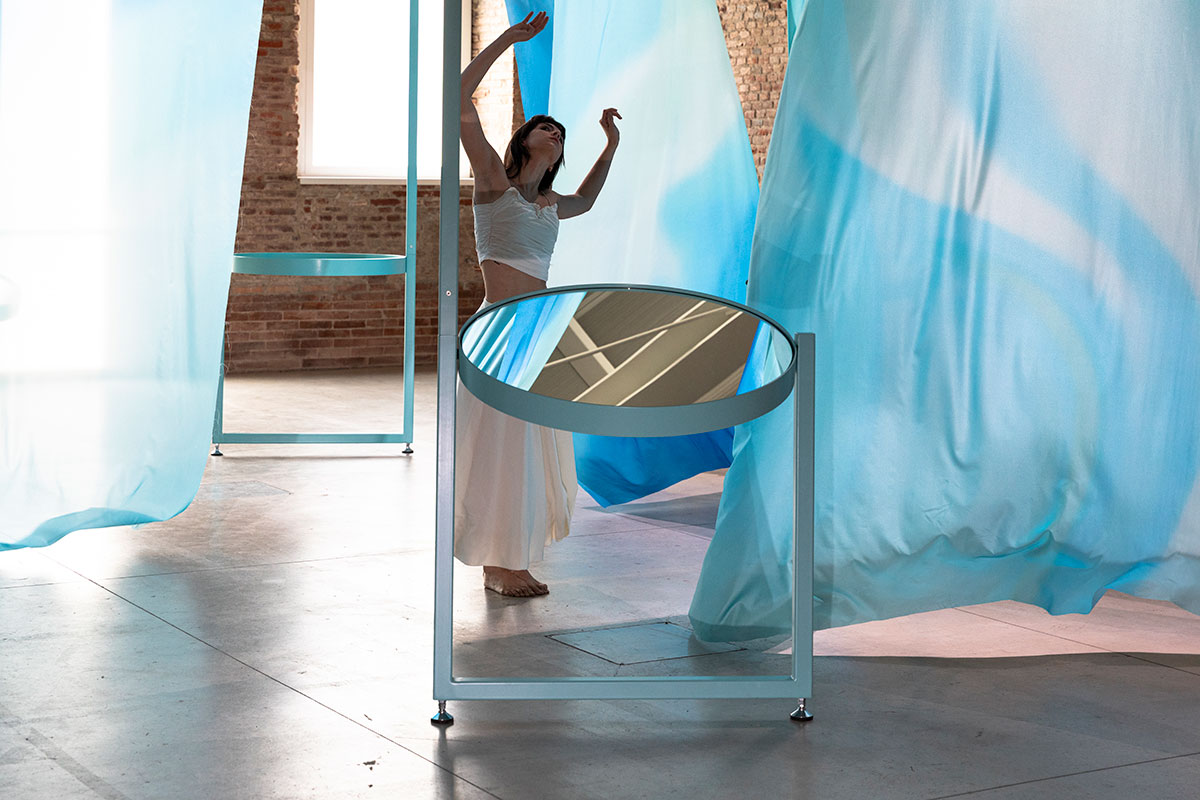
© Lorenzo Fraschetti
Looking at all these factors together, Milano Design Week today seems to be entering a more mature phase, because the way it is experienced and interpreted is changing. It is no longer only the place where people discover what is relevant, but a space in which to build a personal path. If until yesterday the question was “what to see,” today it is increasingly “what to choose.” With all its excesses, contradictions, and the exhaustion it entails, Design Week remains difficult to give up. Because it is one of the few moments in which design truly moves beyond objects and becomes experience, relationship, and exchange. And every year, in different ways, it continues to bring us back here.
Tag: Fuorisalone 2026 Milano Design Week Milan Design Fuorisalone
© Fuorisalone.it — All rights reserved. — Published on 07 May 2026
 Iscriviti alla nostra newsletter