High craftsmanship as a paradigm of “being project”: a mindset that transforms material, knowledge, and care into cultural experience, shaping contemporary making.
"Every material, when well worked, becomes precious"
These words, spoken by Pierluigi Ghianda — the Italian cabinetmaker who embodied the philosophy of high craftsmanship — encapsulate a principle that transcends technique and manual skill. Apparently simple, this phrase contains the essence of a cultural approach to making: a practice that is not mere execution, but thought, research, and design.
Every artisanal gesture thus becomes an act of knowledge, a bridge between material and meaning, between the past and the needs of the present.
The concept of “being project,” at the heart of this year’s Fuorisalone reflections, finds in Italian high craftsmanship its most authentic expression. To be project means not to limit oneself to producing objects, but to construct visions and meanings. It means translating intuition, knowledge, and care into matter — transforming every gesture into experience and memory. The craftsman is no longer merely an executor: he is a thinker, a designer, a storyteller, a guardian of tradition, and an innovator.
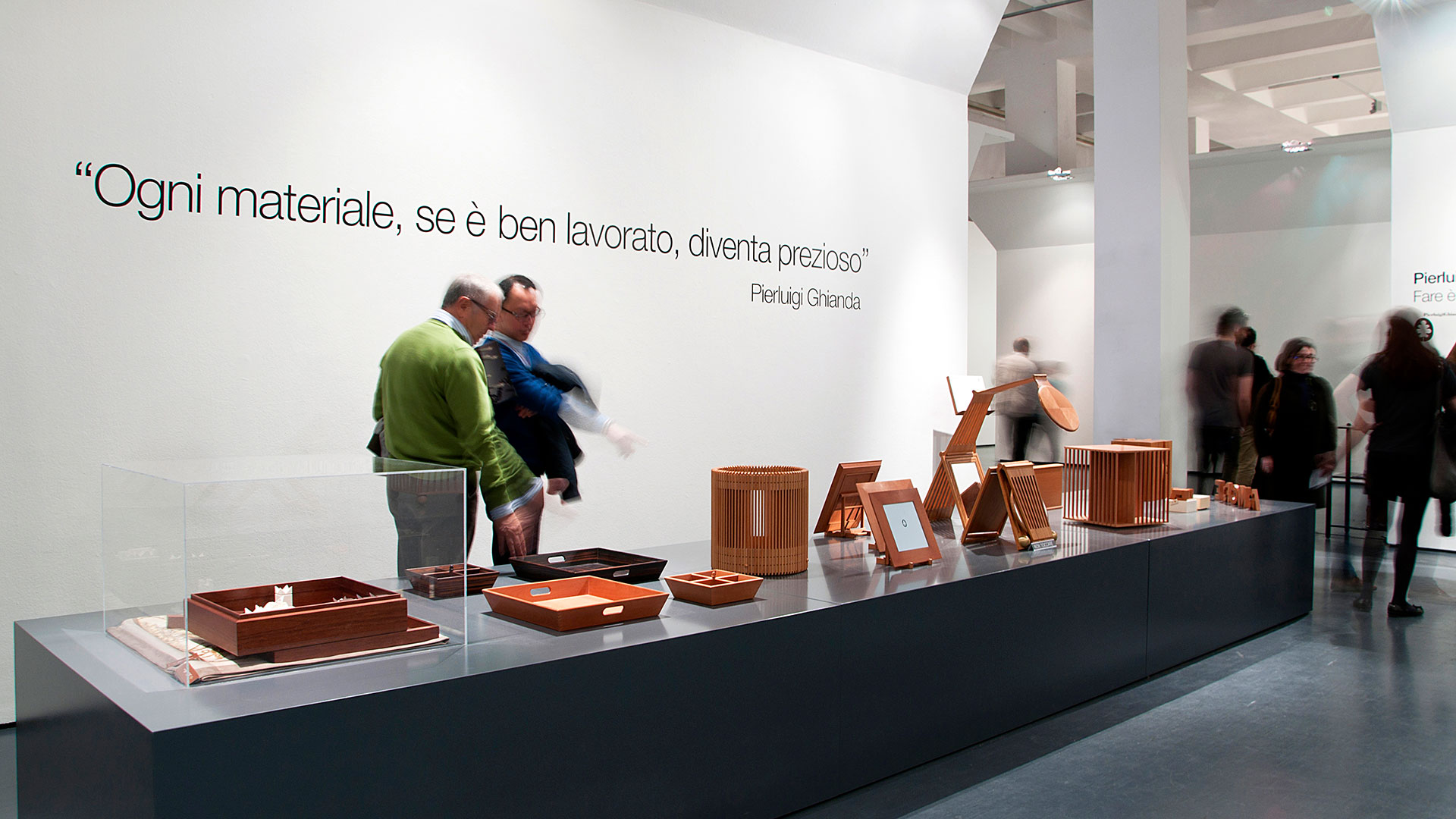
Pierluigi Ghianda – “Making Is Thinking. The Man Who Signs Wood” Triennale di Milano, 2013 – exhibition curated by Studiolabo and Aldo Colonnetti
In recent years, Italian high craftsmanship has regained unexpected centrality — not only as a manufacturing excellence but as an instrument of culture, identity, and design thinking.
During a recent meeting promoted by Artemest at the Istituto dei Ciechi in Milan, Paolo Casati, Creative Director of Fuorisalone.it, emphasized how Italian craftsmanship can act as a strategic driver for the future of design and enterprise. The event revealed how material quality, attention to detail, and conceptual depth can transform an object into both experience and narrative.
In an era dominated by mass production and global homogenization, craftsmanship emerges as a strategic resource. Value no longer lies in quantity or repetition, but in the ability to transform knowledge, aesthetics, and technique into unique experiences. Each piece tells a story, creates relationships, and becomes part of a shared culture.
High craftsmanship is, in this sense, already experience: storytelling, slowness, uniqueness, empathy. Every object is gesture and memory, belonging and dialogue.
Within this framework, experience is not just marketing — it is an economic and cultural paradigm, as Pine and Gilmore defined in their Experience Economy. In the historical evolution of economic models — from raw materials to goods, from services to experiences — the highest value no longer resides in ownership, but in the experience that accompanies it.
Craftsmanship, by its very nature, is experience: every piece tells a story; every gesture translates culture into living matter; every detail becomes a moment of relation between the creator and the user.
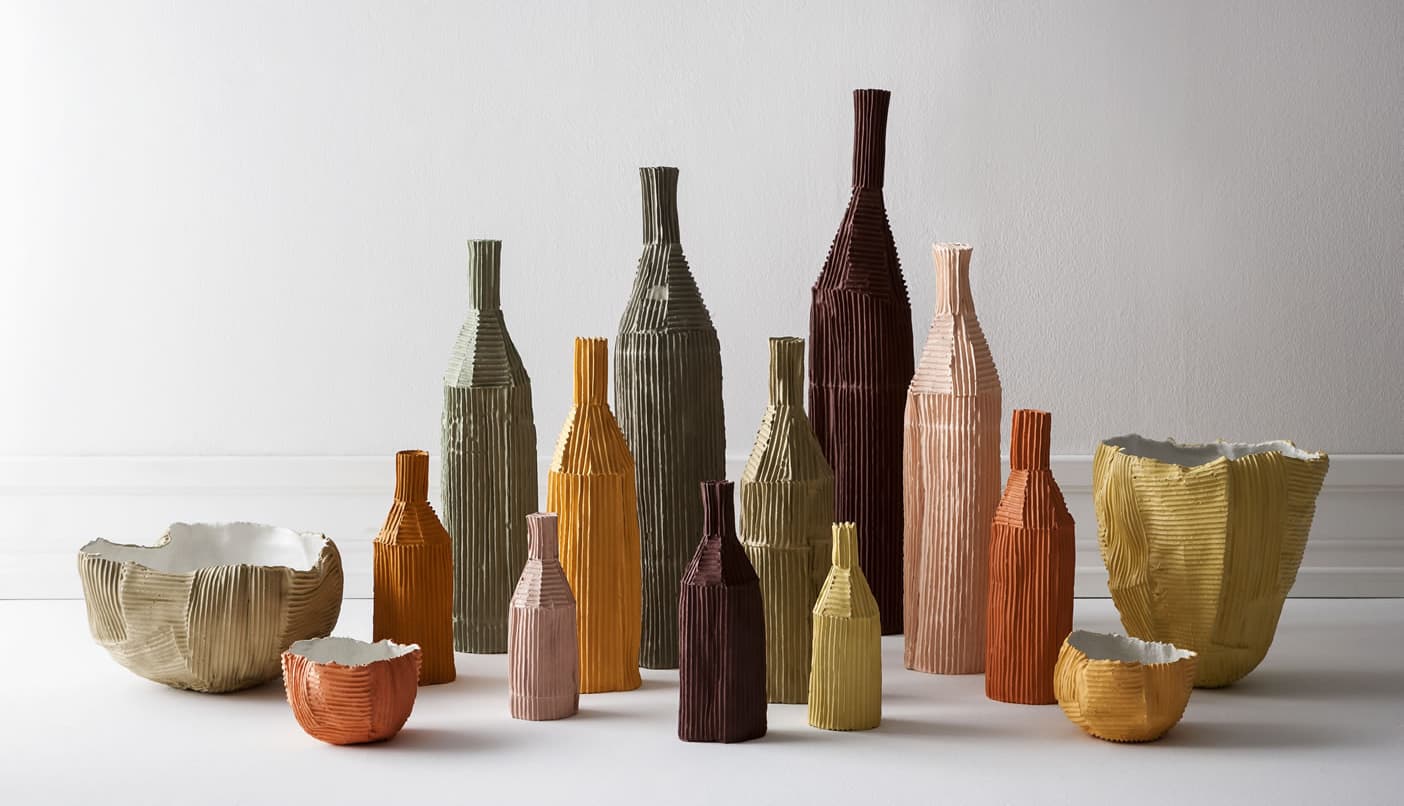 Credits: Paola Paronetto
Knowledge as Competence and Design
Contemporary high craftsmanship must overcome the reductive vision of making as mere manual ability. As Stefano Micelli writes in Futuro Artigiano, “there is great intelligence in making.” The craftsman is no longer an executor — he is a thinker, an innovator, a designer. He operates in a liminal space between art, design, and industry, constructing meaning through material.
The value of high craftsmanship lies in the experience it generates. The object is not simply possession: it is narrative, memory, relationship. Participating in the creative process, understanding the origin of materials, and recognizing the maker’s gesture transforms consumption into cultural experience.
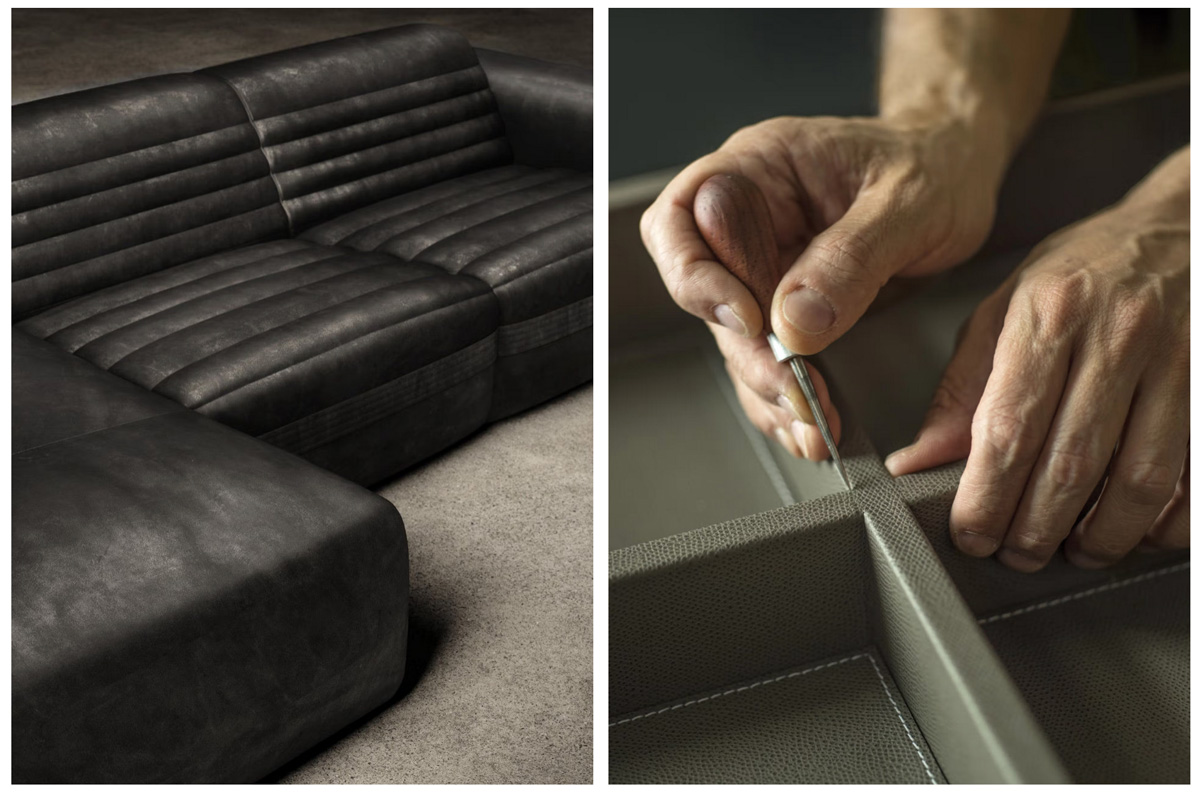 © Artemest
Artisanal knowledge unfolds across multiple dimensions:
Culture of material.
A deep understanding of wood, metal, ceramics, or textiles is not only technical but epistemic — a layered knowledge that preserves traditions while opening pathways to innovation. To know a material means to grasp its history, its limits, its aesthetic and functional potential. It is the first step toward transforming it into something unique.
Care and attention.
Every gesture — from selecting a piece of wood to the final finish — is embodied knowledge. Making is a dialogue with matter, where every imperfection becomes an opportunity for reflection. Care is culture: it is method, ethics, and respect for the value of work and material.
Dialogue and contamination.
The contemporary craftsman is not isolated. He collaborates with designers, architects, artists, engineers, and technologists. This cross-pollination generates new forms of creativity, where tradition meets innovation and where technique encounters aesthetics — where history and future intertwine.
Design thinking.
Making is never an end in itself. Every project is born from a vision, a conceptual search, an aesthetic and cultural intention. The object thus becomes the materialization of thought — not a simple product, but an idea made tangible.
Within this perspective, high craftsmanship fully inhabits the Experience Economy: value lies not only in matter or technique, but in the narrative that accompanies it, the relationships it generates, the sense it creates. The art of making becomes pedagogy of beauty, ethics of care, and applied philosophy of life.
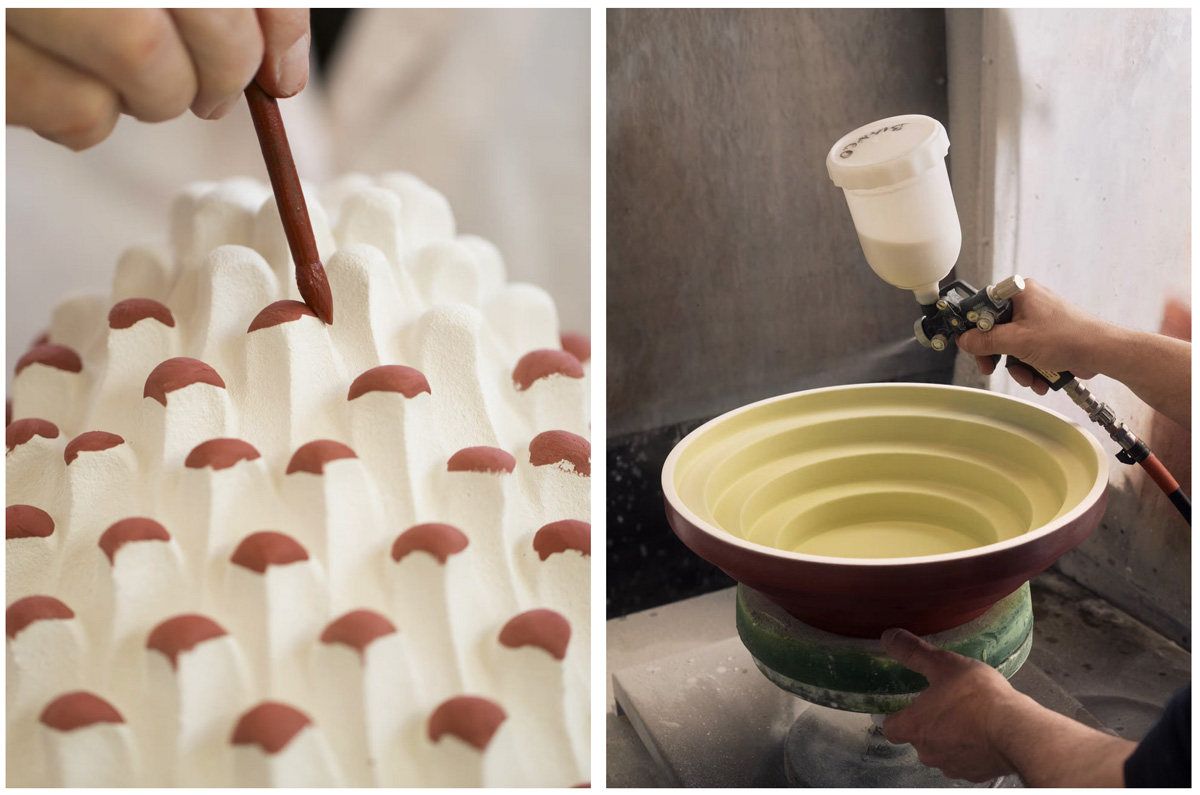
 © Artemest
Being Project: High Craftsmanship as a Paradigm
The craftsman, as being project, does not simply create objects: he develops vision, meaning, and culture. Four key words encapsulate this attitude: thought, care, research, dialogue.
Thought. Making arises from an idea, from reflection on form, function, and meaning. Every gesture is conscious; every project is born from a cultural vision.
Care. Precision, patience, and dedication are instruments of knowledge. The act of working is also an act of understanding.
Research. Materials, techniques, and processes are not fixed answers but open questions. Every project is an experience of discovery, experimentation, and innovation.
Dialogue. With materials, with people, with the culture of one’s time. Artisanal creativity is always relational — an encounter, a confrontation, a contamination.
L'Appartamento by Artmest, Palazzo Doniezzetti Milano, Fuorisalone 2025
To be project means to integrate culture, aesthetics, and social responsibility.
It means viewing the art of making as process rather than product — as a path of thought, not a mere manual act. It means transforming gesture into narrative, matter into meaning. In a world dominated by industrial mass production, high craftsmanship stands as a strategic paradigm: it is cultural differentiation, territorial identity, sustainability, and innovation. It is not nostalgia — it is vision. It is not static preservation — it is a project in constant becoming.High craftsmanship, seen as being project, transcends production and enters the realm of thought embodied in matter. It is a paradigm where culture, experience, and responsibility intertwine, creating a model of unique and sustainable value.
To be project is to recognize that matter is never neutral: every wood, every metal, every fiber tells a story — of culture, of place, of vision.
It is the craftsman who becomes author, the material that becomes thought, the gesture that becomes culture.
It means designing relations, visions, and communities — not merely objects. Every project becomes experience; every experience becomes memory; every memory becomes shared value.
In essence, to be project means to think, make, and live design as culture, responsibility, and vision. From this perspective, craftsmanship is not just a trade but a paradigm for the future — a future that unites aesthetics, culture, and innovation in a continuous dialogue between past and contemporaneity.
Manifesto of High Craftsmanship
Thought, Value, Future
1) Beyond Skill Lies Thought The craftsman is a thinker and an innovator — not a mere executor.
2) Care Creates Value Every detail, every gesture, transforms matter into a precious experience.
3) Continuous Research Innovation is born from dialogue with materials, techniques, and new visions.
4) Sharing Generates Growth Collaboration and cross-pollination with designers and professionals elevate the “art of making.”
5) The Artifact Is Experience To offer stories, emotions, and uniqueness — not just objects.
6) Distinctive Authenticity In a world of mass production, craftsmanship offers unrepeatable uniqueness and genuine storytelling.
7) Heritage Is Innovation Cultural heritage is the foundation for continuous reinvention.
8) Technology Serving Art The osmosis between artisanal skill and new technologies is the key to evolution.
9) Collectible Design as a New Stage The craftsman becomes an author; the works become functional pieces of art.
10) The Future Is Crafted Work is created, not sought — through dignity, pride, and creativity.


 Iscriviti alla nostra newsletter