Weaving as an everyday gesture, a way of recording reality, and a form of resistance
Caterina Frongia brings into textile design a language that weaves together memory, migration, and hidden alphabets. Born in Oristano and based in Bologna, she works on the border between art and craft, transforming archaic techniques of Sardinian tradition — such as pibiones weaving — into contemporary visual systems where geometries, symbols, Braille codes, and thread-written scripts coexist. Her tapestries and capes are textile architectures that hold stories: embroidered words as poetic and political notes, traces of human passages, references to African culture, metaphors of shelter and nomadism. Over the years, Caterina’s work has been shown in numerous exhibitions and contexts such as the Lake Como Design Festival, Dutch Design Week, and Milan Design Week. In recent months she has presented new works such as Dal mare non vedo che cieli at MSGM in Milan, Designers Atto II at MURATS in Samugheo, and Tessere per resistere at ISRE in Nuoro. Her recent path also includes collaborations with Artemest, and the collective We Mediterranean.

caterinafrongia_liberacidalmare_dettaglio_2025_©francescocorlaita
Who is Caterina Frongia today?
Today I am like yesterday, only a little more. As I always say, we are stratifications of character, education, people, and places. Each of us has our own experience and is the result of the human relationships we’ve had: that is my focus, without a doubt. The human being, with all their humanity, is at the center of my work.
I am convinced that the things we make, whether material or immaterial, must serve someone. I am always struck — me, who makes material objects — by how much immaterial labor is inside a finished object. I continue to see myself as unclassifiable. “I don’t want to be pigeon-holed,” as the English say. I am not a designer, not an artist trained in an academy, not a craftswoman, and certainly not a writer — but today I am someone who moves quietly between disciplines.
To sum up my work, I could say that I transcribe my client’s story onto a tapestry: they tell me their personal story and I translate it into symbols, returning a sort of portrait. So far I have listened to many life stories, studied them, translated them with respect, and I still keep all the reflections, notes, and sketches in a notebook for each client — a monumental task at times. I listen and transcribe immaterial things.
Your works often combine archaic motifs, contemporary codes, and fragments of alphabets. How do you decide which languages to bring together within a single textile?
It always depends on the story I have to tell. The more full of secrets it is, the more I use encrypted languages. On the contrary, if I want a readable content, I use comprehensible alphabets — but most of the time both coexist. Only afterward does the aesthetic question come in: the balance between figures, with many adjustments, remakes, and even accidental solutions. These are never “easy” works — there is always a bit of purgatory to go through, and sometimes the scars are visible.
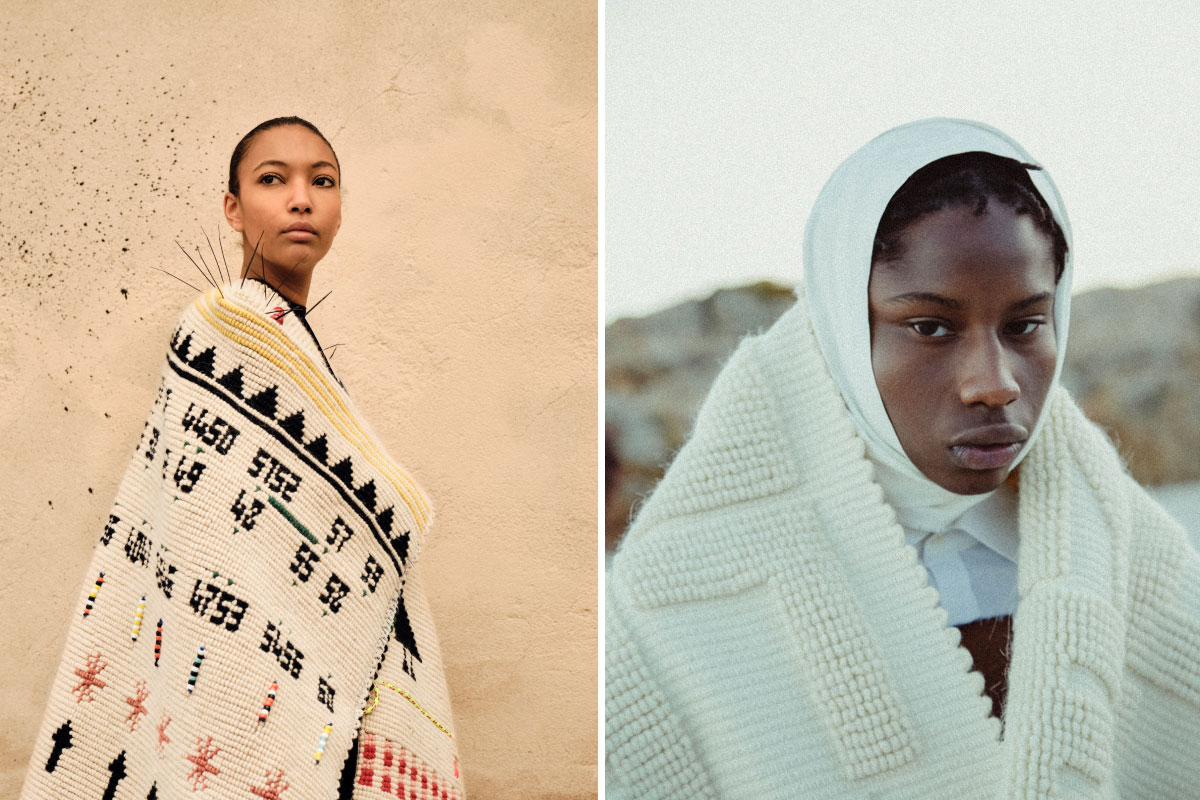
caterinafrongia_cappa©dariocervellin_2025 caterinafrongia_narente_2024_©narente
In Dal mare non vedo che cieli, the idea of the object as crossing and contamination emerges. How does this dimension influence your way of designing?
Migration and nomadism are my obsession, so my work cannot ignore the current geopolitical situation and the reasons people move: environmental hardship, climate change, desertification, deforestation — just like other species do, birds for example. In nature there are no clear borders and everyone looks for new places to nest. More generally, migrating helps create new forms of thought and cultural biodiversity. To migrate means to move, and by moving we carry and bring techniques, knowledge, human closeness, and understanding. In the works on display I was able to merge very different contents: autobiographical elements, other people’s life stories, ecological issues, political or ethical considerations. I wove the tapestries by mixing wool, bird-ringing bands, rescue whistles, fishing spoons, ropes, and so on. There was also a cape with an evocative title: How sexy your kindness could be. Cultural richness generates kindness.
Your recent collaborations — with MSGM and We Mediterranean — have taken you beyond the loom. What changes?
Almost nothing, from a design point of view: it is still writing. But experimenting in other contexts excites me, and I would love to be multidisciplinary. I am used to working alone, and sharing my language with others gave me a stronger awareness that I can be understood. Working with MSGM was very fun — everything started and ended almost at the same time. I brushed against fashion without being swallowed by its charismatic vortex; in a way, it took some slowness from me.
With We Mediterranean I share the same ideals. The project is based on principles of hospitality, dialogue, and coexistence, building light structures with powerful symbolism. It felt very natural — and an honor — to intervene on their project Canopy, a textile ceiling that welcomes and shelters those passing through.
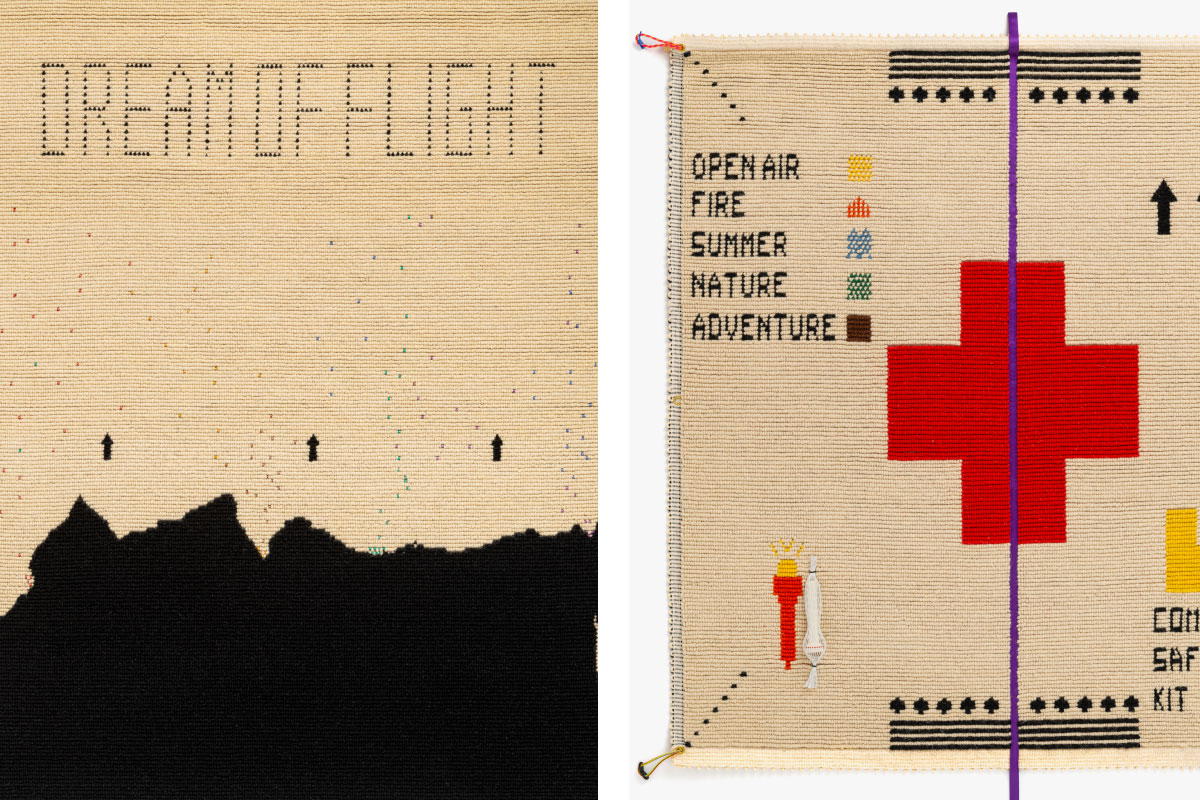
caterinafrongia_dreamofflight_2024_©francescocorlaita caterinafrongia_liberaci dalmare_2025_©francescocorlaita
Textile has been defined as a “soft architecture,” capable of creating temporary shelters. Do you recognize yourself in this reading?
Architecture, according to Loos, has textile origins, and this definition fits me perfectly. I never lose sight of the primary function of textiles in certain civilizations: versatile enough to be placed on walls or floors, used to protect from cold, heat, and weather. They once served to cover the body and were therefore already “inhabited.” Transformation and movement were embedded in their function. This nomadic aspect of the textile object exists in my work both structurally and thematically. My works contain entire life stories; in a sense, they shelter and preserve them.
Braille recurs in your tapestries — an alphabet not everyone can read. What interests you about this boundary between visible and invisible?
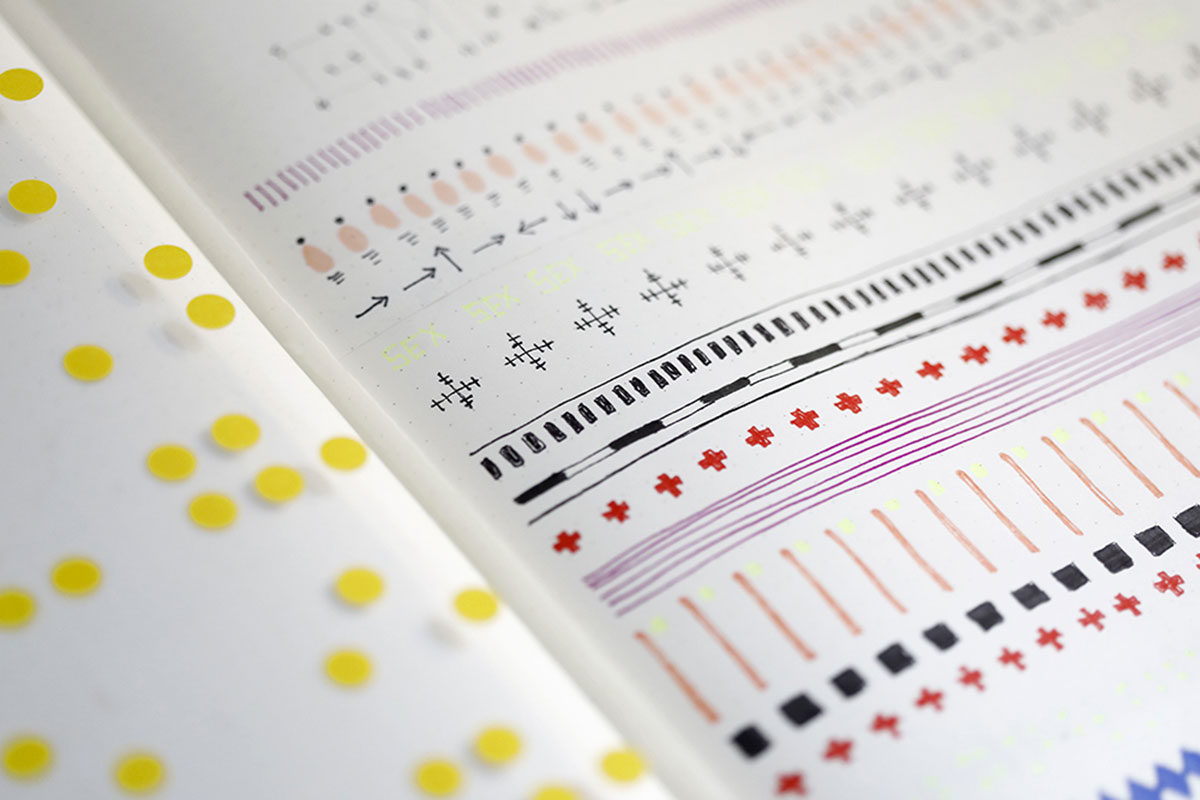
Braille, while functionally equal to other alphabets, expresses absence more than any other — or at least highlights the presence/absence dialectic. Reading Braille is not about seeing, but about feeling. What superficially refers to darkness becomes immensely luminous when experienced from within and enhanced by the other senses.
From a lack grows an enormous presence of images, sensations, sensitivity, and bodily intelligence. Braille symbolizes for me an exemplary tool of willpower, communication, and the simplification and lightening of a problem — almost a facilitation even for others. So the choice of Braille is not merely aesthetic. I like that it can be read by those who know it and, with a small effort, deciphered by those who don’t.
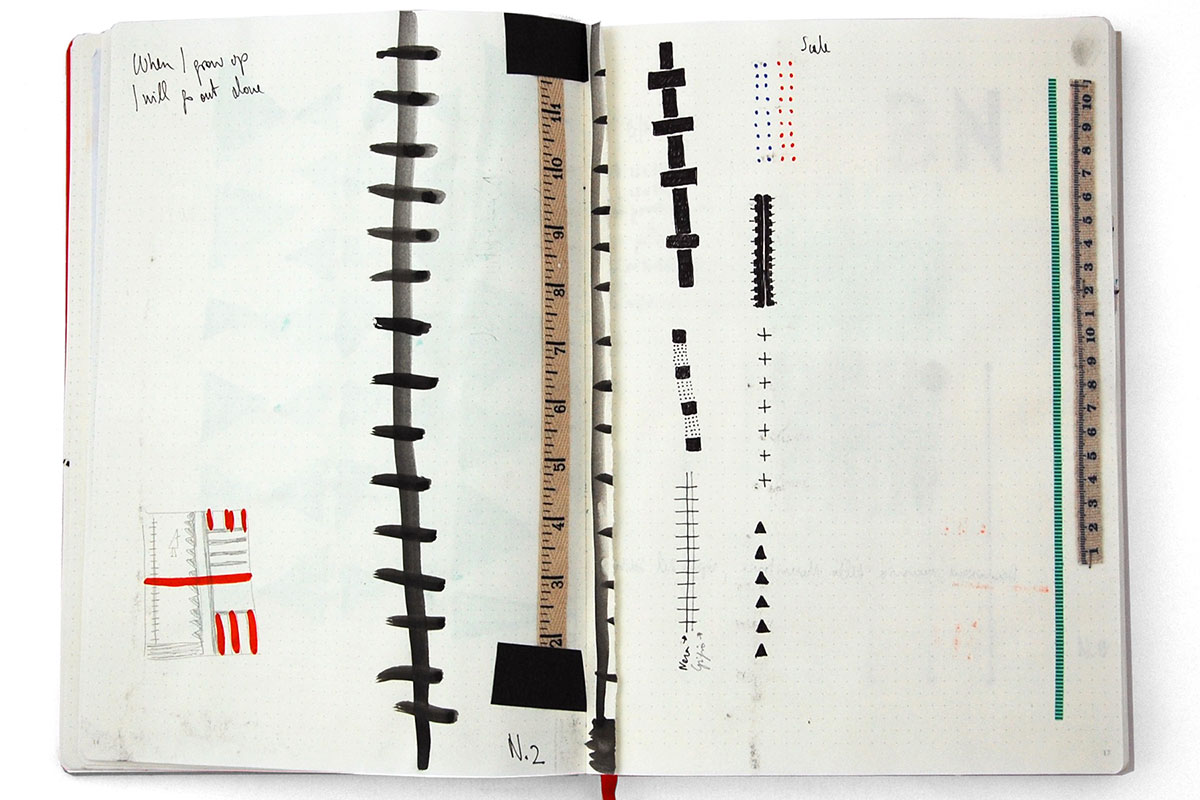
Courtesy of caterinafrongia
The political dimension of textile in your work is always subtle, never declared. What role does weaving play as a form of resistance?
Our works always stem from ideas, ideals, and observations. Mine are not fixed positions, but reflections on what I see happening. I don’t say things are right or wrong — I ask whether they are. Weaving, as a form of writing, has time to think. It is often an act of resistance, hiding a silent activism, and it becomes the manifestation of resistance for those who live through war, for example. In my case it is an act of reflection, an attempt to communicate, to generate exchange between writer and reader. My only form of resistance is technical: the craft itself, which keeps me anchored to memory. I let my hands think and my mind do.
“Be the Project”: what does it mean to you?
To be the project means to be aware of movement, to favor change — it is a living system. It means constantly asking how things are made; it is research, a form of knowledge.
My favorite word is invention, because it makes anything possible through what we already know plus what we do not yet know we know. It is the beating heart of the work — the adrenaline, the pain that is worth it. Invention corresponds to the new, which is not an arrival point but an attitude, a way of being. It is ungraspable because it includes the different, the foreign, the uncommon. The finished object puts order into all this. That is why, once finished, it often no longer interests me — sometimes I even forget my works.
Courtesy of caterinafrongia
What are you working on now?
I am designing four white corner tapestries, all focused on the idea of being put in a corner — a metaphor for our times, for the inability to fail, the fear of disappearing, of not overcoming the frustration of mistakes, of guilt and shame. We live as if in a fairy tale, and from fairy tales we only want the happy ending. But the world is in the forest.
Tag: Be the Project Interviste Design Product Design Fuorisalone 2026 Craftsmanship
© Fuorisalone.it — All rights reserved. — Published on 13 January 2026
 Iscriviti alla nostra newsletter