Between rigor and poetry, Elisa Ossino pursues a research practice that brings together space, light, and matter in a delicate balance suspended between abstraction and memory
A Sicilian architect and interior designer, she has lived and worked in Milan for many years, where she also studied at the Politecnico and developed a distinctive language defined by essentiality and compositional sensitivity. In 2006, she founded Elisa Ossino Studio, giving life to projects - ranging from private residences and installations to collaborations with brands such as Amini, V-Zug, Molteni, Salvatori, and De Padova - in which emptiness becomes language, light is sculpted as material, and living is conceived as a gesture intertwining art, metaphysical and surrealist references, architecture, and thought. We met her to discuss her approach and the theme of the upcoming Fuorisalone, Be the Project: an invitation to reflect on the meaning of making design today, between responsibility, imagination, and restraint.
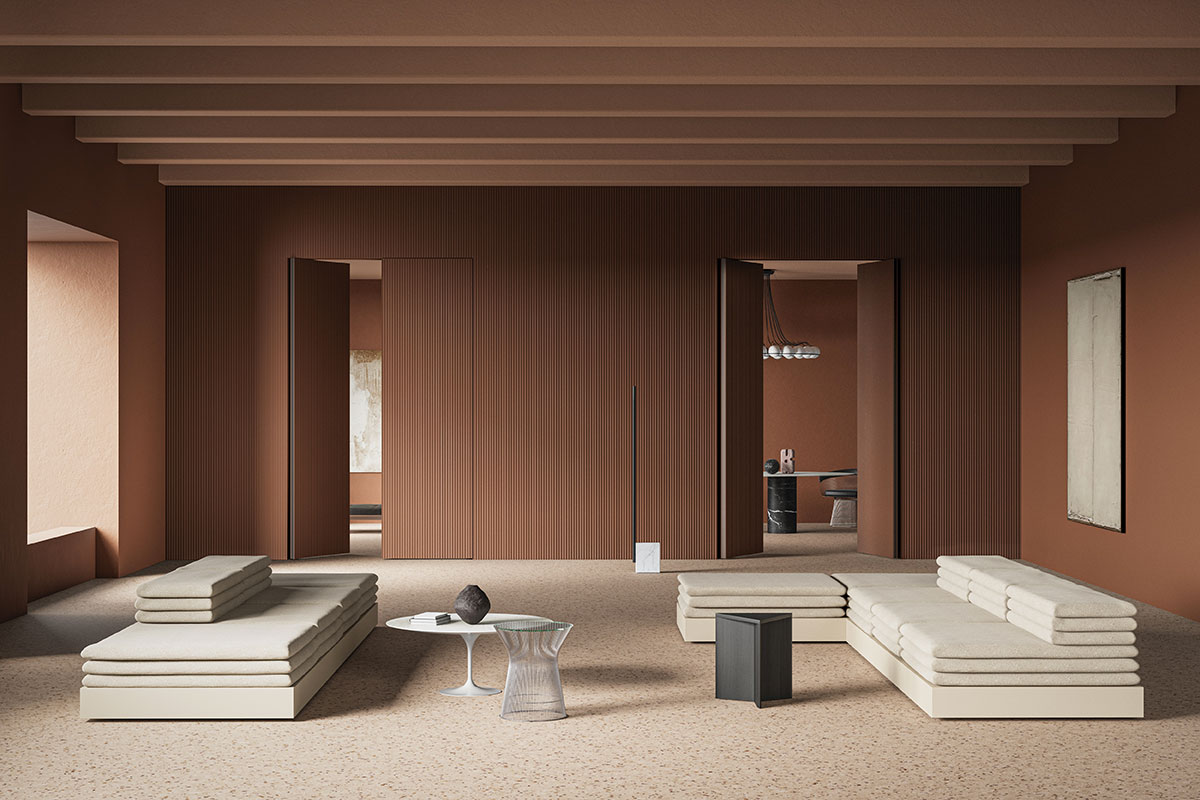
ElisaOssino_Scrigno_Mappamundi_Montebello
Your work combines precision and lightness, rigor and poetry. Where does this balance come from? What defines your stylistic signature?
I would say that what makes my work recognizable is a sense of suspension, which arises from a continuous search for spatial abstraction. I integrate functional elements into the architecture until they almost disappear. This process allows me to bring forms back to their essence and to build a spatial structure based on rhythm, proportions, and clarity.
Within this essential framework, I introduce warmth through light, materials, and a carefully calibrated presence of objects that activate a more intimate resonance. I do not design with the intention of creating ethereal spaces, but rather of building atmospheres in which light, matter, and proportions generate a subtle balance, where perception becomes sharper and the act of inhabiting more conscious. I always work on the threshold between geometry and sensitivity - an intermediate space where form remains present without renouncing a more human vibration. That is where poetry emerges.
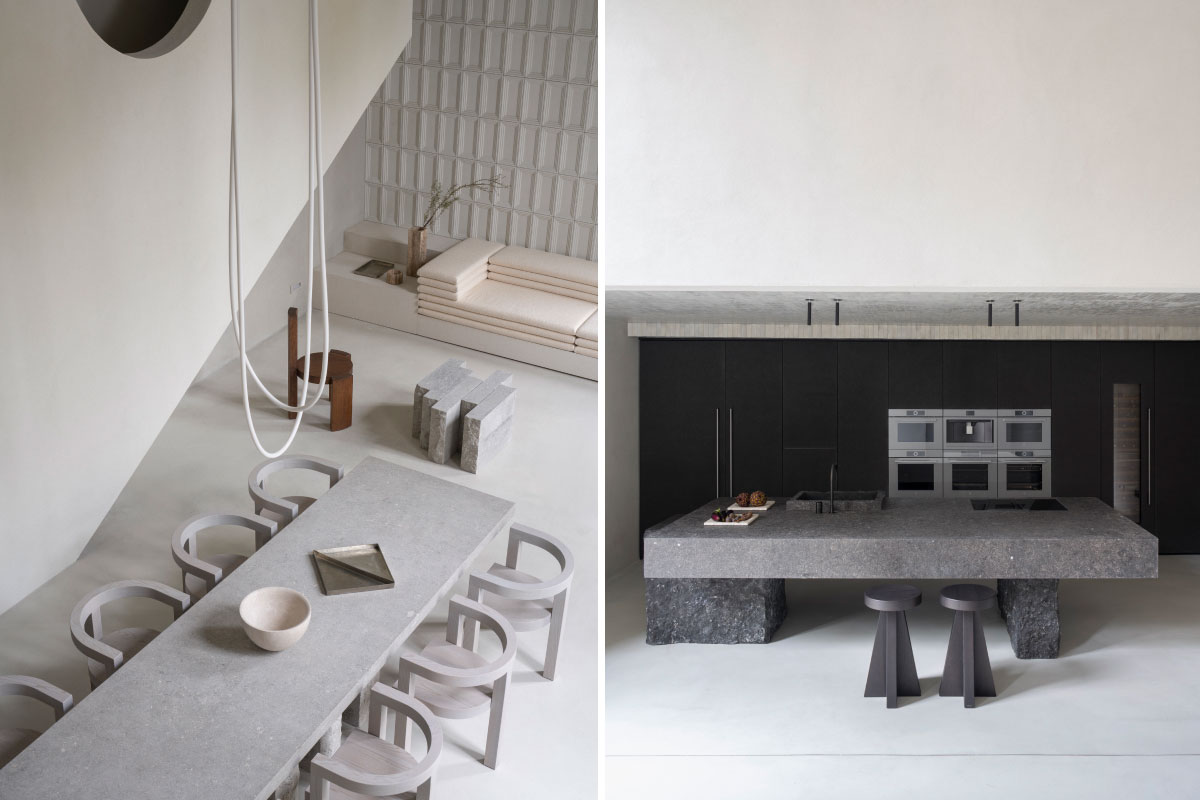
ElisaOssinoStudio_V-Zug Studio Milano_©Giorgio Possenti
You often speak of a “humanistic” approach to design. What does this mean? Which phase is fundamental in your creative process?
For me, a “humanistic” approach means bringing design back to its original dimension: an act that arises from thought and places human experience, sensitivity, and memory at its center.
The fundamental phase of my creative process is the conceptual one - the moment in which I define the narrative I want to activate, the images I wish to evoke, and the deeper meaning the space should convey. In this preliminary stage, still free from technical constraints, atmospheres and intentions take shape and guide everything that follows.
The more operational phase of design comes later, as a spatial translation of these contents: a passage from idea to form, from vision to experience. In this way, the project remains faithful to its original core and can acquire a density that is not only physical, but also mental and emotional.
Your research also includes art, curatorship, and scenography. Is there a common thread connecting these dimensions?
Absolutely. Art, curatorship, and scenography are natural extensions of the same design thinking. They share a common root: the desire to generate an experience, to activate a mental space as well as a physical one. Working in these fields means engaging with the power of forms and images to shape perception and construct narratives that open imaginative passages. Whether it is a museum exhibition, an artistic intervention, or an interior, I always try to create a condition of attention - a suspension that allows the gaze to linger and thought to expand. The common thread is the tension toward an essential language charged with resonance, in which every element is not only functional but also becomes a device of meaning. It is the same research expressed in different territories: creating places that are not merely passed through, but that offer experiential depth and a contemplative dimension.
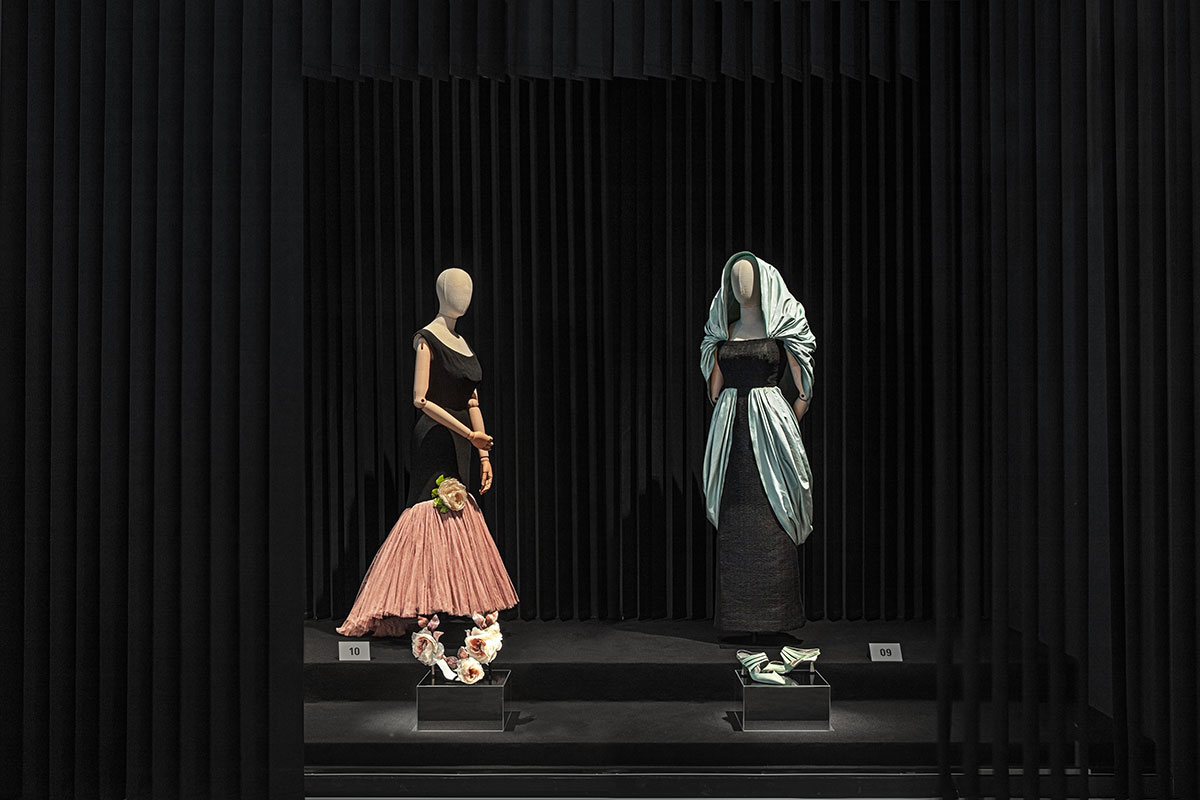
ElisaOssinoStudio_Balenciaga_©JuanCarlosVega
The theme of Fuorisalone 2026 is Be the Project, an invitation to rediscover design as a process rather than just a form. What does this mean to you?
Be the Project resonates deeply with my way of understanding design. It brings attention back to the process, to the thinking that precedes and guides form, to everything that happens before a project materializes. For me, “be the project” is first and foremost an act of awareness: understanding which narrative and experience we want to generate, and searching for images and atmospheres to express it. Form is only the visible outcome of a broader journey made of intuitions, subtractions, and inner images to be evoked. Recognizing design as a process also means accepting its open nature: a dynamic field where imagination, responsibility, and restraint intersect. It is an invitation to consider design not as an object, but as a cultural gesture and a space of relationships. In this sense, the Fuorisalone theme fully reflects my approach, in which every formal choice arises from a deeper intention and from a vision that is built over time.
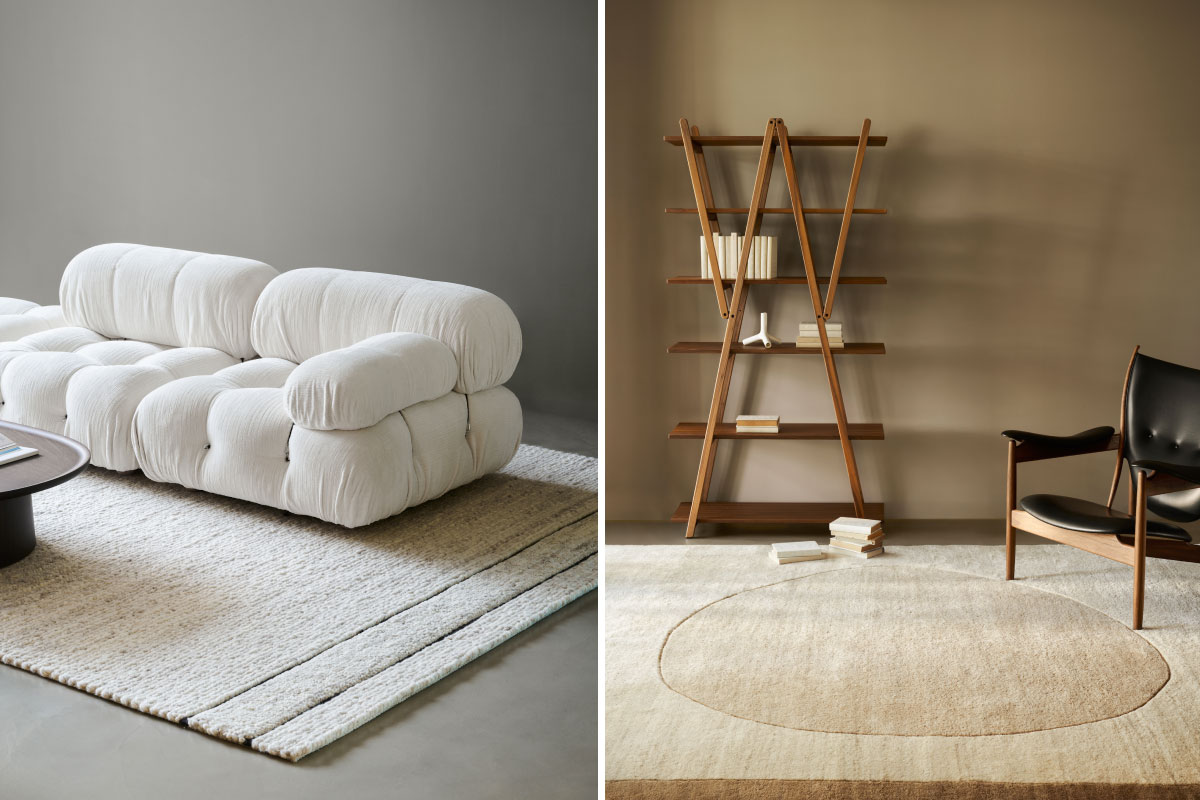
Amini_ by Elisa Ossino_©Valentina Sommariva
Your work seems to balance thought and instinct. How much space do you leave for unpredictability and error? Has a mistake ever led you to start over?
I leave ample space for intuition, which guides the conceptual phase of each project. Error, on the other hand, has limited room: developing a prototype is delicate and requires great care to avoid waste and unnecessary costs. I carefully control every detail before starting production, often through small preliminary models that anticipate and verify proportions. When an error does emerge, it becomes an opportunity to rethink and strengthen the original idea, while preserving the project’s poetic meaning and balance.
Is there a recent project that you consider emblematic of your path or indicative of a new direction in your research?
Lately, I have been particularly interested in exploring multisensory spaces, an area I have been working on for several years. In various projects, I have introduced performers and live actions, with the aim of amplifying the humanistic dimension that is so important to me and of communicating symbolic reflections.
In this way, space becomes a deeper and more participatory experience, capable of engaging those who inhabit it on multiple levels: physical, emotional, and cognitive.
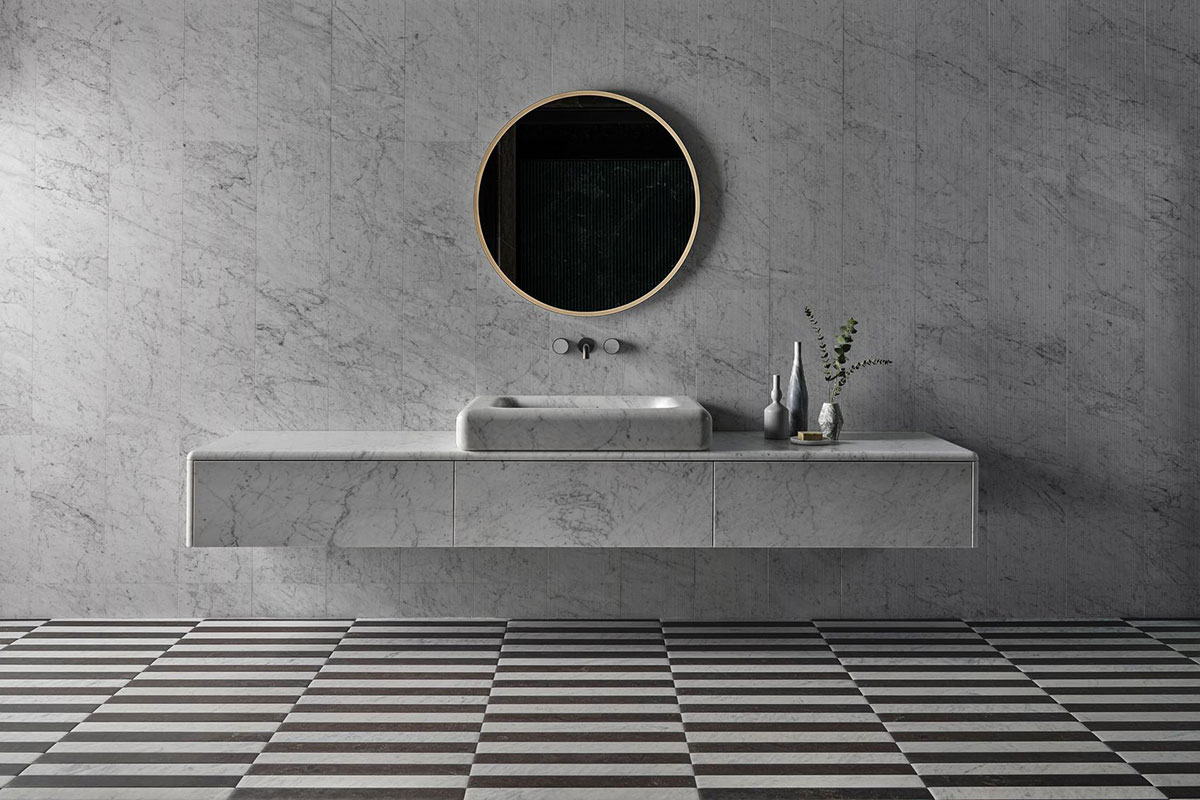
ElisaOssino_Salvatori_Nereo 2025_©Matteo Imbriani
What are you currently working on? Will we see you at the next Design Week? Can you give us a preview?
At the moment, I am working on very different projects, united by a single tension: giving form to spaces and objects capable of telling stories and evoking emotions.
Among them, a project focused on materials and craftsmanship in a space that will open during Design Week; a curatorial project celebrating the history of a design company; an installation for new developments; and an apartment that intertwines contemporaneity and memory within a historic Milanese building.My research into multisensory environments also continues, experimenting with new ways of relating people and space, alongside product design projects dedicated to everyday living.
The beauty of my work lies in inhabiting many places and times at once: every suspended project vibrates with possibilities yet to be discovered.
Tag: Be the Project Interviste Design Fuorisalone 2026
© Fuorisalone.it — All rights reserved. — Published on 09 February 2026
 Iscriviti alla nostra newsletter