At Milano Design Week, an exhibition explores the Board game as a cultural phenomenon able to cross eras and generations
There is an object that has crossed centuries and survived technological revolutions without losing its relevance: the board game. Before books, screens, and digital platforms, there was already a table where people gathered to share rules, simulate conflicts, and build alliances. “0-99. Design per gioco” is the title of the exhibition that, during Milano Design Week, from April 10 to May 10, 2026, transforms Palazzo Arese Borromeo in Cesano Maderno into a space for reflecting on design as a relational and cultural practice.
1.jpg)
Design per gioco © Jessica Soffiati
In this 17th-century historic residence, one of the most important in Lombardy, the Board game is not seen as simple entertainment, but as a cultural object and a design project able to tell stories about collective identities, value systems, and ways of living together. The title refers to the age range printed on many game boxes - “0-99” - suggesting a universal experience that speaks across generations.
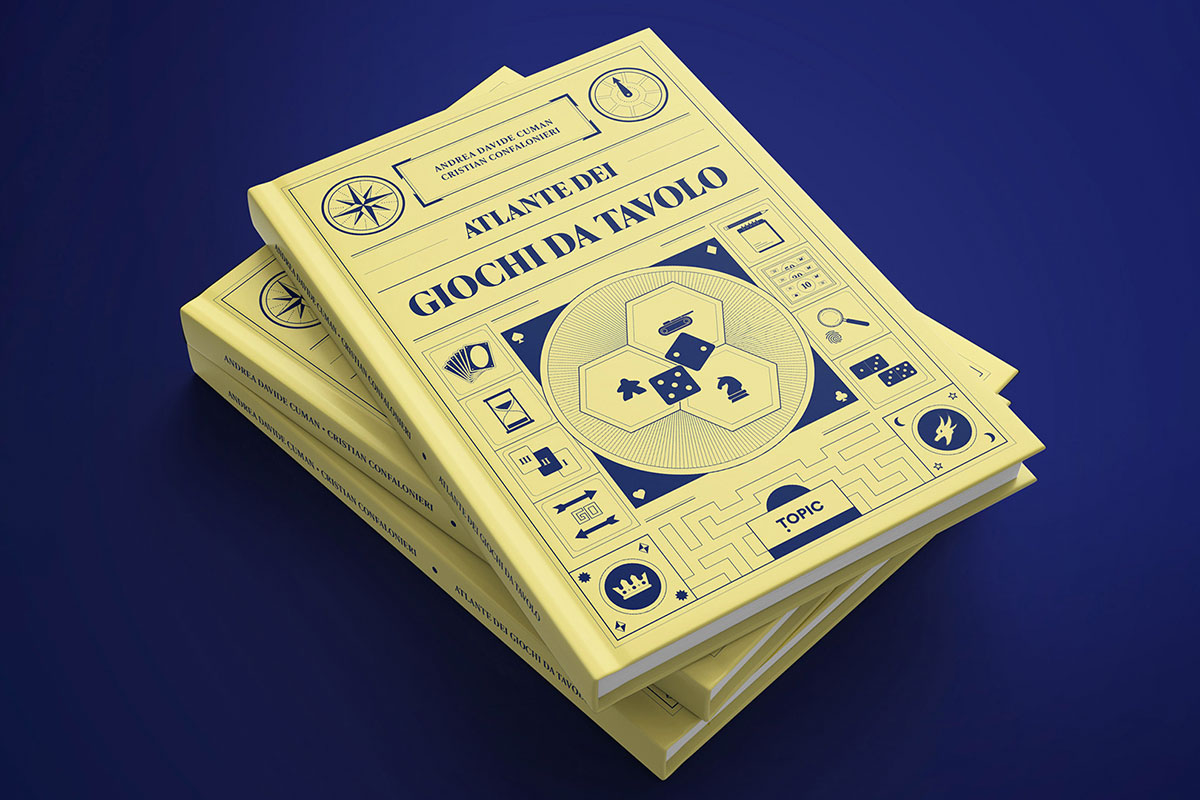
Studiolabo_Atlante dei giochi da tavolo
The exhibition is curated by Cristian Confalonieri, co-founder of Studiolabo and Fuorisalone.it, game designer and co-author with Andrea Cuman of “Atlante dei giochi da tavolo” (TOPIC Edizioni, 2024), one of the most extensive international surveys of the sector and the scientific foundation of the project. The concept and co-curation are by Alessia Interlandi, founder of In.circle. If design is the organization of relationships through forms and rules, the board game represents a perfect synthesis: a closed system that simulates the world, coordinates conflict and cooperation, and makes visible the invisible structures of social dynamics. Confalonieri defines it as “a technology of coexistence,” able, in its analog nature, to counterbalance contemporary digital fragmentation.
.jpg)
Design per gioco © Jessica Soffiati
The exhibition path moves across time, starting with thirty ancient games from different parts of the world - from Gioco reale di Ur to Go, from Scacchi to Domino, from playing cards to Tombola - showing how play has long been a tool for learning, symbolic representation, and cultural transmission. It then continues with major 20th-century titles, from Cluedo to Forza 4, from Monopoli to Risiko, presented in a giant, playable 90-square-meter version that transforms territorial conquest into an immersive spatial experience.
Design per gioco © Jessica Soffiati
Alongside these classics, the exhibition features reinterpretations by designers and brands that bring the game into the realm of high craftsmanship and design: the Carrom table by Vismara Design, steel Scacchi designed by Gianfranco Frattini, the Backgammon carpet by architect and artist Valeria Molinari, the wooden and leather Battaglia navale by Pinetti, and Il Gioco dell’oca by Pineider. At the core of the exhibition is a focus on game design, highlighting the authorial work behind each title. Two rooms are dedicated to Alex Randolph, a key figure in the professionalization of the sector and the first to introduce the author’s name on game boxes. His work is also explored through the documentary “Alex Randolph, regista di giochi” by Andrea Angiolino, directed by Luca Bitonte (Lucca Crea, 2022).
.jpg)
Design per gioco © Jessica Soffiati
The relationship between concept and craftsmanship is expressed in the installation “La scrivania del game designer” by Spartaco Albertarelli, placed in dialogue with the desk of Pierluigi Ghianda, master cabinetmaker of Italian design, permanently exhibited in the palace. The comparison reflects on the connection between idea and material, concept and construction.
The exhibition focuses on game design and presents the most representative works of some of the most important names in the Italian gaming scene: Simone Luciani and Tommaso Battista, Emiliano Sciarra, Andrea Angiolino, Luca Borsa, Luca Bellini, Walter Obert, and Carlo Emanuele Lanzavecchia.
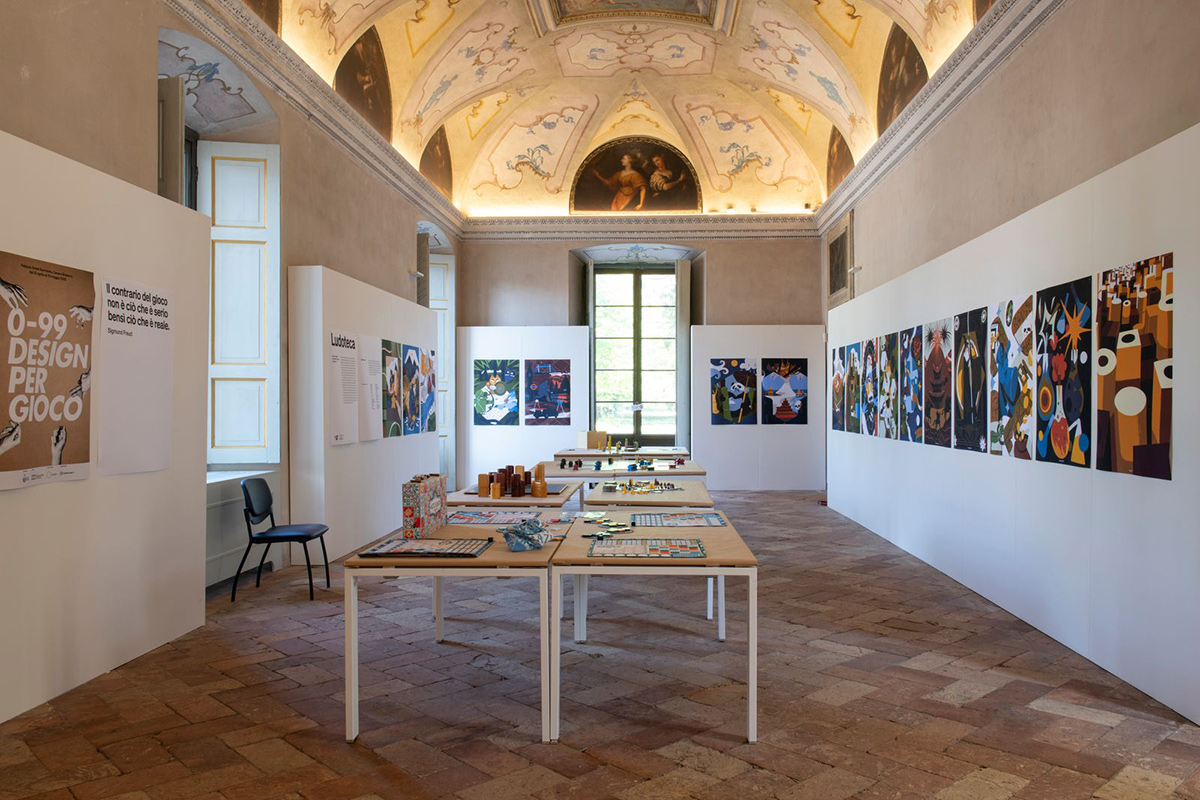
Design per gioco © Jessica Soffiati
Promoted by the Comune di Cesano Maderno, the exhibition also explores the “new renaissance” of board games since the 1990s, through celebratory, oversized, and collectible editions that show the global cultural comeback of the board game. It also raises an open question: what will be the impact of artificial intelligence on a traditionally handcrafted practice? This question is addressed by memorIA, an artistic game developed using AI by Studiolabo and Silvia Badalotti, photographer and prompt designer. The exhibition concludes with an active Ludoteca - not a simple addition, but a coherent extension of the project’s vision: because in the end, a game can only be understood by playing it.


 Iscriviti alla nostra newsletter