Gianfranco Frattini 1926–2026
Castello Sforzesco, Milan
Museum of Furniture and Wooden Sculptures and Sala Castellana
March 31 – June 28, 2026
Tuesday–Sunday: 10:00 am – 5:30 pm
Through re-editions, archival materials and design projects, the exhibition opens a broader programme of celebrations dedicated to a key figure of twentieth-century Italian design
From March 31 to June 28, 2026, Castello Sforzesco in Milan hosts Gianfranco Frattini 1926–2026, the exhibition that inaugurates the programme of events marking the centenary of the architect and designer, a central yet often understated figure in the history of Italian design in the second half of the twentieth century. The installation, set within the Museum of Furniture and Wooden Sculptures and the Sala Castellana, integrates discreetly into the permanent display, establishing a dialogue between the historical collection and a selection of re-editions produced for the occasion by companies that collaborated with Frattini throughout his career, including Artemide, Cassina, Poltrona Frau, Tacchini, Gubi and CB2.
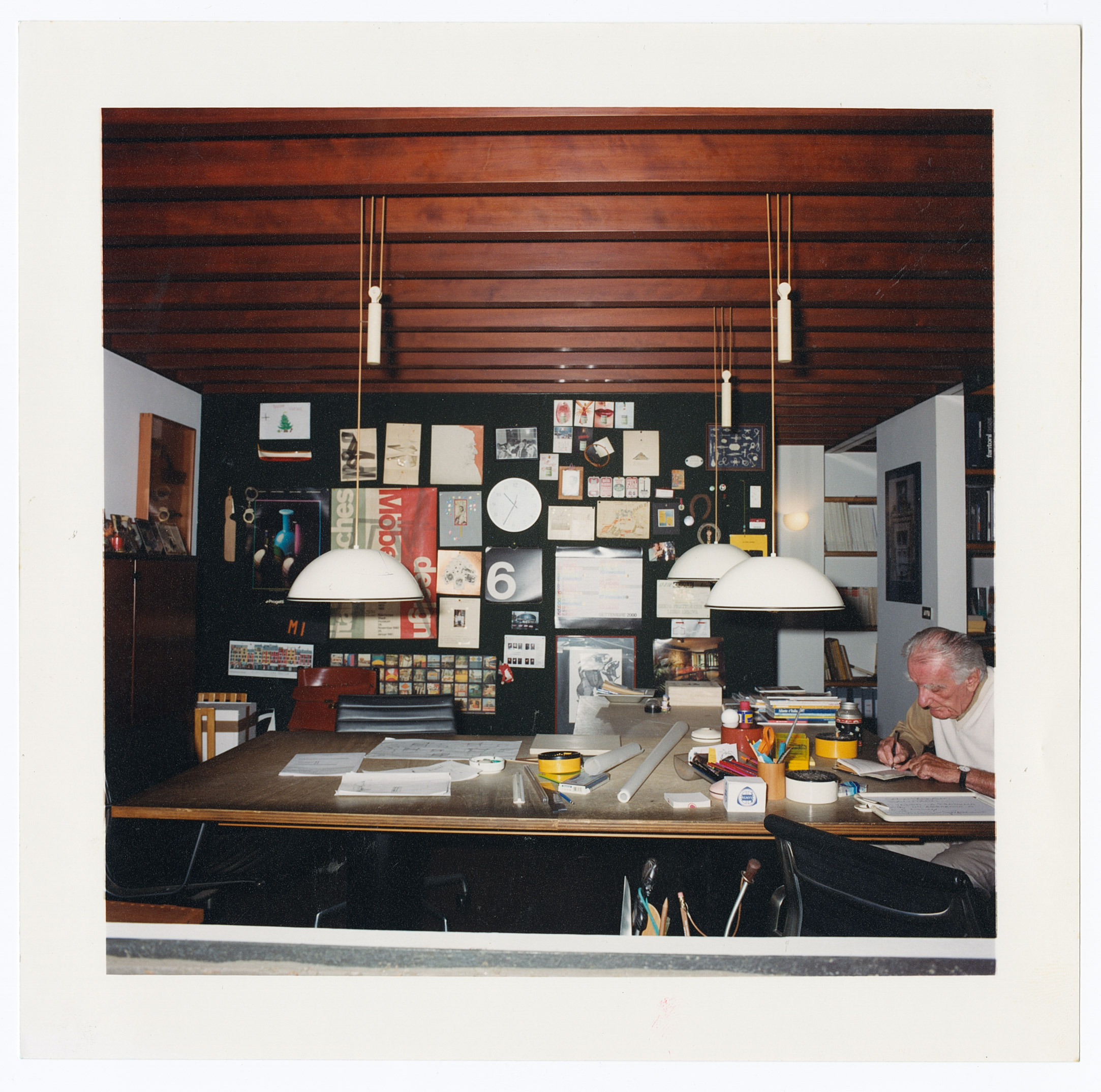
The exhibition, curated by Emanuela Frattini Magnusson and Fiorella Mattio, with exhibition design by Emanuela Frattini Magnusson and Pietro Todeschini, creates an essential environment in which objects emerge as autonomous presences, isolated by lacquered surfaces that echo the designer’s chromatic vocabulary. The museum’s niches become intimate spaces dedicated to individual projects, including the Megaron lamp, the 780/783 side table series, the Albero bookcase and the Lina armchair, offering a focused and non-linear reading of Frattini’s work. The installation extends into the Sala Castellana, where, alongside the Marco vase, a selection of reissued glass objects highlights the continuity between design research and contemporary production.
The exhibition marks the beginning of a wider programme promoted by the Gianfranco Frattini Studio/Archive, which will continue throughout Milan Design Week and across 2026 with a series of distributed installations, publications and public events, including the presentation of the first catalogue raisonné dedicated to the designer and a range of initiatives aimed at bringing his objects back into everyday use, in line with the approach that consistently defined his work.
Often described as a “quiet” figure, Gianfranco Frattini played a fundamental role in shaping Italian design as an integrated system connecting project, industry and culture. Educated at the Politecnico di Milano and active since the 1950s, he was among the founders of ADI and part of the generation that established a close relationship between industrial production and design quality, collaborating with companies such as Cassina, Artemide and Bernini. His approach is characterised by a measured language, distant from iconic gestures or formal statements, and by a strong attention to construction, materials and detail, often developed through close collaboration with craftsmen and manufacturers.
In a contemporary context, revisiting his work reveals a particularly relevant position: Frattini understood design as an infrastructure of living, a coherent system of objects and spaces that build relationships rather than images. His focus on wood, durability and construction quality, as well as the ongoing dialogue between design and production, anticipates themes that are central today, from sustainability to the redefinition of the relationship between industry and craftsmanship.
In this sense, the exhibition at Castello Sforzesco goes beyond a historical reconstruction, offering a renewed reading of Frattini’s work through re-editions and their placement within a layered museum context, underlining the capacity of his projects to remain active in the present. More than a celebration, the centenary begins as a critical reactivation, bringing attention back to a figure who interpreted design as a continuous, coherent practice deeply rooted in the culture of Italian design.


 Iscriviti alla nostra newsletter