An interactive installation that transforms space into a multisensory universe, where light, sound and artificial intelligence engage visitors in an active dialogue
The installation Y.O.U. Your Own Universe was created as part of the glo for art project and turns the visitor into an active part of the artwork. What is the concept behind the project, and how did the dialogue with glo Hilo and its values of innovation, sharing, and participation influence your artistic vision?
Y.O.U. Your Own Universe is conceived as a threshold, a suspended space where everyday time is interrupted and visitors can access a different, more intimate and reflective dimension. It is not a “magical place” in an escapist sense, but a device that invites awareness - of one’s presence in the world, of one’s way of perceiving and relating to others.
The dialogue with glo came naturally, as the values of innovation, sharing, and participation are already central to Numero Cromatico’s research. In this project, however, they become even more explicit: innovation is not only technological but perceptual; sharing is not only social but experiential; participation is not merely interaction, but active involvement in the construction of meaning.
The work does not ask the audience to “do something,” but to question themselves, to open up to the possibility of connection - with themselves and with others in the space. It is in this subtle yet radical shift that the relationship with the artwork is activated.
In the cloister of Palazzo Moscova, the audience moves through visual stimuli, sounds, images, scents, and a specially designed olfactory dimension. How did you construct this multisensory landscape, and what role does bodily perception in space play in the experience?
For years, we have been working on the creation of multisensory environments, understood as complex systems in which each element contributes to shaping perception. There is no hierarchy among the senses: vision, sound, touch, smell, and the audience’s actions all participate equally in building the experience.
In Y.O.U., we used advanced technologies, but our approach remains the same even when working with traditional or natural materials. For us, technology is always a tool, never an end: what matters is the quality of the research behind the work and the relationship it activates between body, space, and artwork.
The body is central - not merely as a physical presence, but as a site of perception, memory, and transformation. Likewise, space is not a neutral container but an active element that influences and guides behavior. Every choice—from light to materials, from sound to spatial arrangement, from text to the olfactory dimension—is designed to predispose the visitor to listening, introspection, and openness to others.
Our works aim to make the present visible in its complexity—a present that contains traces of the past and possibilities for the future. If the audience perceives this tension, if something is activated on an emotional or cognitive level, then the work has achieved its goal.
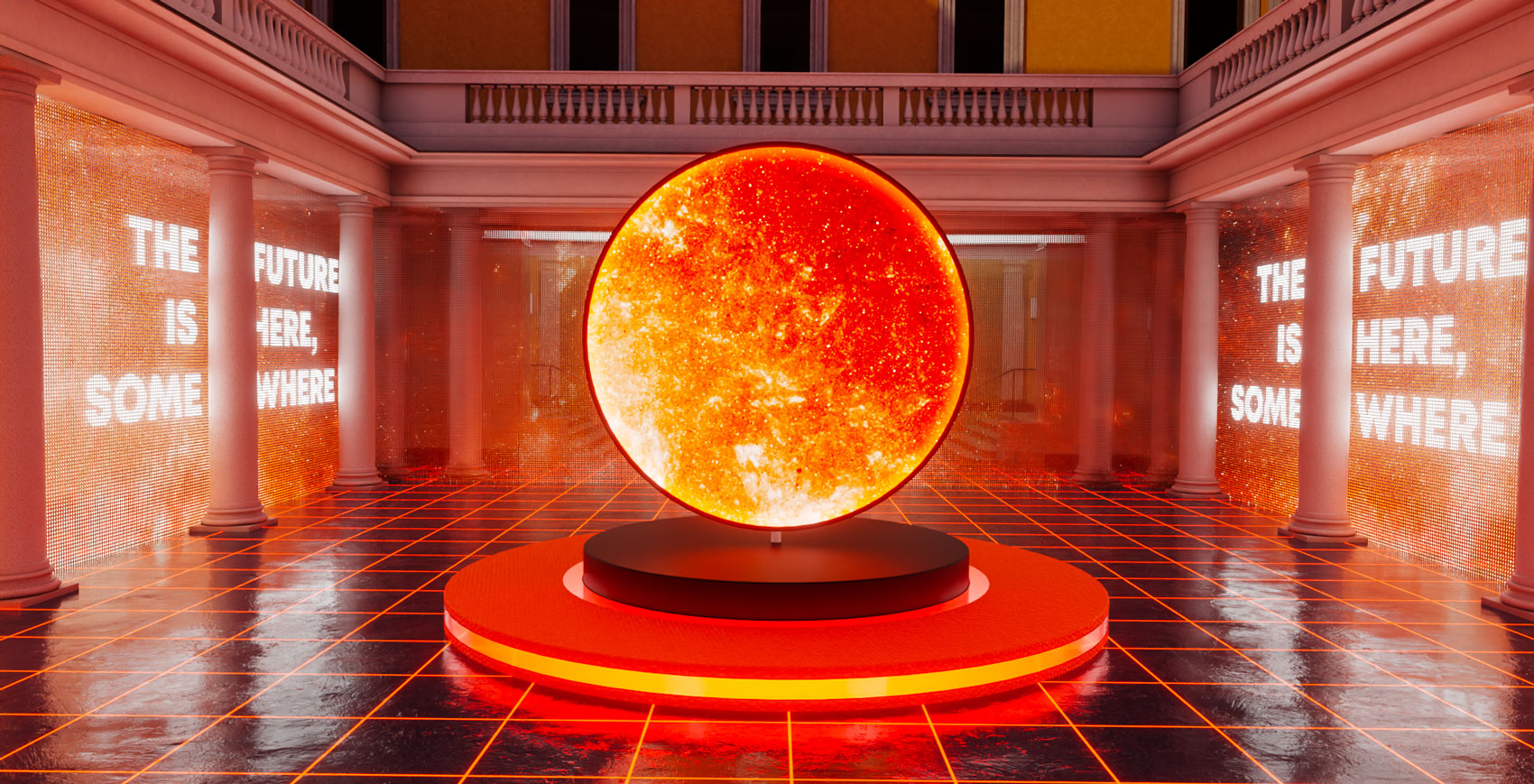
Y.O.U. Your Own Universe ©glo
A central element of the installation is your artificial intelligence systems that generate poetic texts. How does this system fit into your research on language, and what kind of dialogue emerges between human creativity and artificial intelligence?
Our research on language has always focused on producing open, ambiguous texts capable of generating multiple interpretations. Artificial intelligence has proven to be a particularly effective tool in advancing this investigation.
The algorithms we use have been trained through fine-tuning processes on selected corpora from the history of literature. This allows us to guide generalist systems toward producing specific forms - epitaphs, love poems, reflections on the future - while maintaining a degree of unpredictability.
Our interest does not lie in machine authorship or in replacing humans, but in the possibility of building a generative system that responds to precise parameters - such as length, degree of ambiguity, or semantic structure - without being tied to individual expressive intention.
When we began integrating AI in 2018, this was precisely our aim: to use a device capable of producing texts stochastically, opening up unexpected combinations. It is a dialogue between human and artificial in which the human defines the conditions and AI expands the field of technical possibilities.
Within the work, the visitor’s gestures - from movement in space to the choice of a word - help transform the installation in real time. How important is the idea of an artwork that evolves through audience interaction?
We do not think of the work as something collectively created in the sense of direct co-authorship. The artwork already exists as a structure, as a designed device. However, within it, we leave the audience the possibility to activate it, traverse it, interpret it, and transform it through their own experience.
Interaction is not an end, but a condition that allows the work to fully express itself. What interests us is that the audience can recognize in the work a space of possibility - a place where they can question their memories, beliefs, and ways of seeing the world.
In this sense, we always work toward openness. We do not aim to deliver a single, fixed message, but to create a system capable of generating questions. The experience is individual, yet it takes place in the presence of others, introducing a relational dimension that is an integral part of our projects.
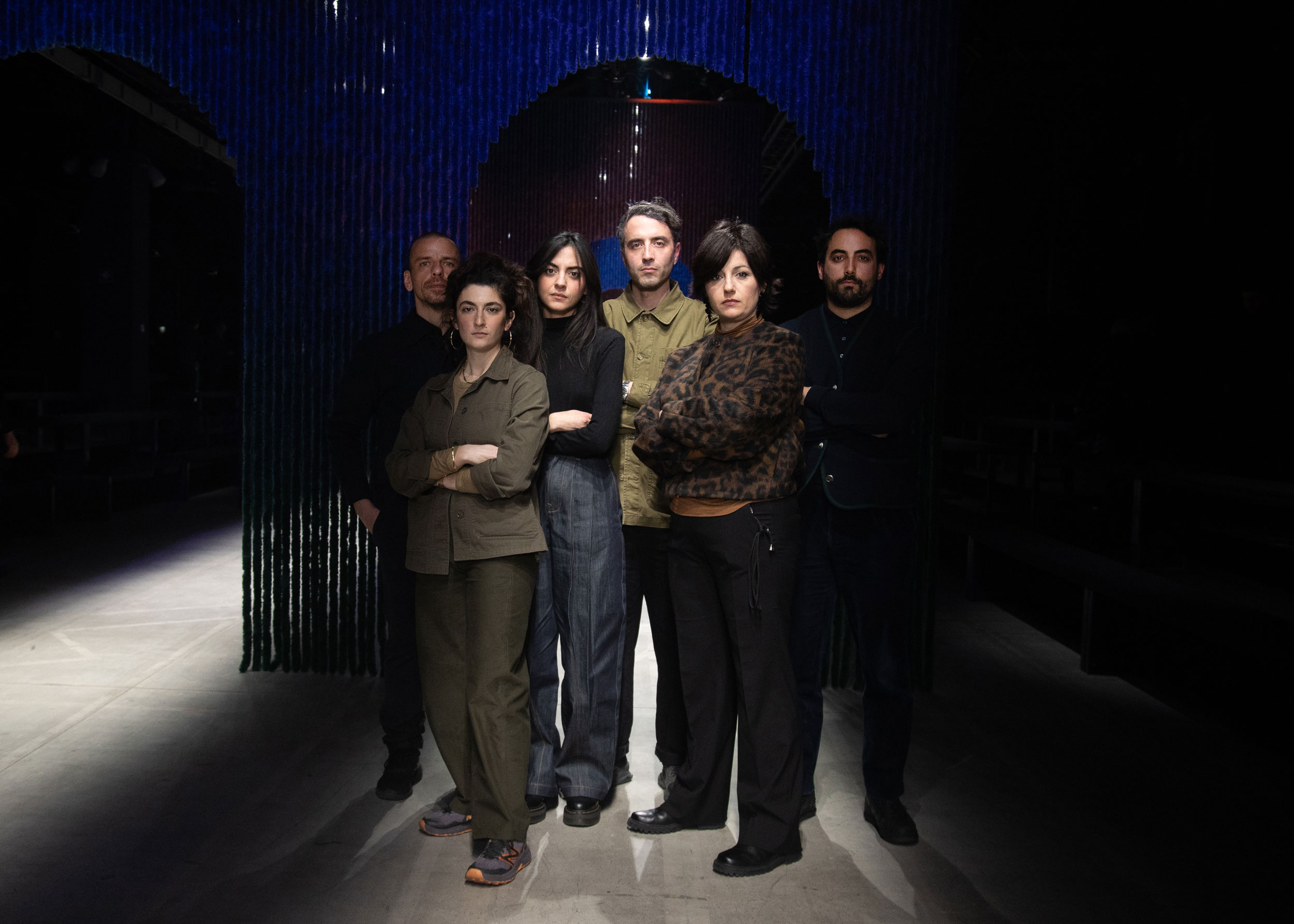
Numero Cromatico ©glo
Tag: Fuorisalone 2026 Milan Milano Design Week Design
© Fuorisalone.it — All rights reserved. — Published on 09 April 2026
 Iscriviti alla nostra newsletter