From September 12 to 20, the festival returns with exhibitions, installations, and the Contemporary Design Selection at Villa Saporiti. We spoke with Giovanna Massoni and Francesca Prandelli
From September 12 to 20, 2026, the Lake Como Design Festival returns, continuing to redefine the relationship between contemporary design and the cultural landscape of Lake Como. For its eighth edition, the festival adopts Confine as its central theme: not merely a line that separates, but a space of crossing, exchange, and contamination. The concept runs through exhibitions, installations, and projects spread across historic villas, neoclassical architecture, and locations that are usually inaccessible, creating a dialogue between craftsmanship, material research, and increasingly hybrid explorations spanning design, art, and project-based research.
Alongside the return of Villa del Grumello, the 2026 edition introduces Villa Saporiti, a late eighteenth-century lakeside residence that has recently been restored. With its centripetal layout, rare elliptical hall, and theatrical decorative schemes, the villa becomes the new stage for the Contemporary Design Selection, an exhibition that seems almost purpose-built to engage with the ideas of threshold, transition, and dialogue between eras, languages, and geographies.Curated for the fourth consecutive year by Giovanna Massoni and directed by Francesca Prandelli, Chief Coordinator of the festival, the exhibition will bring together an international selection of designers, studios, artists, and collectives invited to engage with the theme Confine. We sat down first with Giovanna and then with Francesca to learn more.
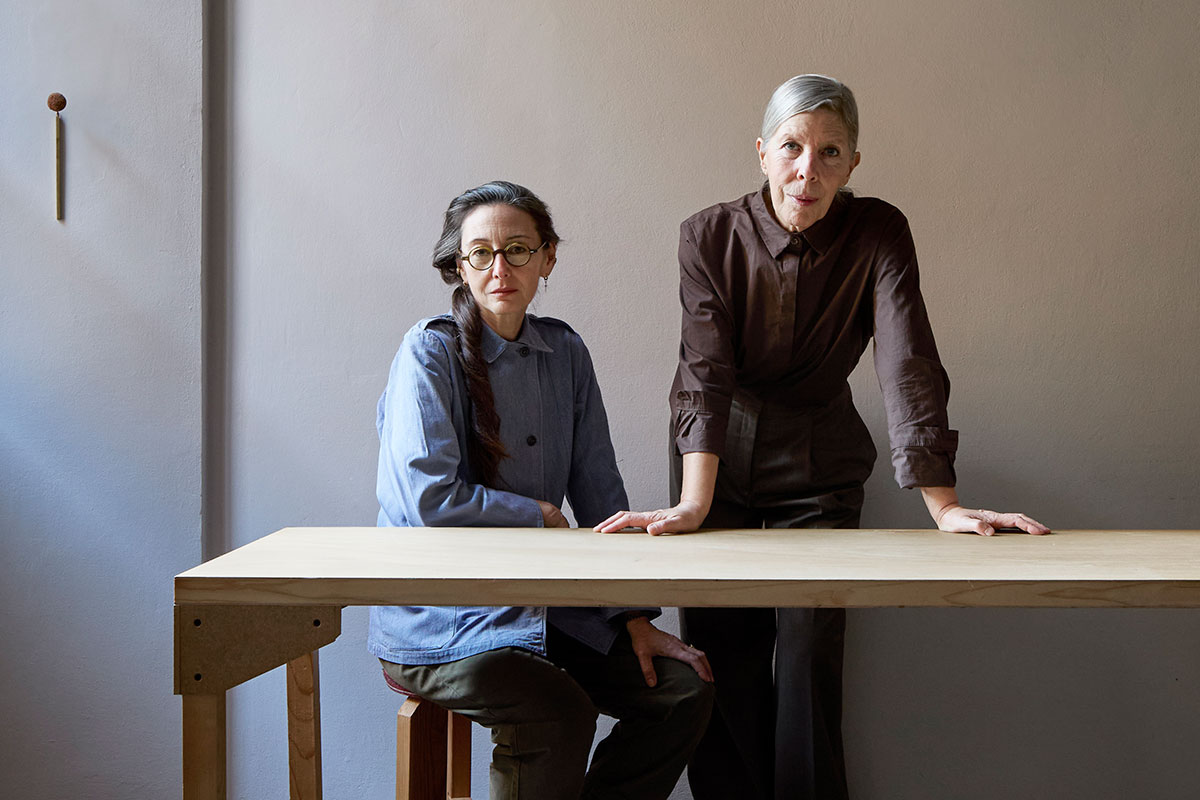
Francesca Prandelli, Chief Coordinator of Lake Como Design Festival, and Giovanna Massoni, curator of Contemporary Design Selection. ©Alessandro Ruffini
Giovanna Massoni Answers
In recent years, design seems to become most interesting when it operates in “undefined” territories: between art and function, craft and research, object and installation. Did you feel that this year’s submissions were moving in hybrid territories?
Yes, very clearly — and not by chance. We are living through a moment in which independent design and research-driven craftsmanship are actively seeking their own identity, for reasons that are at once economic, political, social, and cultural. The market has saturated traditional categories; industrial production leaves little room for sustainable material research, lower-energy manufacturing processes, or the valorization of industrial waste. Design that inhabits hybrid territories responds to all of this: it is a way of reclaiming cultural relevance without giving up physicality, materiality, and making.
There is also an element specific to this edition: the theme Confine. It is a deliberately open word, neither illustrated nor confined. This has given designers explicit permission to operate within indeterminacy — between discipline and indiscipline, between the scale of the object and the scale of the installation, between craft heritage and conceptual speculation.
What emerges from the submissions is that hybridity is no longer an avant-garde position; it has become one of the most widespread responses to the complexity of the present. It is not an escape from definition; it is a methodological choice.
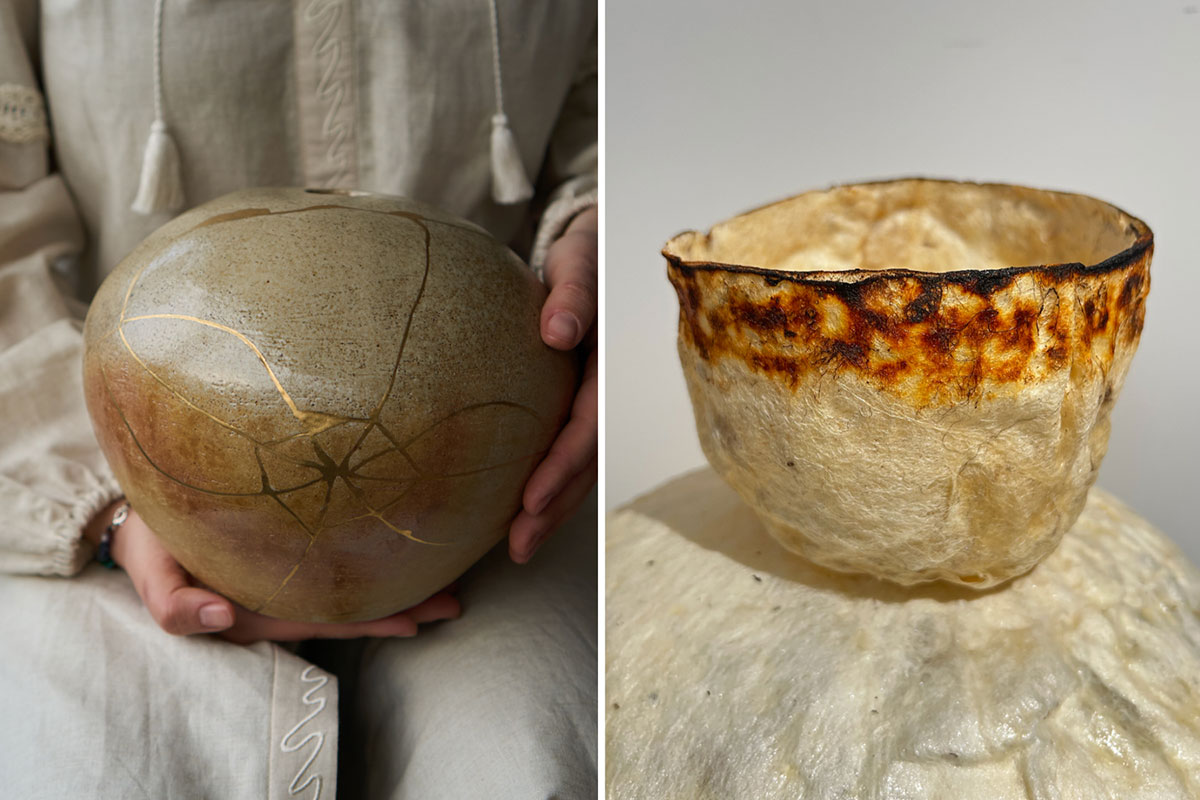
Larisa Zolotova and Sandra Battistel
Many designers seem less interested in the idea of the iconic object and more attracted to processes, materials, relationships, and narratives. Looking at the selected projects, which sensibilities or trends do you think are emerging most strongly in contemporary international design?
It is a real trend, and it says something important about the moment we are living through.
The iconic object belongs to a period in which design proposed models. Today, that confidence is more uncertain, and perhaps more honest. Designers seem less interested in making declarations and more interested in asking questions: materials as a field of research, process as narrative, and the relationship between object and context as the true substance of design. It is a critical form of design that generates questions rather than solutions. And that is not a criticism. The strongest emerging sensibilities are linked to material experimentation — often in dialogue with the environmental crisis — and to process-oriented approaches: projects in which the “how” is inseparable from the “what,” where the choice of a material is already an act of cultural and political positioning.
Yet after the experimental phase, something else must happen. The unique piece is a legitimate form, but it speaks to a specific audience, comes with exclusionary prices, and circulates through channels that often overlap more with contemporary art than with design. The risk is that the most interesting research remains confined within a self-referential niche, unable to generate broader impact. This is not a criticism of uniqueness itself — it is a question about the system.
This year the Contemporary Design Selection brings together designers from around thirty countries. Were there any approaches, sensibilities, or projects that particularly stood out in the way they interpreted the theme?
The most convincing submissions were those in which hybridity was structural rather than decorative — where the tension between experimentation and function, between craft and research, was not an aesthetic effect but the driving force of the project itself.
Several projects inhabit an intermediate territory between object, space, and matter. Oversized upholstered forms become both seating and sculpture. Similarly, porous partitions define space without enclosing it, guiding the body without imposing themselves. Other works place process at the center of the object. Self-produced glazes, drippings, and burned surfaces make transformation, error, and time visible as part of the aesthetic itself. In some cases, it is the material that generates unexpected outcomes — shades, traces, and variations — turning unpredictability into a method.
Part of the research focuses on marginal or discarded materials. Post-consumer plastics are treated using techniques associated with luxury production; agricultural waste becomes textile surfaces that make pollution tangible; fibres considered unusable are transformed through controlled burning processes that reveal their material qualities.
Other projects openly dissolve disciplinary boundaries: 3D-printed furniture made from composite materials becomes simultaneously design, sculpture, and technological performance; textiles born from the meeting of craft traditions and European industrial processes transform pattern into a space of cultural negotiation.
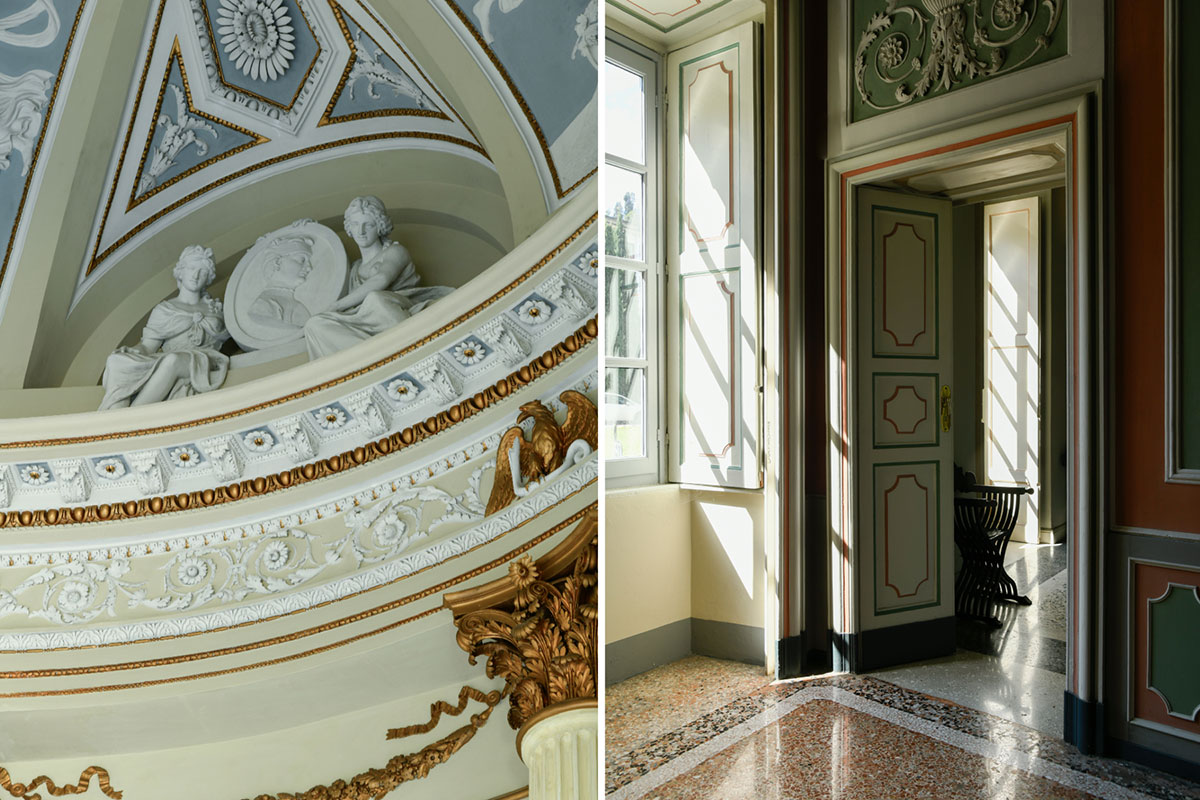
Lake Como Design Festival, Villa Saporiti. ph Lorenzo Butti
Francesca Prandelli Answers
This year the Contemporary Design Selection arrives at Villa Saporiti for the first time. How much did the villa’s almost cinematic architecture influence the exhibition and its dialogue with the theme?
When we chose Villa Saporiti, it was immediately clear that the theme Confine would not need to be imposed: the villa already embodied it. Its history, centripetal plan, elliptical hall, and the way rooms open and close around a center that gradually reveals itself — all of this is already a reflection on the idea of the boundary. Not as a line that divides, but as a threshold that organizes, calibrates inside and outside, and manages the act of crossing.
Working in a building designed around hierarchy, sequence, and gradual revelation dictated the rhythm of the exhibition. The question was not how to fill the spaces, but where projects could breathe, where the tension between historical and contemporary elements could become productive, and where it risked slipping into mere decoration. This year we raised the bar by creating a route in which every room asks something of the visitor: a choice, an act of attention, a shift in scale.
What criteria guided the selection process?
This year we received submissions from more than fifty countries, a number that confirms the increasingly international nature of the festival and already says something about the resonance that the theme Confine has generated beyond Italy.
Selection is never a neutral process: there is always a tension between curatorial coherence and openness to surprise. We kept three main criteria in focus. The first was the quality of the project itself — not in a purely aesthetic sense, but in its ability to sustain prolonged attention and reveal something that does not exhaust itself at first glance.
The second was its relevance to the theme: not an illustration of Confine, but a genuine engagement with the word — as a space, a method, and a question. The third, and perhaps the hardest to define, was the project’s ability to enter into dialogue with others: to hold its place within the exhibition without closing in on itself. This is especially important in a building such as Villa Saporiti, where every decision regarding placement, lighting, and distance between works becomes part of the meaning.
An exhibition is a system, not a gallery of soloists, and working within an eighteenth-century villa constantly reminds you that the system already has its own grammar — and that ignoring it would be a mistake.
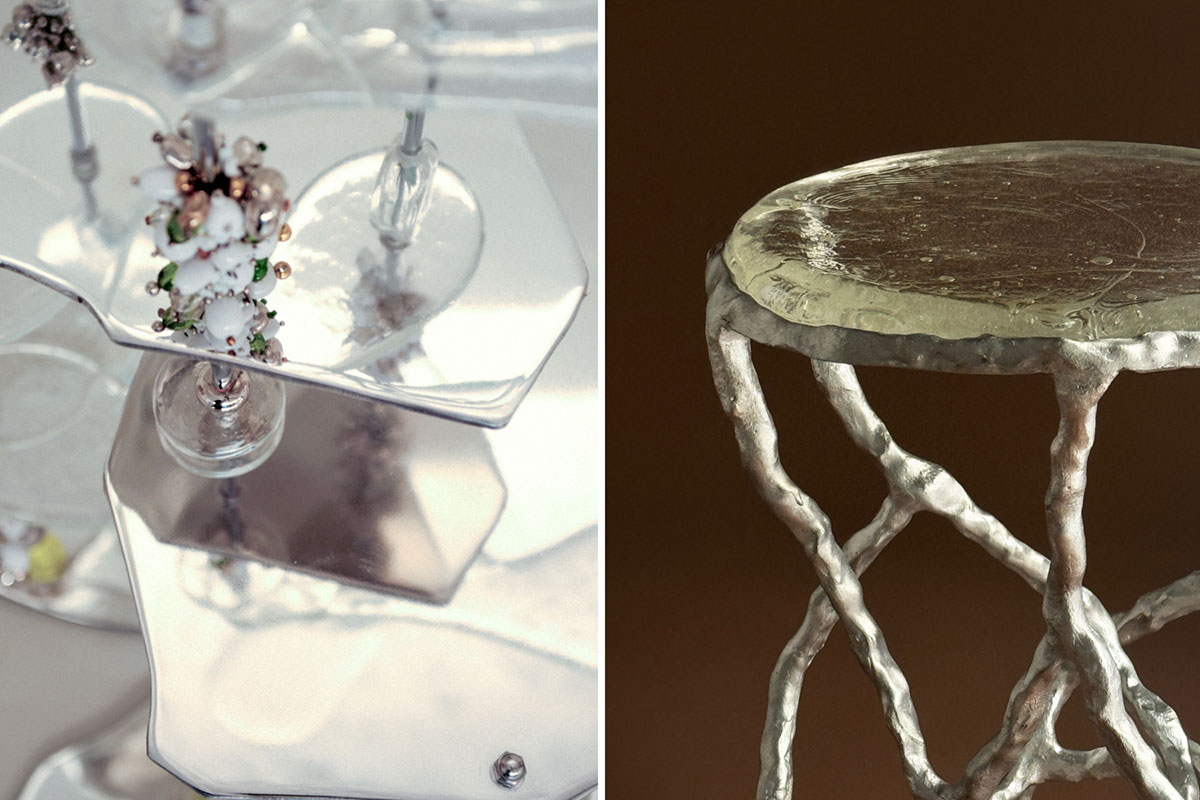
Marijke De Cock and Sofia Karnukaeva
When visitors enter Villa Saporiti this year, what would you like them to take away from the Contemporary Design Selection 2026?
I would like visitors to leave with a question rather than an answer.
A boundary is, by definition, an unstable place whose meaning changes depending on where one stands. This applies equally to geography, design, identity, and time. If the exhibition succeeds in conveying that feeling of crossing — the idea that we are always at a point of passage, never definitively on one side or the other — then it will have done its job.
For years, Wonderlake Como has worked with a clear vision: making unexpected places accessible, opening spaces that are usually closed to the public, and revealing architectures that the city normally knows only from the outside. Every edition of the festival is an act of crossing a threshold: we bring the public beyond a physical and symbolic boundary.
In this sense, the theme Confine has never been merely a curatorial choice, but a declaration of method.
Tag: Design festival Lake Como Design Festival Mostre Interviste
© Fuorisalone.it — All rights reserved. — Published on 01 June 2026
 Iscriviti alla nostra newsletter