Longevity is reshaping the way we think about living. As preventive healthcare meets responsive environments, design is taking on a new role: creating spaces that actively support everyday wellbeing. Eight Sleep offers a compelling glimpse into this shift.
For decades, longevity belonged almost exclusively to the field of medicine. Today, that perspective is changing. Longer life expectancy, the rise of the silver economy and a growing focus on prevention are expanding the conversation well beyond healthcare. Architecture, design, technology, urban planning and scientific research are now asking the same question: how can the environments we inhabit help us live better for longer?
The Milan Longevity Summit reflects this change. By bringing together researchers, physicians, institutions and businesses, it promotes a systemic approach to longevity. One that considers health as the result of multiple interconnected factors—nutrition, physical activity, mental wellbeing, technological innovation and, increasingly, the quality of the spaces we live in. Within this framework, design moves beyond the creation of objects and buildings. It becomes part of the infrastructure of everyday health.
At the same time, another transition is taking place. For more than a decade, wearable devices have been our primary tools for monitoring the body. Smartwatches, smart rings and biometric sensors have made personal data part of everyday life, now intelligence is beginning to leave the body and enter the home.
Distributed sensors, artificial intelligence and adaptive systems are shaping what is commonly described as Ambient Intelligence or Responsive Environments. Spaces that observe, interpret and adapt. Quietly. Without asking for constant interaction
For design, this represents a significant shift. The smart home allowed us to control lighting, heating and appliances through apps and voice assistants. The responsive home goes one step further. It doesn't wait for instructions. It responds to changing conditions, learning from daily routines and adapting accordingly. Technology becomes less visible, yet far more present.
Objects are changing too, For more than a century, design has focused on form, materials and ergonomics. Today it is increasingly designing behaviour, Lighting follows circadian rhythms, Climate systems react to physiological conditions, acoustic environments adjust to different activities. The value of a project no longer lies only in the object itself, but in the ongoing relationship it establishes with the people who use it.
This is where Eight Sleep enters the conversation. Founded in 2014 by Matteo Franceschetti, Massimo Andreasi Bassi and Alexandra Zatarain, the company has developed a sleep ecosystem where hardware, software and artificial intelligence work together to create a responsive sleeping environment. Its latest generation, Pod 5, combines an intelligent mattress cover, an adjustable base, a temperature-controlled blanket and the proprietary Autopilot platform, capable of monitoring heart rate, respiratory rate, heart rate variability and body temperature while automatically regulating the bed's microclimate throughout the night.
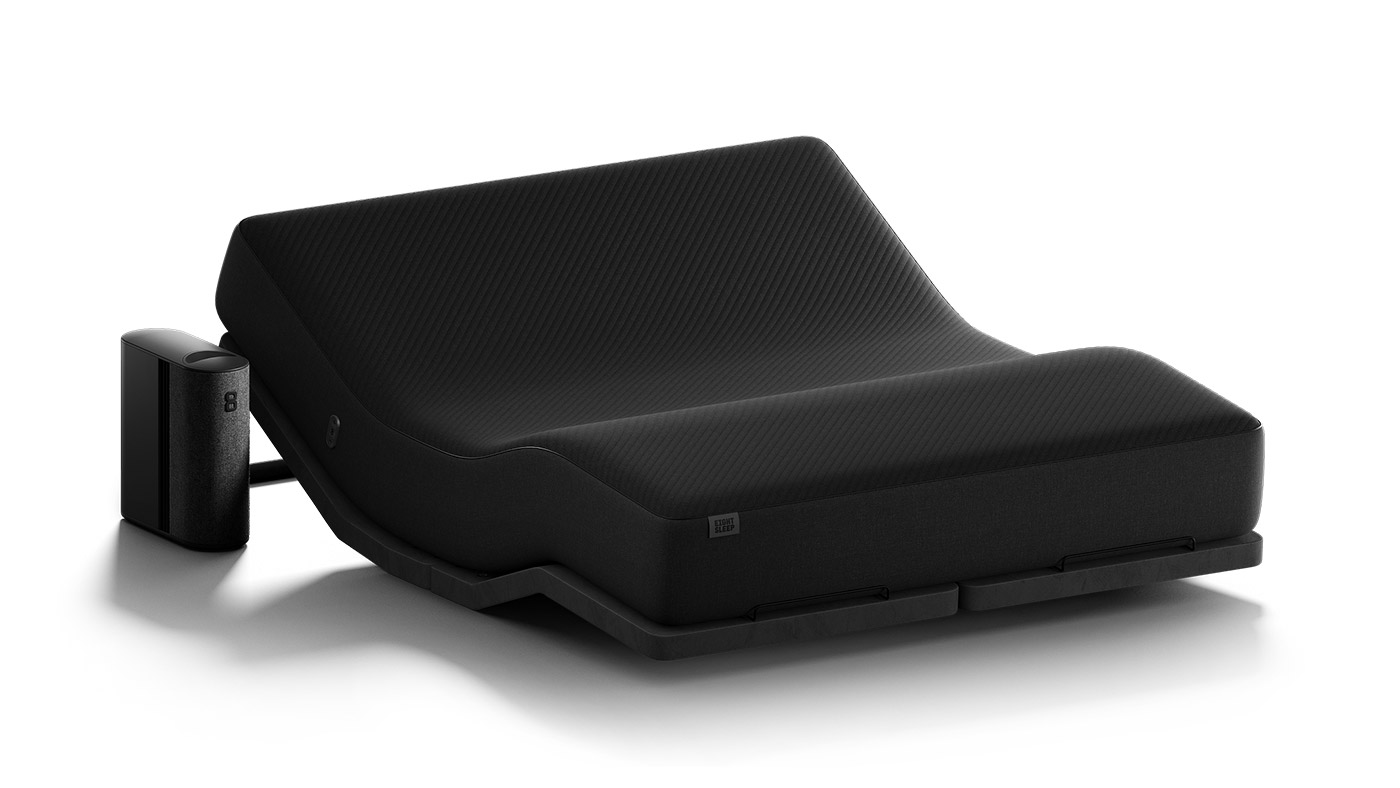
What makes Eight Sleep interesting is not simply the technology itself, but the way it is applied. Rather than introducing another connected product, it turns the bed into a responsive environment. The system observes, learns and continuously adjusts its behaviour to support physical recovery during sleep. The project is no longer defined by the object alone, but by the interaction it creates over time.
To understand where this evolution is heading, it is worth looking at professional sport. Formula One, elite cycling, triathlon and endurance disciplines have become testing grounds where recovery is considered as important as training itself. It's no coincidence that Eight Sleep is used by the Aston Martin Formula One Team, UAE Team Emirates XRG during the Tour de France, and athletes including Charles Leclerc, Fernando Alonso, Tadej Pogačar and Taylor Fritz.
Yet the real story is not about celebrity endorsements, it is about technology transfer. Many innovations that eventually become part of everyday life begin in highly specialised environments before reaching our homes. Sleep optimisation appears to be following the same path. Systems originally developed to maximise athletic recovery are beginning to redefine what domestic wellbeing can look like.
For designers, this opens an entirely new field of exploration. If the twentieth century imagined the house as a machine for living, the next decade may redefine it as an environment that actively cares for the people inside it. Not a medical device. Not a hospital. Simply a home designed to be more aware, more adaptive and more responsive.
Eight Sleep is one of the clearest examples of this transition. Not because it represents the only possible future, but because it shows how ambient intelligence can become part of everyday life. If wearables turned the body into technology's primary interface, the next step is already taking shape: extending intelligence into the spaces we inhabit. In that sense, longevity is no longer only a medical challenge. It has become a design challenge as well.


 Iscriviti alla nostra newsletter