Over 60 locations and 86 studios, brands, galleries, and universities spent three days sketching a creative geography made of industry and experimentation, new talents and major companies, art and materials research
Berlin is talking about design again, but on its own terms. No fair pavilion, no fixed route: for the first edition of CURRENTS. Design in Berlin, the German capital became the platform for the event itself. A debut that put Berlin back on the international design map — without trying to turn it into a new Milan or a second Copenhagen — and one that has already set the date for the next edition, in September 2027.
For three days, Berlin redrew its own design geography. The first edition of CURRENTS. Design in Berlin, held from September 10 to 12, brought around 9,000 visitors to over 60 locations across the city, involving 86 studios, companies, galleries, and universities. Significant numbers for the debut of a festival born with an ambitious goal: to make visible and connect a scene that had long existed in the city but had never before found a shared platform.
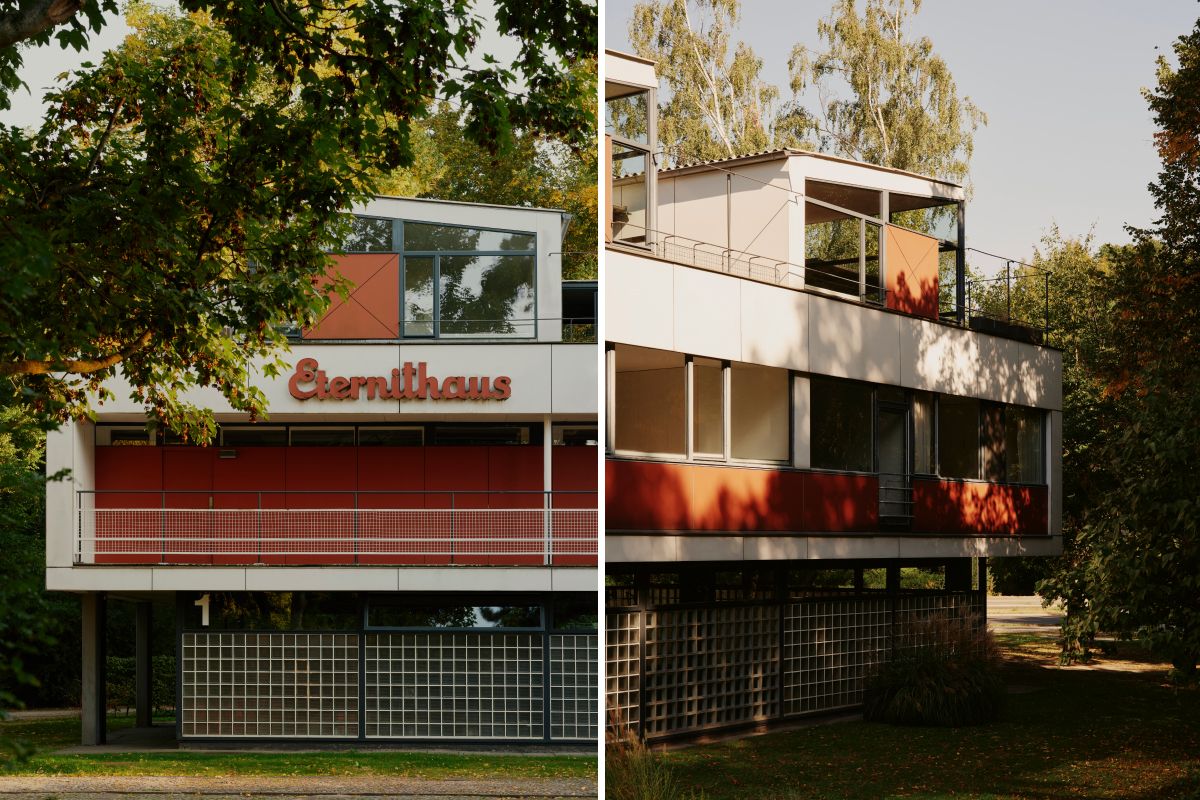
From the start, CURRENTS chose a format that reflected Berlin's own structure — polycentric, or rather, without a center at all. Not a fair concentrated in a single location, but an event spread across the city, capable of bringing the public directly into the spaces where design was conceived, developed, and produced. A "diffuse" approach that made it possible to show not just finished objects, but also the processes, people, and relationships behind their creation. "We were thrilled to see the flexibility, inventiveness, and motivation with which participants carried out their projects," said Jasmin Jouhar, co-founder of CURRENTS, noting that the presentations confirmed international interest in Berlin as a design city.
CURRENTS. Design in Berlin - Ph. Robert Rieger
Born as an independent project and carried out without public funding, CURRENTS sought to connect energies that already existed in the city, giving them a shared framework and greater international visibility for the first time. Factories, showrooms, galleries, universities, and temporary spaces formed a diffuse map, linking industry, research, culture, and new generations. And it was precisely this mix that produced something distinctly Berlin: a design culture in which the boundaries between design, art, architecture, and experimentation constantly overlapped.
Kaldewei - CURRENTS. Design in Berlin
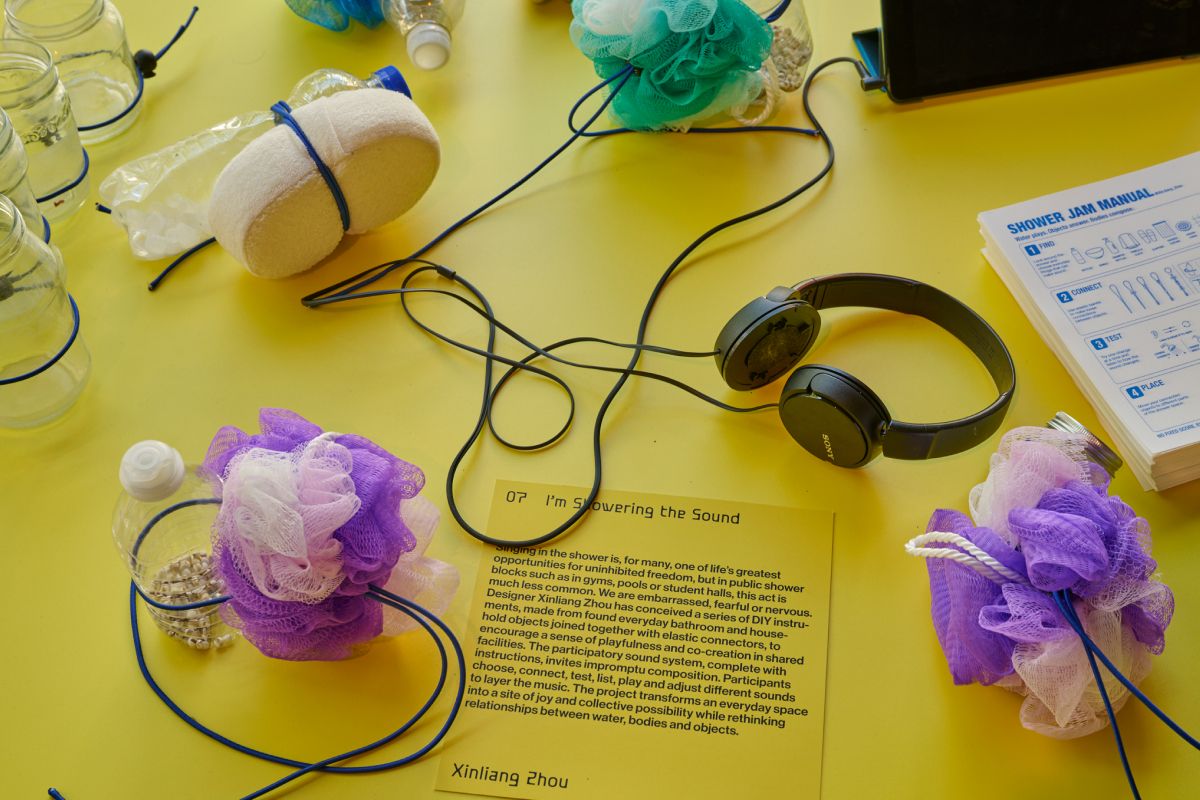
Among the most interesting projects of the first edition, Kaldewei addressed the relationship between industry, research, and education. In the company's new Brand Space, housed in two former railway arches near Savignyplatz, the results of a ten-week collaboration with students from the Design Academy Eindhoven were presented. Rather than simply asking them to design a new product, Kaldewei invited them to engage with industrial materials and processes. The resulting works shifted the focus from object to material, and from outcome to process. Circularity, durability, transformation, and the value of resources became tools for questioning not only the future of the bathroom, but more broadly the relationship between design and industrial production.
The choice of space also contributed to the project. During CURRENTS, the new Brand Space functioned less like a traditional showroom and more like a meeting platform between company, students, designers, and public. The dialogue with one of Europe's most experimental design schools allowed an industrial manufacturer to temporarily question its own materials and production logic through the eyes of a much younger generation.
Tecla - CURRENTS. Design in Berlin
Materials research returned, in a completely different form, in Marble Shaping Space, a project by Gonzalez Haase AAS for Marbledworks, presented by OUVERTURE Studio. Furniture and spatial objects in marble explored the relationship between materiality, function, and what the designers called a "choreography of everyday behaviors."
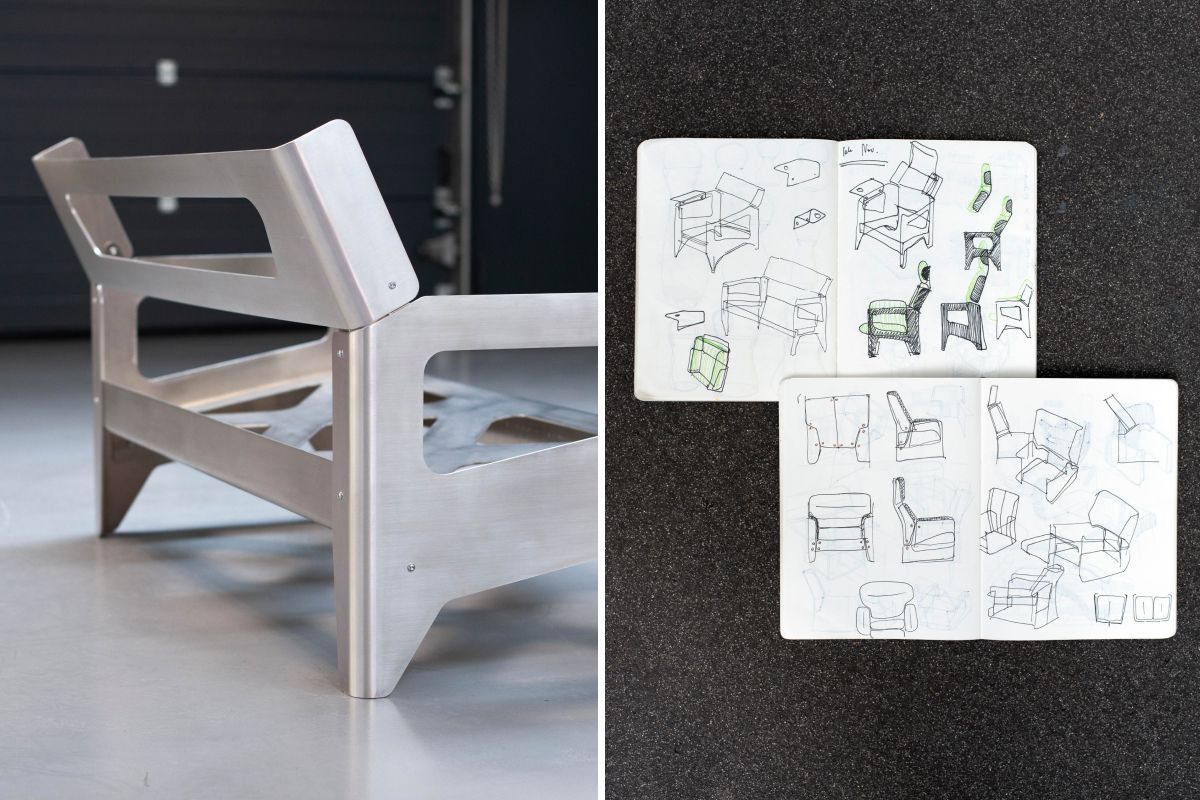
In Kreuzberg, meanwhile, Tecta's Berlin Room occupied the spaces of a former factory on Pücklerstraße, transforming them for CURRENTS into a kind of temporary apartment dedicated to Berlin design. Here, Tecta connected its own Bauhaus tradition with a new generation of designers tied to the city. At the center of the project was Pascal Hien, a Berlin-based designer trained at the Universität der Künste who worked at Konstantin Grcic's studio before founding his own in 2023. Together with Tecta, Hien built an environment where his work engaged in dialogue with pieces by Hanne Willmann, Geckeler Michels, Katrin Greiling, Daniel Lorch, and Andree Weissert. With Erlkönig – Design in Process, Tecta and Hien also showed prototypes from a new seating collection, bringing to the forefront materials, comfort, proportions, and the usually invisible decisions that precede mass production. The choice of a disused factory, far from the traditional trade-fair context, also helped turn the design process itself into part of the experience. Rather than celebrating the Bauhaus as heritage, the project set its legacy back in motion through process and experimentation.
Grau - CURRENTS. Design in Berlin
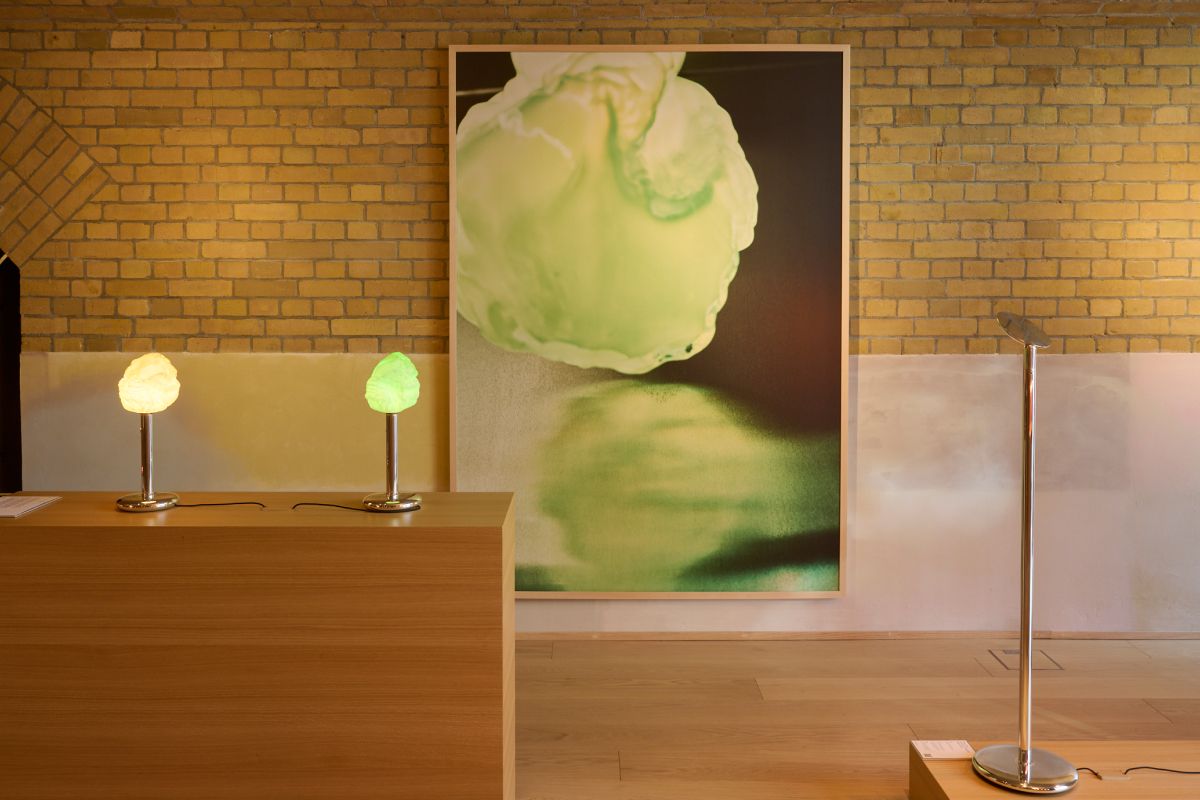
If Kaldewei opened up the world of industry to the experimentation of a new generation of designers, just a short distance away GRAU chose instead the border territory between design and contemporary art. In its space on Savignyplatz, the brand presented ALIEN, a project developed with artist Yngve Holen. Produced in a limited edition of 200 pieces, the object took the shape of moldavite as its starting point, translating it through mouth-blown glass reactive to UV light and a polished aluminum body.
With ALIEN, GRAU and Holen questioned the distinction between lamp, sculpture, and collectible object. The collaboration proved especially meaningful for Holen's practice, which has long focused on the transformation of industrial objects and on the relationship between body, technology, consumption, and desire. The functional object thus became the starting point for a work that moved freely between industrial production and artistic practice.
This permeability and porosity between culture and industry was one of the most interesting features of CURRENTS' first edition. And it wasn't only about visibility. Laura Ewert, co-founder of the festival, noted that beyond the public's enthusiasm for the quality of the exhibitions, it was especially important that new professional contacts were formed during the festival, and that sales had also taken place.
A question thus emerged that ran through many of the projects presented: what role could companies and brands play within design culture, beyond producing and presenting new objects? CURRENTS suggested some possible answers: becoming commissioners, research platforms, partners for artists and schools, and producers not just of objects, but of ideas and relationships.
Tag: Design festival News
© Fuorisalone.it — All rights reserved. — Published on 17 September 2026
 Iscriviti alla nostra newsletter