Designers, materials, craft and new technologies across more than 300 events from 12 to 20 September
A tile that is not fired, but “grown” with the help of bacteria. Textile waste transformed into acoustic products. Sugarcane by-products turned into building material. In London, where the London Design Festival returns from 12 to 20 September, some of the most interesting projects begin with the material itself. More than 300 events across eleven Design Districts make up a programme spanning research, circularity, craft and new technologies. One of the key destinations is Shoreditch, where the long-established Design Triangle expands into Shoreditch Design Week, the Festival’s largest official district. From 15 to 20 September, it brings together more than one hundred showrooms, exhibitions, installations and events, with designers including Jasper Morrison, Bethan Laura Wood, Martino Gamper, Raw Edges, Lee Broom, Donna Wilson and Rio Kobayashi. Material Matters also moves to Shoreditch for its fifth London edition, taking place from 15 to 17 September in the industrial spaces of UNLOCKED Shoreditch.
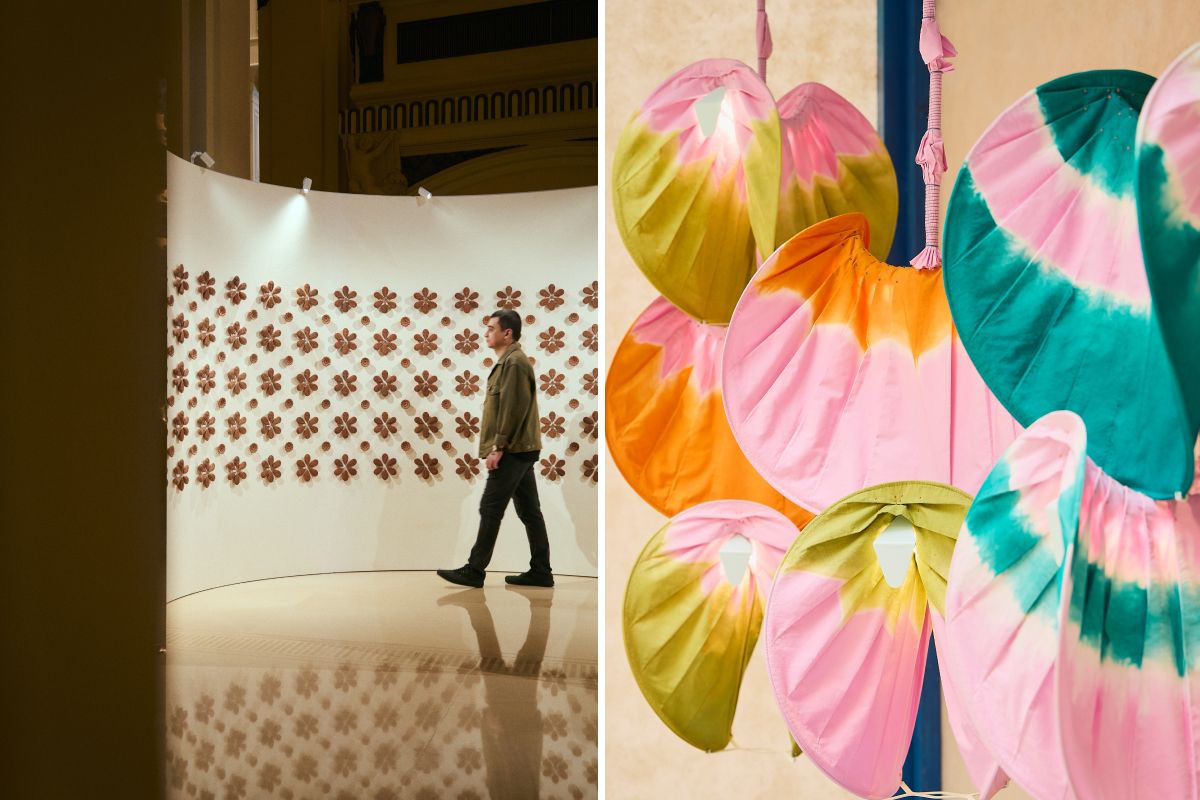
On the left: Setyawan. Work credit The Peninsula / On the right: Craft Tech Tokai Project, © Ed Reeve
Among the projects, FRONT® and Biomason present Mimmik Tile™, a tile grown with the help of bacteria rather than fired in a kiln; The Or Foundation transforms post-consumer clothing into acoustic products, while Carbon Cell is developing a compostable, biochar-based alternative to plastic foams. Neve Beill Ceramics, with Thames Matter, works with material sourced from the Thames alongside reclaimed glass and minerals, while Zieta Studio continues its exploration of shaping metal with air in Whispers Bench. With Second Song, Spared pushes circularity one step further: the Brighton-based studio founded by Callie Tedder-Hares and Emma Lally turns waste generated by its own practice into collectible design, from spent coffee grounds and shells to plastics and timber by-products. The remnants become a record of the projects and experiments that produced them. In the EC1 Design District, meanwhile, Sugarcrete® is presented at VitrA in New Ways of Thinking About Land, Time and Buildings. Developed by the Sustainability Research Institute at the University of East London with AKT II and other partners, it is a low-carbon building material made from sugarcane by-products and proposed as an alternative to conventional construction materials.
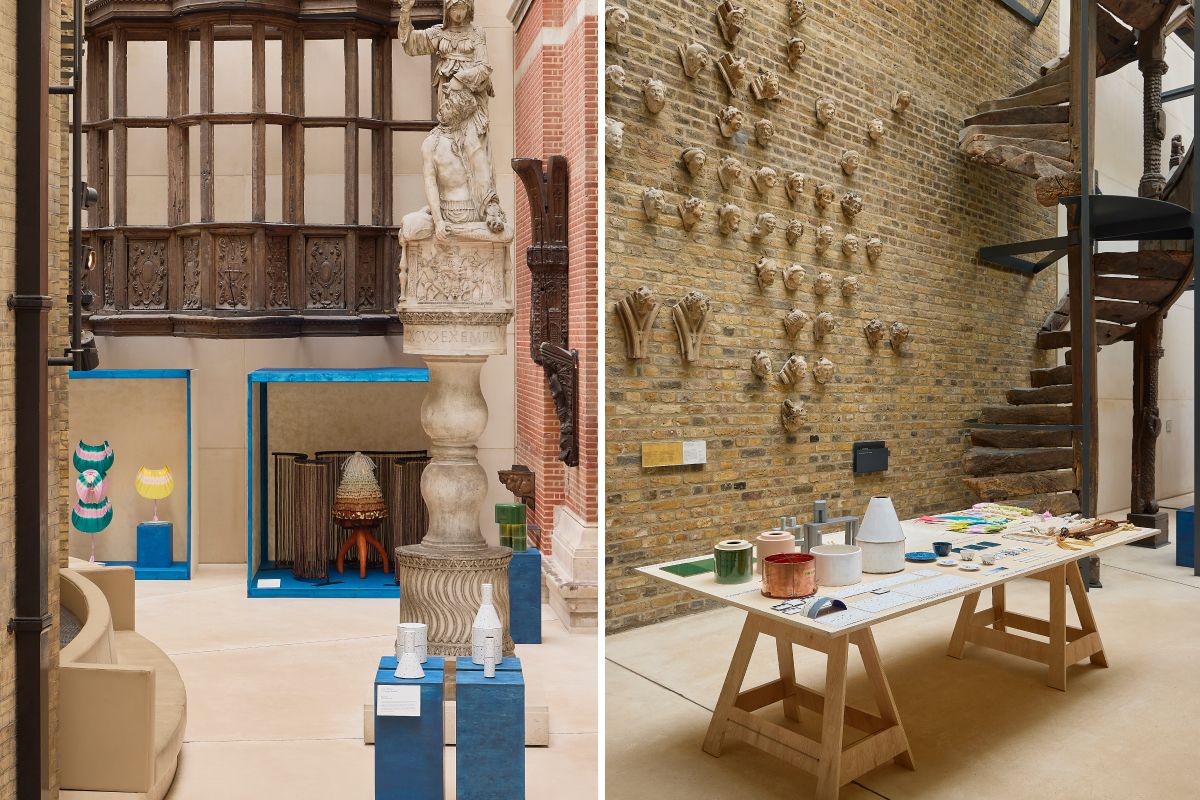
Craft Tech Tokai Project, © Ed Reeve
But material research is only one of the themes running through the Festival. At the V&A – Victoria and Albert Museum, the Global Design Forum returns from 12 to 14 September, curated this year by Rhiarna Dhaliwal and centred on the theme Worlds in Motion. Speakers include Es Devlin, Lakwena Maciver and Natalie Melton. Also at the V&A, Craft x Tech Tokai Project pairs international designers and artists with craftspeople from six areas of Japan’s Tokai region to create new works rooted in traditional techniques, from ceramics and lacquer to metalwork, woodworking, washi paper and textiles. Founded by designer and engineer Hideki Yoshimoto and curated by Maria Cristina Didero, the project returns this year for its second edition. Among the collaborations, Bethan Laura Wood works with Hiroyuki Murase of Suzusan, Philippe Malouin with Shigeyuki Ando of Ando Cloisonne, and Lanzavecchia + Wai with Takanori Senda of the Warabi Paper Company, bringing long-established craft techniques into dialogue with contemporary design. Also at the V&A, Awakenings, curated by Carrie Chan and Kristian Volsing, explores the relationship between design, craft and technology, including the creative and destructive potential of artificial intelligence. The exhibition features works by Henry Svendsen, Sam Ghantous, Andre Williams, Nina Davies and Albert Yonathan Setyawan, alongside new commissions by Aziza Kadyri, Eunjo Lee and Playfool.
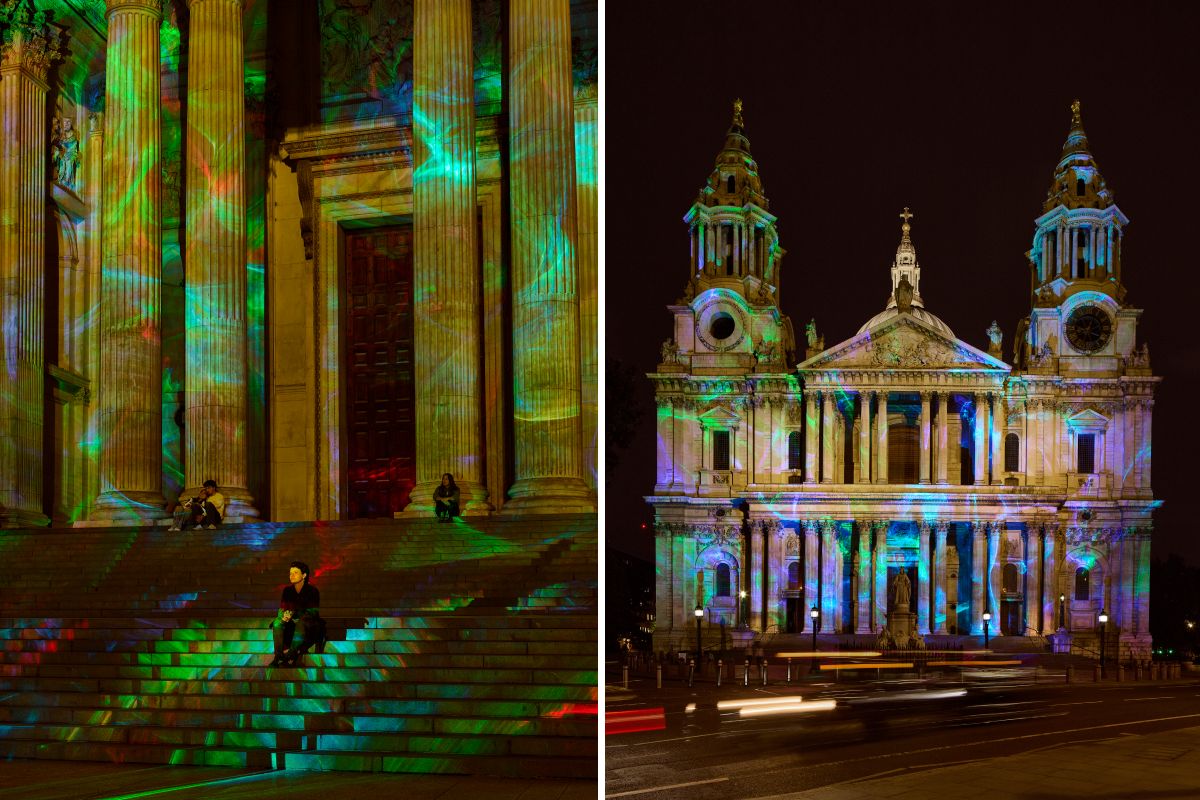
Soul e The Point of Unity © Mark Cocksedge
Among the Landmark Projects, The Pangolin Shield by Studio Saar and Atelier One occupies Strand Aldwych with a bamboo structure layered with traditional Indian police shields and knups, woven rain shields used by farmers in north-eastern India. Reassembled to form a collective shelter, they provide a starting point for exploring colonial legacies, power, ecological exploitation and movement across borders. At St Paul’s Cathedral, Ukrainian lighting designer and artist Mykola Kabluka presents Soul and The Point of Unity: the former is an audiovisual installation generated through the interaction of light, glass, movement and space; the latter, making its UK debut following its presentation at Burning Man, is an immersive sculpture illuminated at night by 3,500 fibre-optic points. Finally, at the Wapping Hydraulic Power Station, an 1890 industrial building reopening to the public after thirteen years, L-Acoustics presents The Art of Sound, featuring Max Cooper and Chris Watson, with sound becoming a material in its own right. What emerges from the London Design Festival is an approach to design that pays increasing attention to the origins of materials, the processes through which they are transformed, and the potential to recover techniques, resources and waste to develop new ways of designing and making.
Tag: Design London Design Festival Mostre Exhibitions News
© Fuorisalone.it — All rights reserved. — Published on 14 September 2026
 Iscriviti alla nostra newsletter