Simple Flair Apartment
C/o Casa Rossi
Corso Magenta, 12,
20123 Milano
In Corso Magenta, more than 550 square metres and twelve rooms host the latest chapter of Simple Flair. A temporary apartment takes shape inside the nineteenth-century palazzo ahead of its conservation restoration, designed by Michele De Lucchi for Bizzi & Partners, turning the period before construction begins into an opportunity for encounters between architecture, design and culture.
Casa Rossi, a palazzo designed by Giuseppe Pestagalli in 1860 on Corso Magenta, is home to the new Simple Flair Apartment until the conservation restoration works begin, scheduled for May 2027, when the building will be transformed into private residences. For the 2026/27 season, Simona Flacco and Riccardo Crenna have chosen the piano nobile, with more than 550 square metres arranged around an octagonal courtyard, as the setting for a project dedicated to design and contemporary culture. A programme of meetings, exhibitions and collaborations will animate the apartment through to Milan Design Week.
This new address marks a different stage in the evolution of the format, following its previous Milan locations and its experience in New York. Launched in 2017, Simple Flair Apartment has developed a model that brings brands, designers and industry professionals together through domestic settings used for presentations, meetings and cultural activities. At Casa Rossi, this approach engages with an architecture of distinctive character, organised around an octagonal courtyard that forms the building’s visual and spatial centre. The rooms follow a sequence of interconnected routes, allowing visitors to move through the apartment in different directions without a prescribed itinerary. The original layout has informed an arrangement of distinct spaces, each with its own purpose, yet connected within an open system.
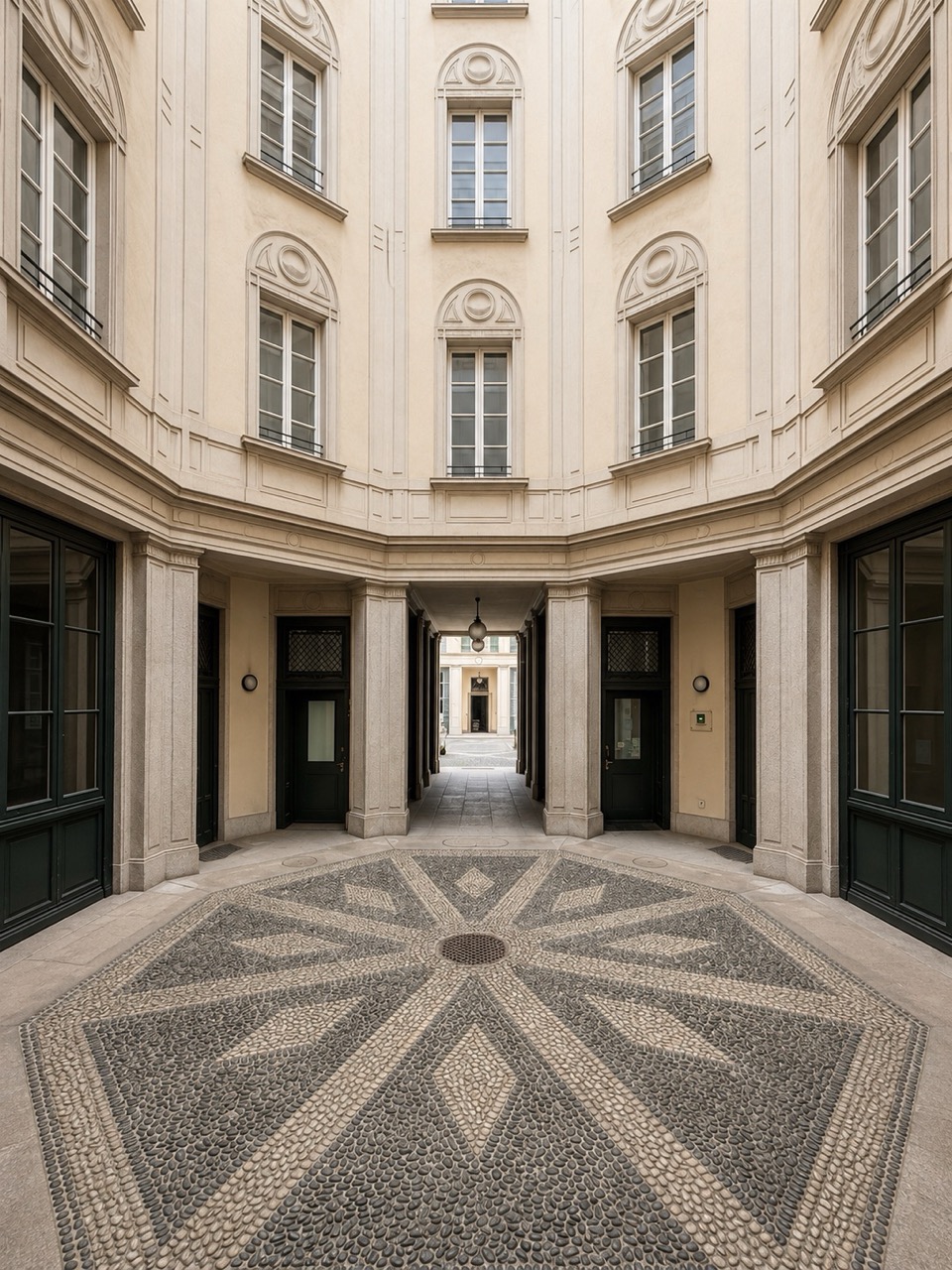
Casa Rossi, cortile ottagonale.
A gallery, café, library, club, hobby room, dining rooms and Simple Flair Goods make up a home that will evolve throughout the season through dinners, exhibitions, presentations, meetings and collaborations. The interiors bring together furniture, lighting, accessories and artworks from companies and designers spanning different generations. Among the participating brands, Spotti, Sikkens and Bang & Olufsen make a particular contribution to the definition of the spaces, through furniture research and selection, colour and surface finishes, and sound. Bang & Olufsen’s audio system is integrated into the Club area. They are joined by Aptitude Objects, Alberto Levi Gallery, BD Barcelona, Bianco67, Brokis, Cassina, Campo Marzio, CC-Tapis, Cimento, Copatlife, Decollectible Gallery, ERG Media, Kriptonite, Natuzzi, Nekhoama, Officine Morelli, Parachilna, Radici, SEM, 6AM and Zanotta. Together with the work of established and emerging designers, these brands bring references from furniture, lighting, textiles, art and accessories into domestic settings.
The interiors combine historic pieces, contemporary production and work by emerging designers. Furniture by Cassina, Zanotta and BD Barcelona sits alongside projects by Patricia Urquiola, Mario Bellini, Gae Aulenti, Muller Van Severen and Ronan Bouroullec, as well as creations by younger studios, artworks, textiles, ceramics and collectible objects. Rather than treating each room as an independent exhibition space, the installation places objects within settings that evoke everyday activities, from reading and conversation to dining and listening to music. The apartment also provides a working context for the participating companies, allowing them to present products and projects within lived-in environments where objects become part of everyday routines.
Simple Flair Apartment Magenta, Casa Rossi. Images by Alice Beltrami
The temporary nature of the initiative is central to its significance. Casa Rossi is preparing for a major transformation, yet before construction begins, its rooms can be explored and used through a programme that brings the building back to life without anticipating the future architectural project. Simple Flair occupies this intermediate phase, respecting the character of the palazzo while establishing a temporary use suited to its existing architecture.
Working without making permanent changes to the interiors has allowed the team to focus on furniture, colour, objects and functions, letting the proportions of the rooms, the light and their relationship with the courtyard guide the installation.
The project also raises questions about the relationship between property development and the city. A historic building can remain closed while awaiting transformation, or it can maintain a connection with people and its cultural context during that period. At Casa Rossi, design provides a means of creating the latter condition, bringing together the property owners, brands, designers and an international professional community. The initiative does not replace the future restoration; it accompanies the palazzo towards its next chapter, making its architecture visible and building a narrative ahead of its residential future.
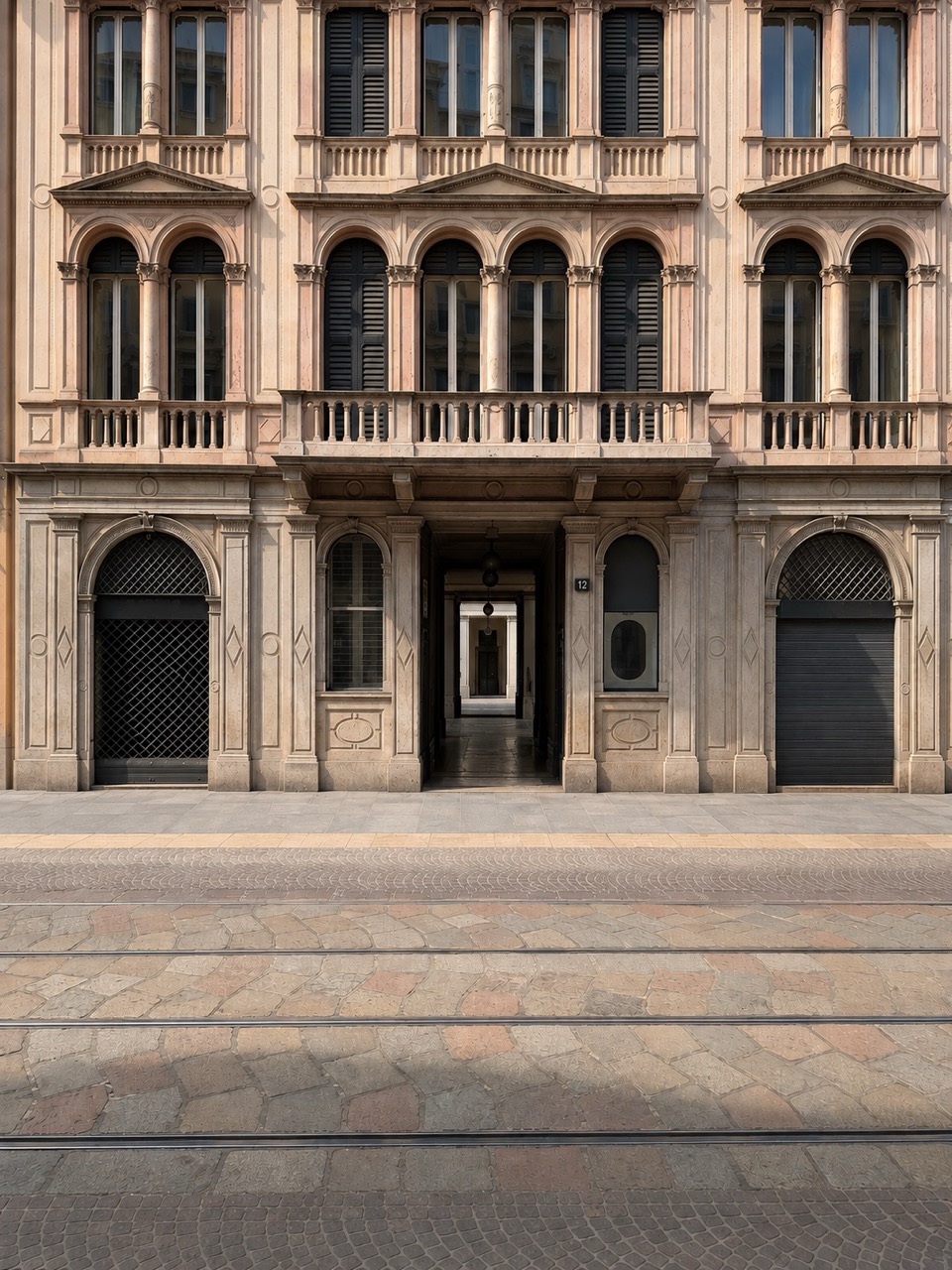
Casa Rossi, Corso Magenta, Milano.
For Bizzi & Partners, the next stage will be led by Michele De Lucchi and AMDL CIRCLE, with a conservation project developed in collaboration with the Soprintendenza, Italy’s heritage protection authority. The stated objective is to preserve the building’s architectural character, proportions and materials while adapting Casa Rossi for a new residential life. Simple Flair Apartment occupies the space between these two moments: the building’s history and its future. Its temporary use brings the rooms back into everyday life and reconnects them with the design community.
The programme will continue through Milan Design Week in April 2027, with events spanning design, architecture, art, fashion and hospitality. For Crenna and Flacco, the value of an event lies less in its scale than in the quality of the relationships it creates, whether around a presentation or a dinner for a small group of guests. Casa Rossi becomes a platform for exploring new forms of collaboration between design culture and industry, in a city where the transformation of buildings is increasingly connected to changes in the ways design is produced, communicated and experienced.
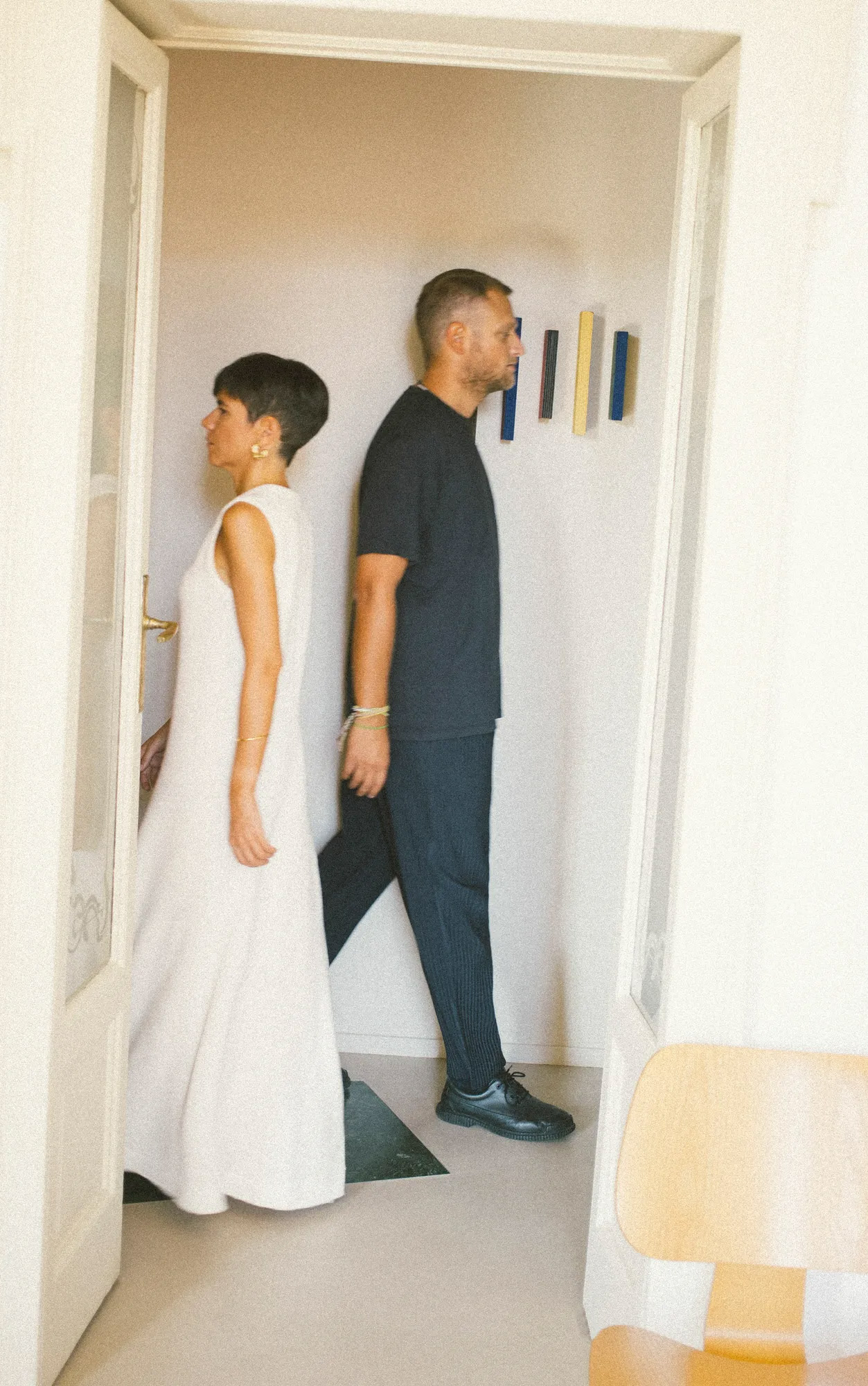
Riccardo Crenna, Simona Flacco. Ritratto di Mattia Bianchessi
From editorial platform to physical space
This is your third Milan location, alongside your presence in New York. How has the Simple Flair format evolved over time? And what role can a project such as Simple Flair Apartment play today in bringing cultural value and visibility to a property before it reaches its definitive use?
R.C. Simple Flair Apartment is a project that grows and evolves with us. It began in Milan almost ten years ago and has gone through several stages, eventually reaching New York and now Casa Rossi, which will be our new home in Milan until May 2027. The underlying principle, however, has remained the same: creating places that bring people, ideas and opportunities together. Spaces with a strong identity, with the warmth and spontaneity of a home, but which also function as cultural and professional platforms.
At Casa Rossi, this concept takes on a new dimension. Encountering a building of such significance to Milan’s history felt like an almost natural fit, entirely consistent with our own journey and that of the partners who accompany us.
There is also a more strategic aspect. Today, we want to play an active and practical role in the forces reshaping the design industry. The relationship between products, architecture, real estate development, culture and the changing needs of cities is undergoing a profound transformation. We believe these worlds need to engage with one another far more than they have in the past. In this sense, Simple Flair Apartment does not simply aim to enhance a property through design. It seeks to create a context in which these different stakeholders can meet, exchange ideas and develop new perspectives.
We are not interested in proposing a vision that everyone necessarily has to share. We want to have a clear point of view, one that can generate dialogue. Even the exchange of differing positions is a form of growth, both for us and for the wider industry.
Designing within a historic palazzo on a temporary basis
Working within a historic building such as Casa Rossi means engaging with existing architecture, its constraints and the challenge of creating an installation intended to last for a limited period. What were the main design challenges, and how did you approach the relationship between the original space and the new concept?
R.C. I believe the key was to let the building speak for itself. We chose an approach that was respectful yet decisive. We did not want to superimpose one project onto another, or transform the rooms through excessive intervention. Instead, we wanted to evoke and amplify what was already there.
The character of the rooms, their proportions, colours, light and the relationships between spaces all contribute to the atmosphere that only certain historic Italian residences can convey.
The real design element, however, is the apartment’s floor plan itself. More than 550 square metres unfold around the octagonal courtyard, the architectural and spatial centre of the home. It is an extraordinary configuration, creating circular flows, continuous routes and the possibility of moving through the rooms without a clear beginning or end.
This structure inspired the concept: a different way of experiencing domestic space, almost in a loop, where every room has its own identity while remaining part of a fluid, continuous experience. There is no prescribed route. Visitors can explore, retrace their steps and discover new perspectives. The architecture naturally encourages movement and encounters. Our work has therefore focused on interpreting this identity in a contemporary way, without trying to erase it or artificially reconstruct something that belongs to the past. From this perspective, the temporary nature of the project was almost an opportunity. It allowed us greater freedom to work through suggestions and impressions, creating a dialogue between architecture, furniture, objects and people.There is another aspect I find particularly interesting: Casa Rossi stands at the heart of a Milan undergoing profound social, cultural and experiential change.
Bringing the present into contact with the historical roots of a building like this also means asking what kind of identity we want to give the city of tomorrow.
For us, the project emerges from this exchange. It is not about reinterpreting the past, but about using it as a starting point for imagining something new.
The property owner's brief and Simple Flair's vision
What was Bizzi & Partners’ brief for Casa Rossi, and how did you interpret it? What objectives did you set for the concept, and how did you translate the owner's requirements into a project able to accommodate events, content and collaborations?
R.C. Working with Bizzi & Partners is always a pleasure, but above all, it is a source of inspiration.I think it is relatively rare to encounter a property owner so far-sighted and willing to make room for unconventional ideas, which inevitably involve a certain degree of risk.
This is something I often reflect on. I have the feeling that Italy is gradually losing its willingness to take risks. I fully understand the reasons, especially in the current economic climate, but we must not forget that a significant part of our business landscape was built on the vision and courage of people who decided to do something that had never been done before.We see this every day in our consultancy work with Simple Flair, too. For many brands, making bold decisions has become increasingly difficult. And yet, when risk is supported by a clear vision, expertise and strong execution, it can generate extraordinary value.
I believe this is one of the things our team and the Bizzi family have in common: a shared vision, a willingness to engage in discussion and, above all, the desire to make things happen. This alignment has led to a project with a clear identity, capable of welcoming our network while also becoming a platform for communicating the future of Casa Rossi.
That future will also bear the mark of Michele De Lucchi, whose intervention I am certain will further enhance the building’s identity and offer future residents an authentic way of experiencing Milan.
I believe this is a fundamental value, one that is sometimes underestimated: the identity of a city. It is a heritage made up of architecture, culture, habits, relationships and ways of living, which today risks being sacrificed in favour of increasingly standardised models. It is a value we can recover, interpret and communicate at every scale, from an individual object to an entire building.
A programme built around relationships
What projects, collaborations and events will animate Simple Flair Apartment over the coming months? Which areas of design and culture do you intend to explore, and how do you see the programme evolving throughout the year?
R.C. As always, we like to explore different fields without imposing overly rigid boundaries. The programme will span design, architecture, art, fashion, culture and hospitality, with events that vary considerably in scale, content and audience. There will be dinners, conversations, talks, panels, exhibitions, presentations and collaborations, as well as less conventional formats that we are developing together with our partners. What matters to us, however, is not creating a packed calendar of events for their own sake. We want to create genuine opportunities to meet, with moments that are experienced and shared by people who have something meaningful to contribute. Sometimes this can happen during a large evening event; at other times, around a table with ten people. I do not believe the value of an experience is necessarily proportional to its size or visibility. In fact, the opposite is often true.
There is a principle that has always guided our work and that I consider fundamental to this new season of the Apartment: what you do matters, but how you do it matters even more.The real difference lies in how you shape an experience, choose the people involved, attend to the details and create the conditions for a genuine relationship. I believe this attention to the how has become even more important today, when we are all exposed to an enormous quantity of content, events and stimuli.
Casa Rossi and Fuorisalone 2027
Casa Rossi is preparing for a new season during Milan Design Week 2027.
What role do you envisage for the space during Fuorisalone, and what can you share about the programme, the partners involved and the projects currently in development?
R.C. I can only say that it will be an incredible Design Week. We are working on several projects, some of which are already at an advanced stage, that will involve Casa Rossi and our network on an even broader scale.
For now, however, everything is under embargo, and I would prefer not to reveal anything. I can only add one thing: this year, for us, Design Week will begin considerably earlier than usual.
Featured at Simple Flair Apartment: 6AM, Achille e Pier Giacomo Castiglioni, Afra e Tobia Scarpa, Ananas Ananas, Aptitude Objects, Bang&Olufsen, BD Barcellona, Bianco67, Brokis, Cassina, CC Tapis, Cimento, Copatlife, Cose in Corso, Cristiano Pereira, Decollectible Gallery, Federico Peri, Gae Aulenti, Giuliana Gramigna, Hafner Buro, Hannes Peer, Joe Colombo, Karla Otto, Kokeita, Kriptonite, Le Corbusier, Marco Campardo, Mario Bellini, Mario Botta, Massimo Iosa Ghini, Muller Van Severen, Nekhoama, Officine Morelli, Parachilna, Parasite 2.0, Patricia Urquiola, Piero Lissoni, Pierre Jeanneret, Radici, Ronan Bouroullec, Sand Archive, Sarah Espuede, SEM, Sikkens, Studio Fango, UBR Studio, Yoonjeong Lee


 Iscriviti alla nostra newsletter