Lamps, chairs, sneakers, textiles, sound-absorbing materials and bioplastics: pineapple waste at the intersection of design and research
In Venice, pineapple peel became a lamp. At Milan Design Week 2026, a chair. At Dutch Design Week, a jacquard fabric. In the Philippines, even a pair of sneakers. Usually discarded as waste by the food and agricultural industries, pineapple peels and leaves are finding an increasingly diverse range of applications, from furniture to fashion. And while designers experiment with their textures and properties, scientists are exploring their potential for acoustic and thermal insulation, as reinforcement in composite materials and as a raw material for biodegradable packaging.
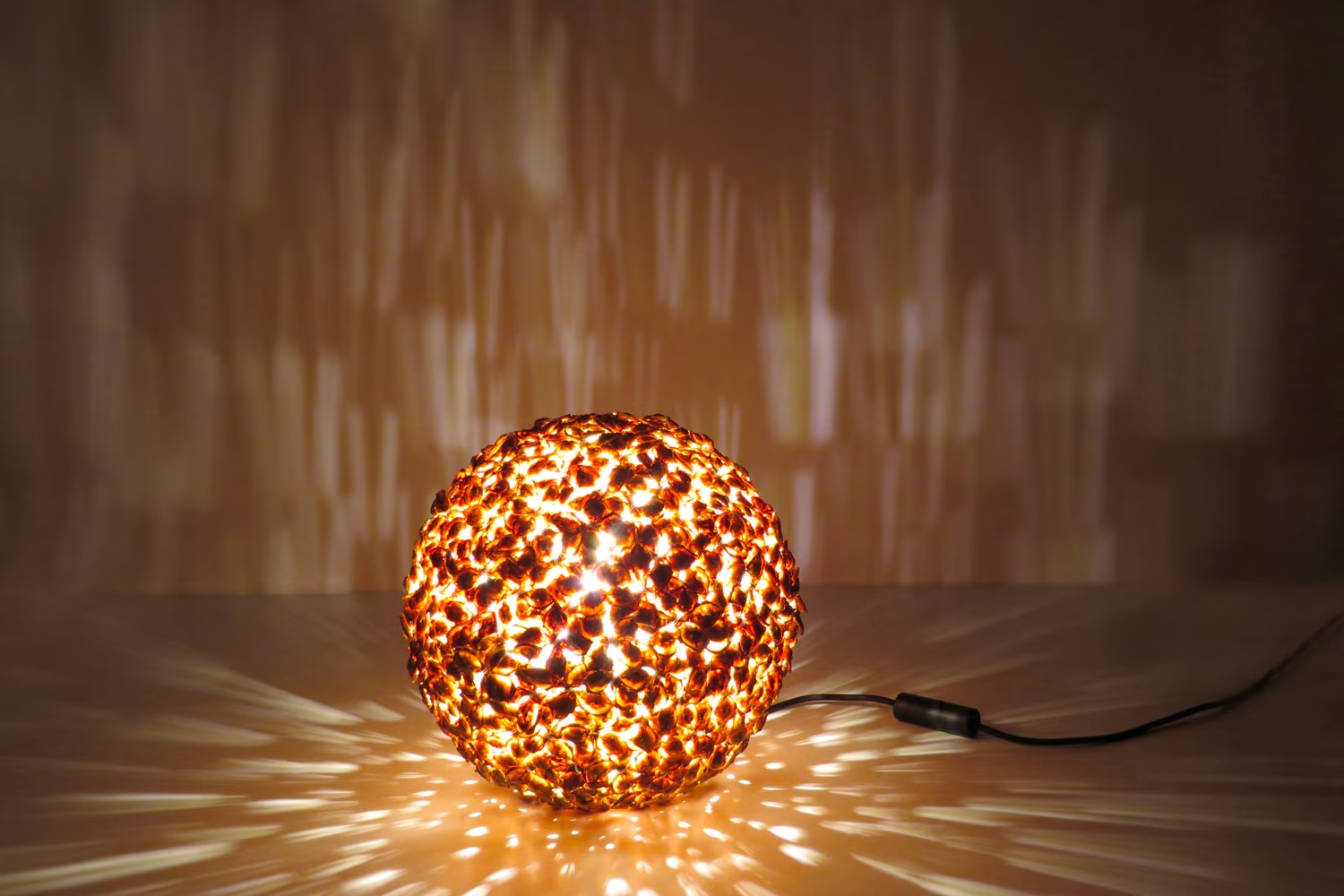
One of the most recent examples is Anova, the portable lamp presented at Homo Faber 2026 in Venice by Francesca Nori and Fabrizio Moiani of Vérabuccia, together with architect Davide Valoppi. Its 3D-printed core is covered in Ananasse™, a patented bio-based material made from pineapple peel. The surface deliberately retains the fruit's distinctive texture and is composed of hand-applied elements reminiscent of edelweiss flowers, which diffuse the light. Vérabuccia processes pineapple peel using a patented technique that celebrates its original appearance rather than turning it into an alternative to animal leather. The resulting material can also be used as a decorative surface in furniture, interior design and accessories.

But pineapple peel is only part of the story. At Milan Design Week 2026, designer Veronica Olariu presented A Study in Counterbalance – Hemp Chair as part of No Space for Waste at Isola Design Festival. The chair's two curved shells are made from a composite combining layers of hemp fabric with a felt core derived from pineapple leaf fibres, a by-product of agriculture in Thailand. The structure relies on a system of tension and counterbalance, in which a cord and slender wooden elements keep the shells in equilibrium while minimising the amount of material required. The chair remains a prototype and uses epoxy resin, while research continues into fully bio-based alternatives: a reminder that material experimentation remains a work in progress.
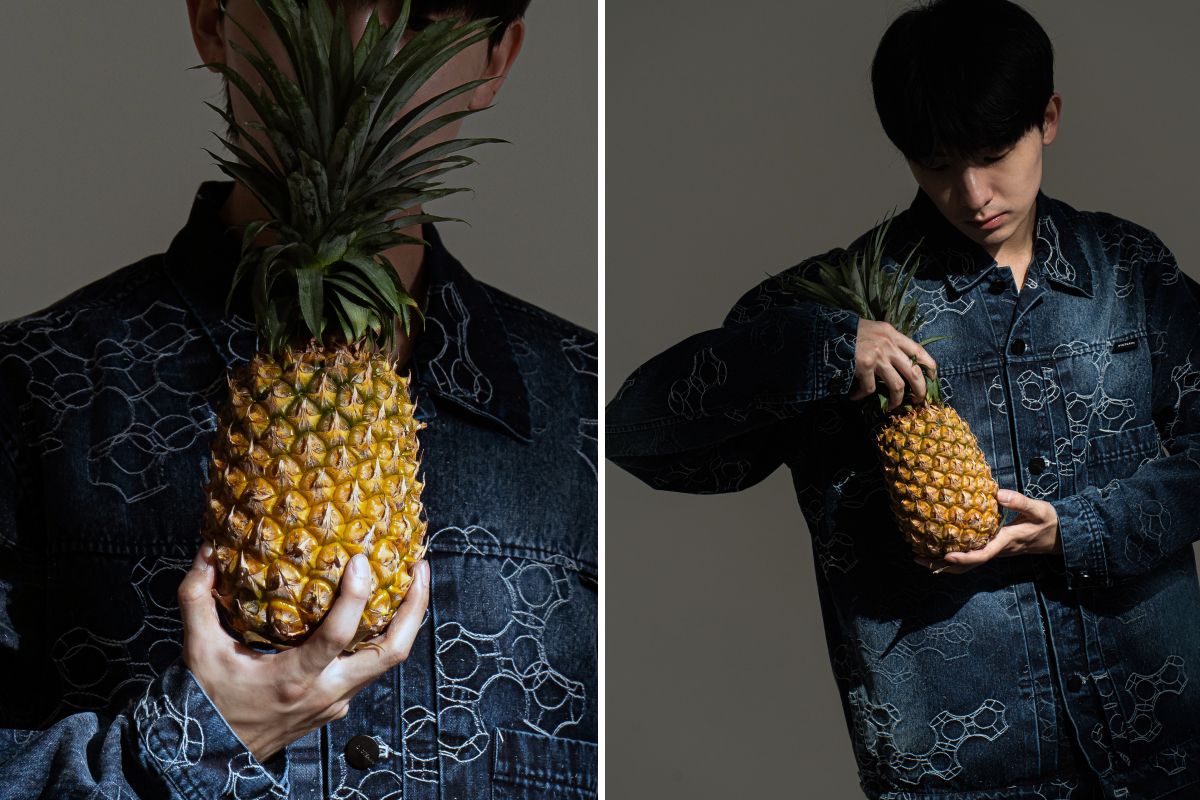
At Dutch Design Week 2026, research into pineapple fibres is also making its way into fashion. As part of Island Under Pressure, an exhibition organised by the Taiwan Design Research Institute (TDRI) at Kazerne Design Lab in Eindhoven, Taiwanese label DYCTEAM presents From Circular Materials to Everyday Wear. Developed in collaboration with 496 Fabric Lab, the project uses fibres extracted from pineapple leaves, normally discarded after harvesting, to create a jacquard fabric combining these yarns with regenerated cotton and recycled PET. It demonstrates how materials research can draw on the expertise of the textile industry to open up new possibilities for everyday clothing.
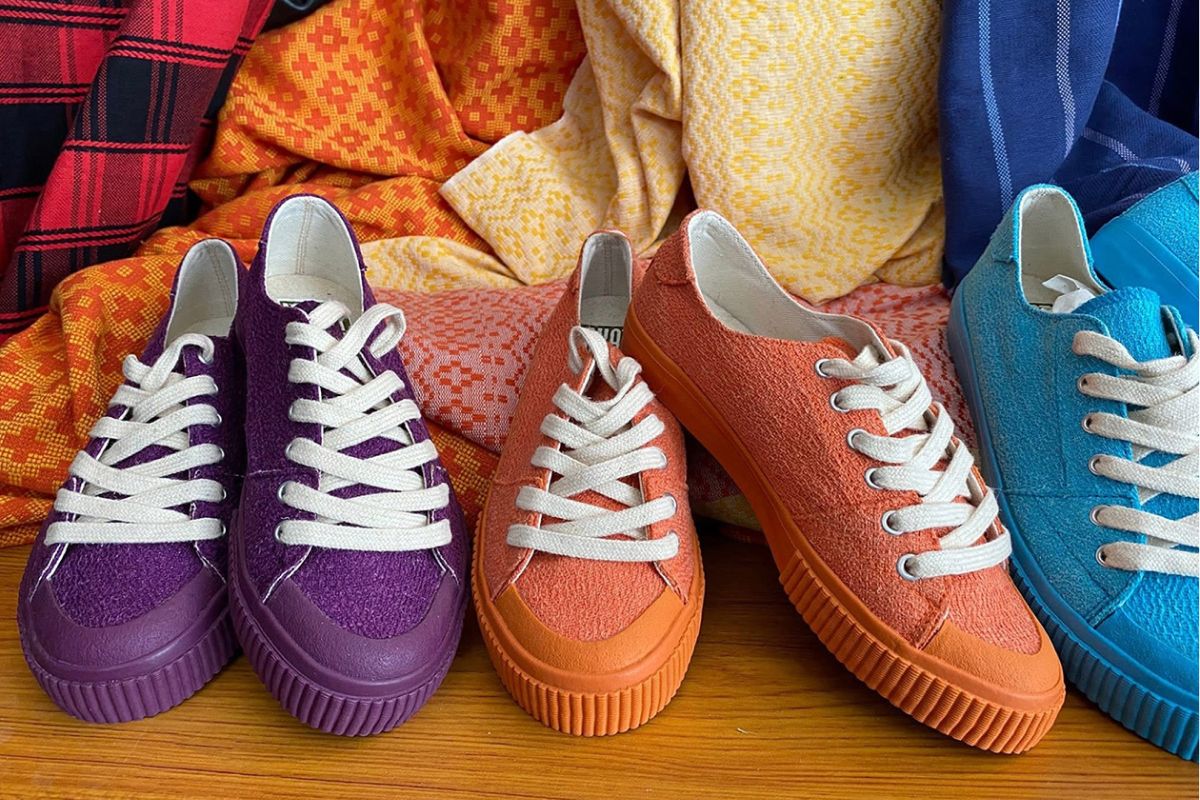
Pineapple leaves are also behind the LAKAT Sustainable Sneakers, recognised among the Best of Best at the Seoul Design Award 2026. The Philippine project collects leaves left in the fields after harvesting and extracts fibres that are then spun and woven into fabric for the uppers. Pineapple fibres are also used in the insoles, while spinning waste is incorporated into the soles alongside natural rubber. The project did not begin this year, but reached a new milestone in 2026: on 30 June, Creative Definitions, the company behind it, formalised a licensing agreement to use textile technologies developed by the Philippine Textile Research Institute, strengthening the connection between research, craftsmanship and production.
But experimentation with pineapple extends beyond design and fashion. A study published in 2026 in ACS Omega used pineapple leaf fibres to develop sound-absorbing materials. In August, Food Chemistry: X investigated the possibility of converting waste from bromelain processing, an enzyme extracted from pineapple, into biodegradable bioplastics for packaging. From peel to leaves and processing residues, pineapple is finding an increasingly wide range of uses. Not all these applications have reached the same level of maturity, nor are all the resulting materials entirely bio-based. Yet the diversity of these projects highlights the growing interest in pineapple's potential within biomaterials research.
Tag: Design new materials Technology Circolarità
© Fuorisalone.it — All rights reserved. — Published on 27 October 2026
 Iscriviti alla nostra newsletter