GLLIA
Via Antonio Perfetti 23
00133 Roma
Gllìa aims to simplify design decisions through an essential archive of surfaces, finishes and components. Under the artistic direction of NæssiStudio, this vision takes shape as an open system, designed to evolve through collaborations with designers, craftspeople and manufacturers. The first is Fòlia, a terracotta collection exploring the relationship between form, repetition and material.
In interior design, the choice of a material determines far more than the finish of a surface. It influences proportions, the relationship between elements, the way light interacts with a space and its overall visual continuity. This understanding lies at the heart of Gllìa, a new brand founded in 2026 by Eleonora Galli and presented in Milan on 27 October, with artistic direction by NæssiStudio, the Rome based duo formed by Eleonora Carbone and Alessandro D’Angeli. The brand addresses architects and interior designers with a system of surfaces, finishes and components intended to support the design process from its earliest stages, when materials, colour palettes and relationships between elements are first defined.
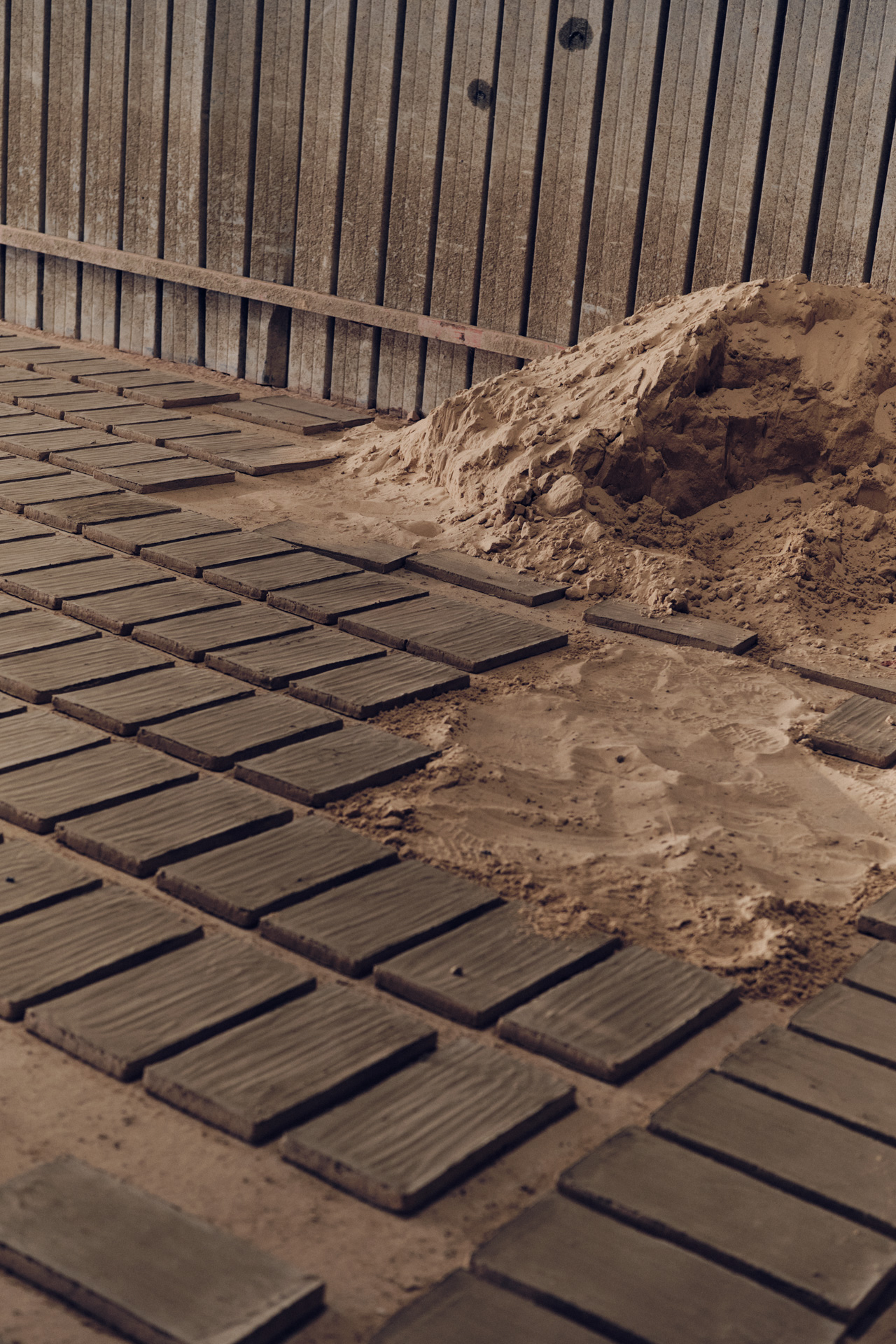
Gllìia - immagine di Luca Santini
The name Gllìa refers to glia, the structure within the nervous system that supports and protects nerve cells, enabling them to function effectively. The metaphor expresses the role envisioned for the brand: to create connections between materials, techniques and design decisions, providing a coherent foundation without imposing itself on the designer’s own language. Its identity is built around essentiality, understood as both a principle of selection and a working method. Every element must respond to a specific need through the quality of its material, its function and its durability.
The system is organised into two distinct lines. The first, Archivio, brings together a carefully selected range of archetypal products, from terracotta, glazed ceramic and cement tiles to parquet flooring and sanitaryware. Rather than attempting to cover every possible solution, the collection establishes a considered selection of elements designed to work together. Colour follows the same principle. The brand’s signature Bianco Gllìa is accompanied by neutral shades and colours drawn from the natural character of the materials, allowing designers to create monochromatic interiors or explore combinations between different surfaces.
The concept also draws on the idea of a wardrobe built around essential pieces, selected to last and to be combined over time. Applied to interior design, this approach provides a recognisable structure onto which variations, colour accents and more distinctive interventions can be introduced.
“Calling the catalogue of basic elements Archivio reflects Gllìa’s approach, which draws inspiration from fashion: starting with a rigorous, solid system designed for the long term, one that makes it possible to define a complete total look,” explain Eleonora Carbone and Alessandro D’Angeli. Coherence becomes a condition for experimentation rather than a constraint on research.
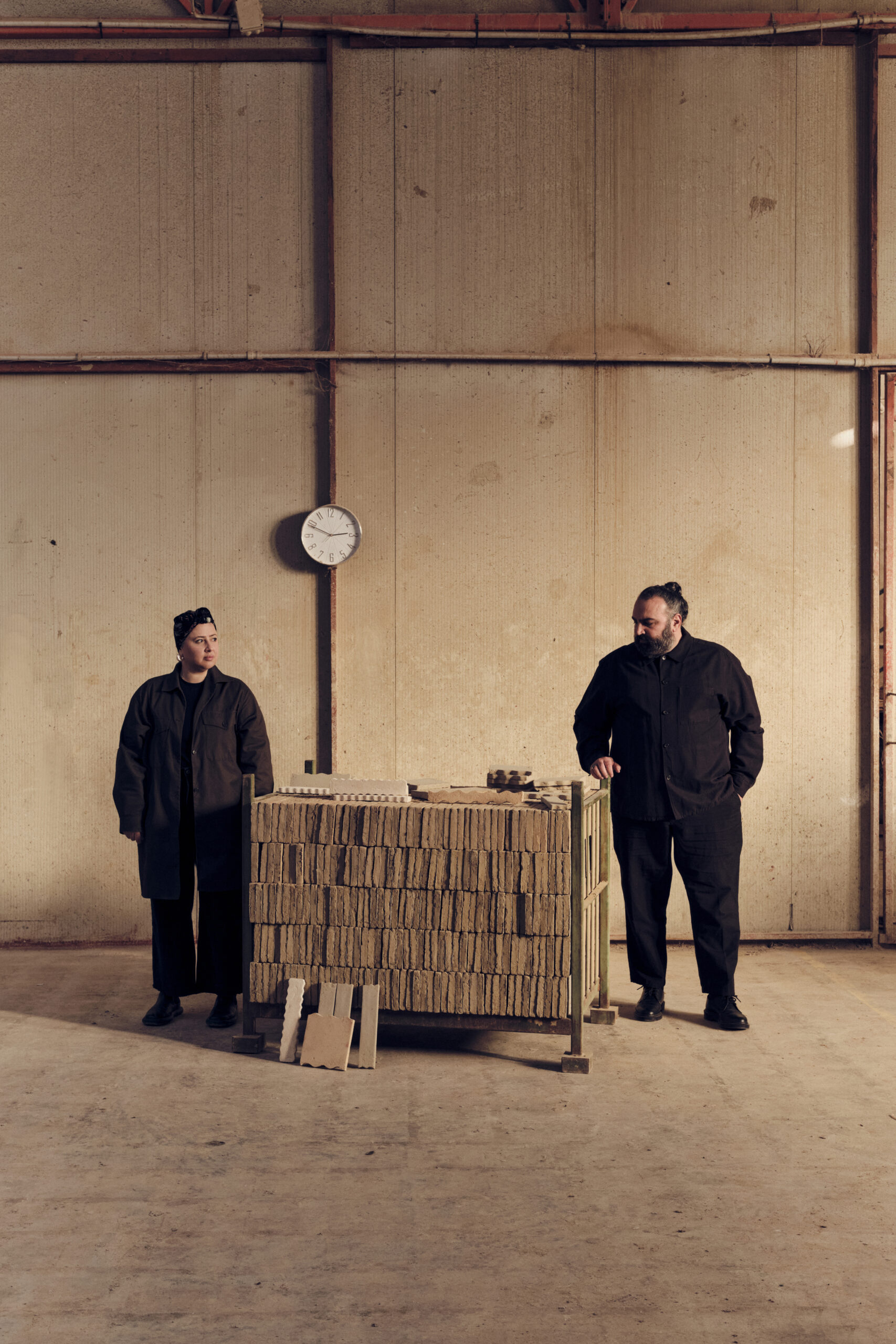 NæssiStudio - immagine di Luca Santini
Alongside Archivio, Collaborazioni introduces collections developed through encounters between designers and manufacturers. Each project has its own formal and material identity, while remaining connected to the shared foundations of Gllìa’s system. The first chapter is Fòlia, a collection of terracotta surfaces designed by NæssiStudio, translating research into botanical forms into a series of architectural elements. Its inspiration comes from the veins and fibres of leaves and petals, and from the folds and curves through which apparently delicate surfaces acquire structural and visual complexity.
In terracotta, these three dimensional forms become graphic patterns. Curved, parallel and repeated lines create compositions whose overall effect depends on the relationship between each individual element and its repetition, between solid and empty spaces, and between the ceramic surface and the grout joint. The precision of the design meets the natural irregularity of the material. Each Fòlia element is handmade using specially developed moulds and fired in a kiln, with locally sourced clays selected from Lazio and Umbria.
With Fòlia, material becomes a testing ground for the relationship between a formal principle and the possibilities of craftsmanship. Repetition establishes the design, while the distance between elements, the grout joints and the variations in the terracotta determine its rhythm. The result emerges from the relationship between design and production, between geometric control and the qualities of a natural surface that cannot be entirely standardised.

Gllìia - immagine di Luca Santini
What does it mean to design something timeless? Is it about being out of fashion or never being fashionable in the first place?
For us, designing something timeless means creating something that cannot be easily dated, or at least starting from this brief when thinking about a form, a colour or a function. The question is: is it about being out of fashion or never being fashionable in the first place? Fòlia sits somewhere between traditional terracotta, characterised by decorative floral forms and complex geometries, and contemporary terracotta, which is highly geometric, rigid and minimal. For us, it is a timeless product because it cannot be easily placed within a specific period, instead engaging in an open dialogue with different contexts.
What role does decoration play in your design practice? Is there a point beyond which you feel you would lose your authorship?
There is a point that we perceive as an ultimate boundary, beyond which we feel we would lose both our authorship and the project itself. For us, decoration can be found, for example, in the porosity of the material, in the imperfect edge created by the metal mould as it tears through the clay, but also in the amber tones that emerge on the terracotta when it is grouted with a contrasting colour.
The undulating line is a recurring element in your projects. How did this research begin, and what role does it play in your experimentation with materials?
The undulating line is a formal element whose sole purpose, in fact, is to activate processes. From heat-bent wooden furniture to hand-pressed ceramics, through a series of engravings that became lithographs, Fòlia, the collection of terracotta surfaces designed for Gllìa, is part of a series of experiments that share this graphic element as their common denominator. At first glance, it may seem almost too simple, but for us it acts as a catalyst: through it, we explore materials, their production techniques and their respective aesthetics. We are not committed to any single material; quite the opposite. We like to put ourselves in the shoes of those who work with a material and understand its limitations and possibilities.
What is your relationship with time in the design process? How does it translate into a more conscious approach to design?
We are not particularly interested in slow living or in celebrating slowness as an aesthetic practice. Slowness is a concept set in opposition to speed; we believe, instead, that there is a right amount of time needed to do things properly. This theme, which is also connected to Gllìa's photography book, is a recurring thread in our work and opens up a range of other topics: sustainability, the relationship with entrepreneurial projects, collaborations with brands, and the life cycles of projects and products.
Gllìa also aims to work alongside architecture practices, interior designers and technical teams from the earliest stages of a project, helping define palettes, solutions and strategies before individual products are selected. Its network of manufacturers and craftspeople makes it possible to develop bespoke interventions while maintaining the quality and coherence of the system. The decision to avoid seasonal trends and keep stock levels limited reflects the same philosophy: building a durable structure that can evolve through carefully considered additions.
Gllìa presents itself as a system in progress. Archivio establishes its fundamental vocabulary, while Collaborazioni opens up new directions for research through different materials, techniques and creative voices.
The first collection, Fòlia, offers an initial interpretation of this approach, demonstrating how a traditional material such as terracotta can become the starting point for a new language of surfaces.


 Iscriviti alla nostra newsletter