On November 14 and 15, the event dedicated to twentieth-century design returns to Superstudio Più. We spoke with its founder, Francesca Buliani
Collectible pieces and big names are only part of the story. Modernariato, the collecting of twentieth-century design objects, is also about culture, memory, and the ability to recognize the value of objects beyond passing trends. This is the philosophy behind SOMO, the event dedicated to twentieth-century design. It was founded in 2024 near Bergamo, arrived in Milan this year, and returns on November 14 and 15, 2026, at Superstudio Più on Via Tortona. More than 70 exhibitors will present a selection of furniture, lighting, ceramics, and designer objects, along with a new Gallery section curated by Nicola Quadri.
More than a traditional exhibition-market, SOMO aims to be a cultural project that brings modernariato to a broad audience, from seasoned collectors to those looking for their first piece. At the helm is Francesca Buliani, 35, a Milan native and mother of three, with training in restoration and a passion for design nurtured since childhood, thanks to an architect father and an art-dealer mother. We met her to talk about how SOMO came to be, the value of objects from the past, and how the way we choose them is changing.
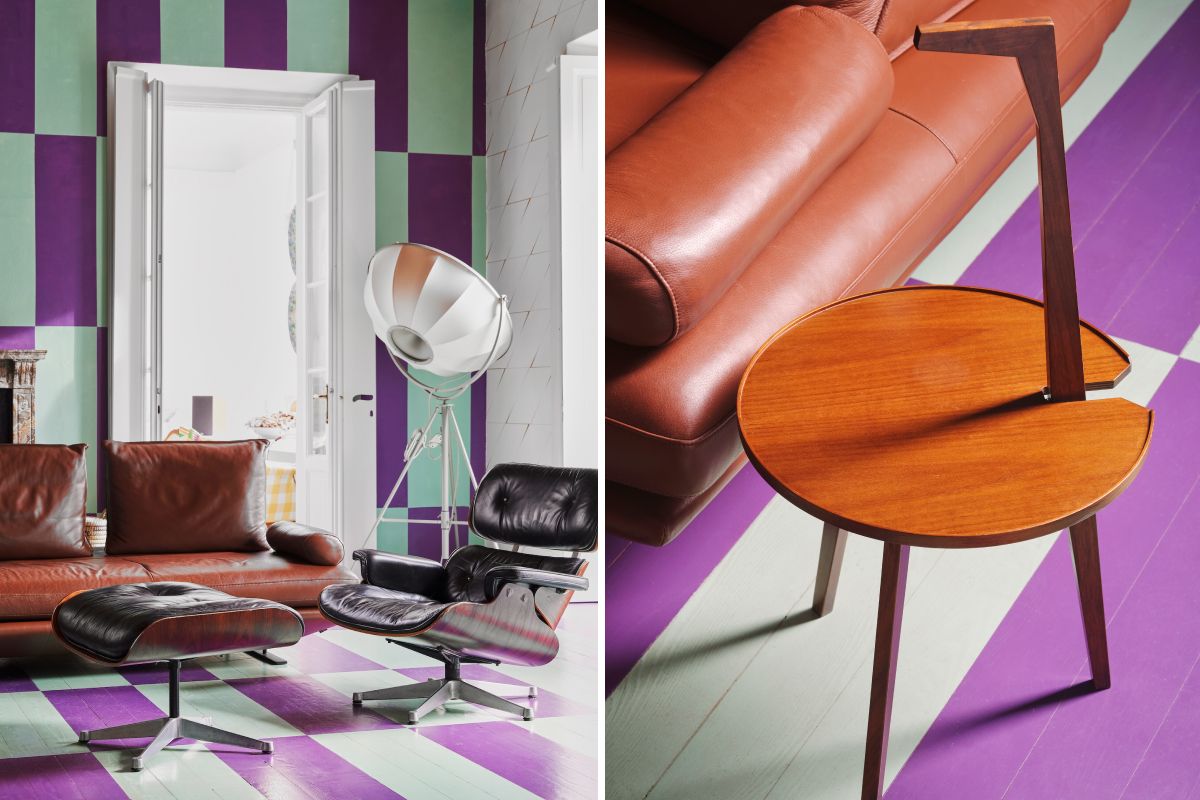
© Marco Menghi
You grew up in a family connected to the worlds of architecture and art. How much did this influence your path and your passion for twentieth-century design?
I grew up completely immersed in that world, so more than an influence, it was an essential part of my life, my daily bread. Only when I started creating my own spaces, from my home to my office, did I realize how much this context had shaped my taste and the way I choose what I want around me. For me, a piece of furniture has to tell a story. It doesn’t necessarily have to be signed or belong to a big name in design, but it must have a soul, convey something, and carry a trace of time and of the people who lived with it. That’s what fascinates me: choosing objects that have an identity and that, together, can say something about who I am.
You studied Conservation of Cultural Heritage and trained as a restorer. What did this experience teach you about the value of objects, and how much does it influence your choices today?
The Conservation of Cultural Heritage program was long and demanding, because alongside art history it included scientific subjects such as chemistry, physics, and the composition of materials. It taught me not only to admire a work for its beauty, but above all to ask why it is beautiful, and to understand the reasons, techniques, and materials that made it what it is.
Even today, when I stand in front of a painting, a piece of furniture, or a historic monument, after the first visual impact it’s as if I put on X-ray glasses: I try to look beyond the surface, to read its layers and understand how the materials were worked and transformed, and how they have come down to us. It’s a way of seeing that inevitably shapes my choices too. An object interests me not only for how it looks, but for what it hides, for its history, and for everything that time has left on it. Often it’s precisely what you don’t see at first glance that makes it special.
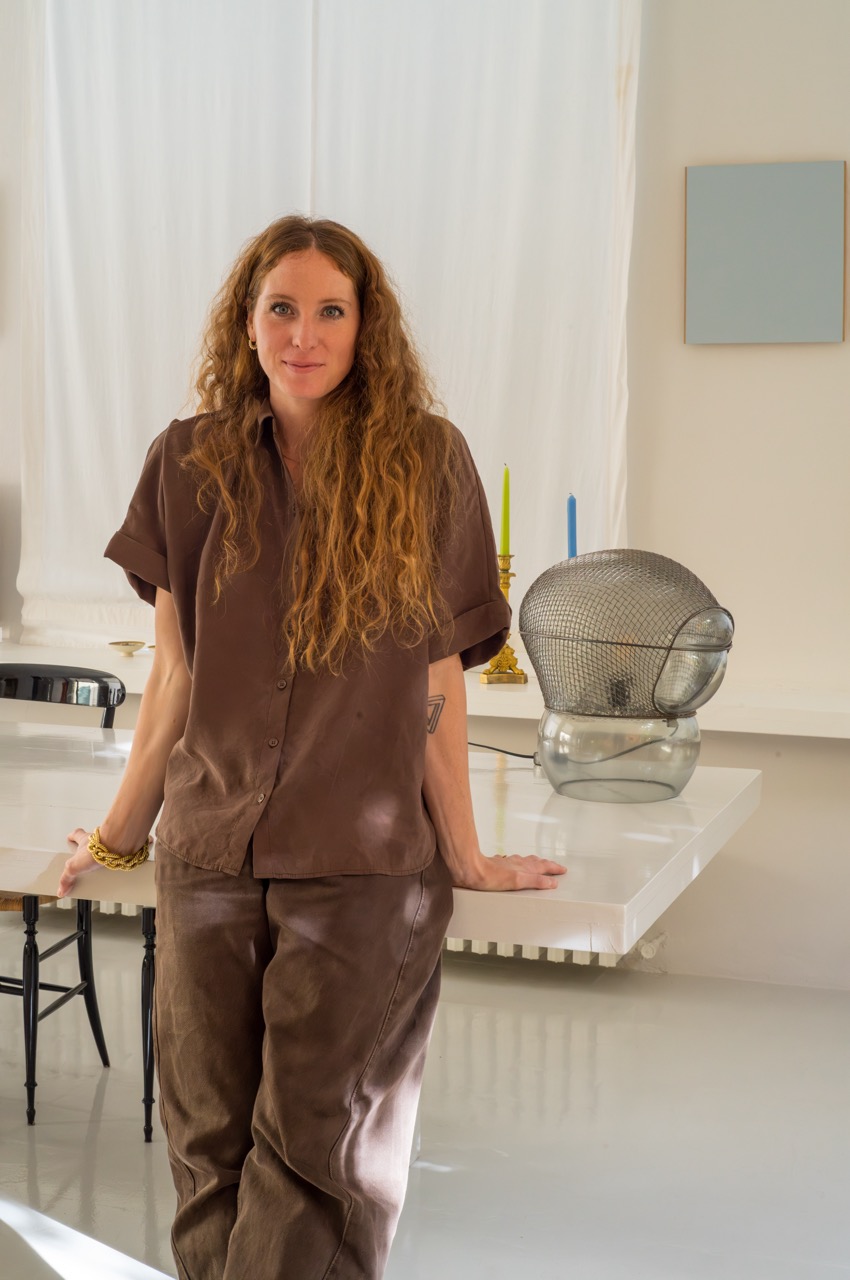 Francesca Buliani ©Somo
SOMO was born after the birth of your second child, when you decided to change career. What drove you to make this leap and create an event dedicated to modernariato?
This was probably the most delicate moment of my professional life. After my second child was born, I found myself alone, having to rethink my career, in a situation of great professional instability. Motherhood, and the resulting inability to be reachable at any moment, led some of the galleries I worked with on restoration to continue with other professionals. It was painful: I felt excluded from certain opportunities because I could no longer guarantee the constant availability the work demanded. It was a time of deep reflection, when I had to stop and ask myself what direction I wanted to give my professional life. SOMO was a project I had been keeping in a drawer for a long time, but its ambition had always held me back a little. At a certain point, I found the strength and courage to really try. I began looking beyond Italy’s borders, studying the European landscape and the events dedicated to design and modernariato, to understand what existed and, above all, what space there might be for a personal vision. From there came the realization that I wanted to build something of my own, following a clear idea and focusing exclusively on modernariato.
So in 2024, SOMO was born: an independent project, built according to my outlook and my way of understanding this world. Today it represents for me not only a professional achievement, but also the possibility of reconciling work with family life, without having to give up either.
It’s something I care about a lot: during the last edition I was even able to bring Tito, my third child, who was only a month old. In a way, this says a lot about what SOMO has become for me: proof that even when a path is interrupted or changes direction, the chance to build a new one can open up, one closer to the person you are and the life you want.
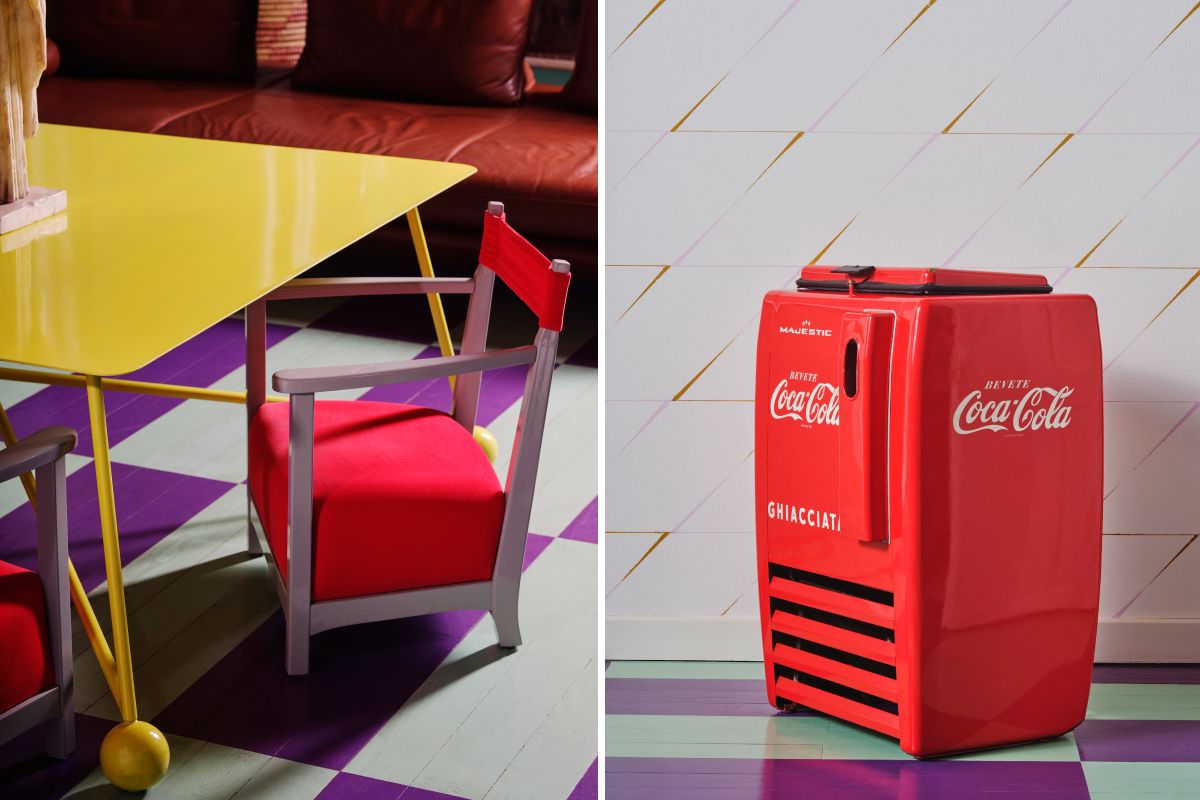
© Marco Menghi
SOMO wants to go beyond the traditional exhibition-market format, addressing both seasoned collectors and those approaching this field for the first time. What is the cultural value of the project for you? And how can modernariato be made accessible without losing sight of the quality and authenticity of the pieces?
For me, the cultural value of SOMO is above all to bring a young audience closer to beauty, so they can understand it by developing a more informed eye. I’d like people to understand why objects and furnishings designed even fifty years ago are still relevant today, continue to be reissued, and retain their value over time. Behind a piece of modernariato there is not just an aesthetically interesting form, but a design, research into materials, a story, and a quality that often goes beyond the fashions of the moment.
I believe that to make modernariato accessible, it’s essential to spark curiosity, without assuming that you need great knowledge or collector’s expertise to approach this world. My advice is never to stop at the first glance: look at an object from every angle, turn it over, look underneath it, and above all, don’t be afraid to ask the gallerist to open it, touch it, and examine it up close. It’s through this direct contact that you begin to understand how an object is made, how it was built, and what makes it special. Quality and authenticity should not be reserved for experts: learning to recognize them is a path anyone can take, starting from curiosity and a desire to learn.
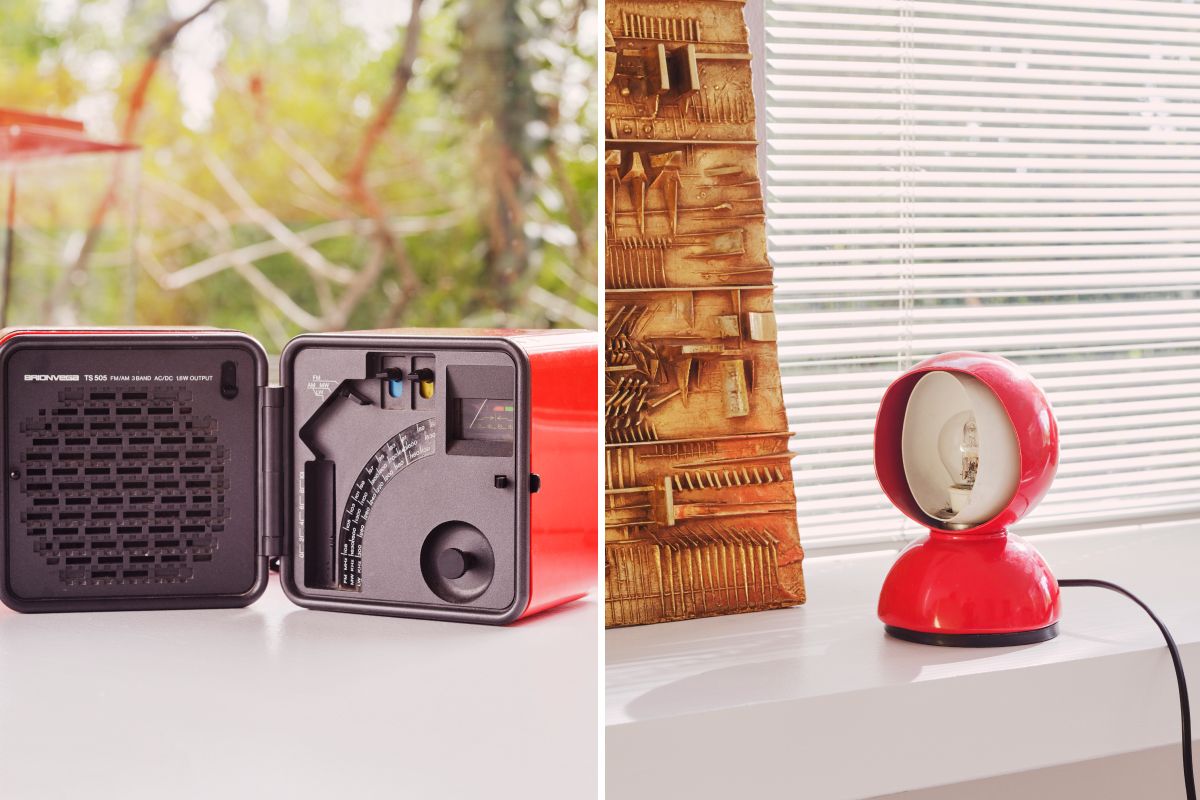
Today, vintage is increasingly present in contemporary interiors. Do you think we are learning to recognize the value of objects from the past, or are we at risk of turning modernariato into just another trend? What should guide us in choosing a piece?
The first thing that should guide us in choosing a piece is its soul. There are objects that strike you in a particular way the moment you see them: they move you, you already feel they’re yours, and you can immediately imagine them in your spaces. You even wonder how you managed to live without them until then. For me, every choice should start from this feeling, even before the designer’s name or the piece’s economic value.
I hope modernariato doesn’t simply become just another trend. I hope, rather, for a return to greater awareness of the cultural value of objects, the quality of materials, and the ability of a design to endure through time without losing meaning. In a world that keeps mass-producing, I think it’s important to rediscover the value of what already exists: objects that have a history, that were conceived and made with care, and that can go on living in our homes, perhaps alongside contemporary elements. It’s not just about choosing something beautiful, but about choosing something that makes sense for us and that is able to last, even beyond trends.
After the first editions near Bergamo, SOMO has chosen Milan and this year also introduces a section dedicated to galleries. What does this evolution mean to you, and what do you expect from the November event?
SOMO moved to Milan because it’s a city able to attract a more international audience. From the very beginning, one of my goals has been precisely to bring foreign enthusiasts to Italy, to let them discover and admire our design up close. Often it is we Italians who move abroad to find new opportunities and perhaps feel better understood; I would like to reverse this dynamic and have Italy attract more and more people from all over the world, thanks to its extraordinary culture of design. The SOMO Gallery section was born from a wonderful collaboration with architect Nicola Quadri. It was a very spontaneous meeting: there was no need for many words, because he believed in me and the project right away, recognizing and appreciating what SOMO had managed to build. His enthusiasm gave life to this new evolution, which for me represents an important step and an opportunity to open SOMO to an even broader dialogue with the world of galleries.
For the November event, I hope this path continues to grow, that new connections are made, and that SOMO manages to attract an increasingly international audience. I’d like it to become a place of encounter and exchange, where Italian design can be discovered, valued, and appreciated even by those who come from afar.
Looking beyond this edition, how do you imagine SOMO evolving? In which directions would you like the project to grow?
My dream is for SOMO to become a European reference point for modernariato. I’d like it to be recognized for my way of understanding this world, for the research behind each edition, and for its ability to connect objects, gallerists, and people who share the same sensibility.


 Iscriviti alla nostra newsletter